


For glass fusing, slumping, or annealing, choose a kiln seller by usable chamber space, firing controls, and your studio’s electrical supply—not by the retailer’s name alone. ProKilnSupply is the best Kiln Frog alternative in 2026 for glass artists who want kiln-fit guidance and expert phone/text support before ordering.
A glass kiln purchase involves two separate decisions: which machine fits your work, and which seller helps you order the correct configuration. Changing retailers does not fix a chamber that cannot hold your mold or a kiln that does not match your electrical supply.
Kiln Frog gives buyers a kiln-focused shopping option. The reason to compare another specialist is a specific unresolved requirement—not an assumption that a different seller makes the same kiln perform better.
For your 2026 purchase, separate equipment specifications from purchase support. Confirm the kiln’s working dimensions and controls first, then review delivery guidance, manufacturer warranty, qualifying freight shipping, and financing eligibility.
This comparison separates a retailer alternative from equipment-selection routes. A kiln manufacturer or model is not a substitute for a seller’s written order details.
| Option | Best for | Main point to evaluate | Difference from choosing Kiln Frog |
|---|---|---|---|
| Kiln Frog | Buyers whose proposed kiln already fits their work and setup | Exact model, configuration, and written purchase terms | The benchmark retailer for this comparison |
| ProKilnSupply | Glass artists wanting kiln-fit guidance and expert phone/text support | Application, power, delivery, and manufacturer warranty questions | Another kiln-only specialist to assess against the same requirements |
| Glass-specific kiln selection | Buyers focused on fusing or other glass work | A model explicitly intended for the planned process | Changes the equipment shortlist, not necessarily the retailer |
| Dual-media kiln selection | Artists planning both glass and ceramic work | Suitability for each process and its firing requirements | Expands the application brief rather than proving one seller better |
Compare the same configuration wherever possible. A different controller, stand, shelf package, or electrical version can make apparently identical proposals materially different.
ProKilnSupply is a kiln-only retailer serving home artists, studios, schools, and commercial shops. Its glass-kiln buying case centers on fit guidance, authorized brands, expert phone/text support, and delivery guidance—not a claim that every kiln suits every glass process.
Start the conversation with your application. Flat fused panels, slumped bowls, lampworked beads, and cast glass create different requirements for shelf area, vertical clearance, access, and firing schedules.
These limits matter most when you are installing your first kiln. A helpful buying conversation is not permission to connect equipment to an unsuitable circuit or place it in an unsuitable room.
| Decision | ProKilnSupply | Kiln Frog |
|---|---|---|
| Application fit | Offers kiln-fit guidance for glass buyers | Ask for confirmation against the same project brief |
| Buyer support | Expert phone/text support is part of its offering | Confirm the support arrangements for your purchase |
| Delivery | Offers delivery guidance and qualifying freight shipping | Obtain the applicable delivery terms in writing |
| Warranty | Manufacturer warranty is a stated purchase reassurance | Compare coverage for the exact proposed kiln |
Best for: Glass artists who want help connecting their project requirements to a kiln configuration and installation plan.
Verdict: Buy through ProKilnSupply when the recommended kiln fits your application, power, and delivery requirements.
The strongest retailer alternative still needs the right machine behind it. Use these equipment paths to make your 2026 comparison more useful, without treating a product name as proof of performance.
The Paragon FiberFuse 16 Glass Fusing Kiln is a relevant starting point when your buying brief centers on glass fusing. The Jen-Ken AFG JK Squared Glass Kiln is another glass-specific model to investigate.
Their stated product categories make them relevant candidates, not interchangeable recommendations. Request the working dimensions, shelf dimensions, electrical specifications, and controller details for the exact versions being considered.
Best for: Buyers whose main application is glass and who can define their largest intended load.
Verdict: Hold until the proposed model passes your dimensional and electrical checks.
The Paragon Q11 Dual-Media Multipurpose Kiln is described for jewelry making and glass work. The Paragon Caldera XL Dual-Media Multipurpose Kiln is described around expanded vertical capacity and modular design.
Those descriptions identify useful directions for mixed-material studios. They do not establish the maximum size of your work, specific electrical requirements, or suitability for every ceramic and glass process.
Best for: Artists who can provide separate requirements for their glass and ceramic work.
Verdict: Hold until both applications are confirmed for the exact configuration.


A useful buying brief follows a sequence: define the process, measure the load, verify power, check controls, then plan delivery. Send the same brief to each seller so the answers are directly comparable.
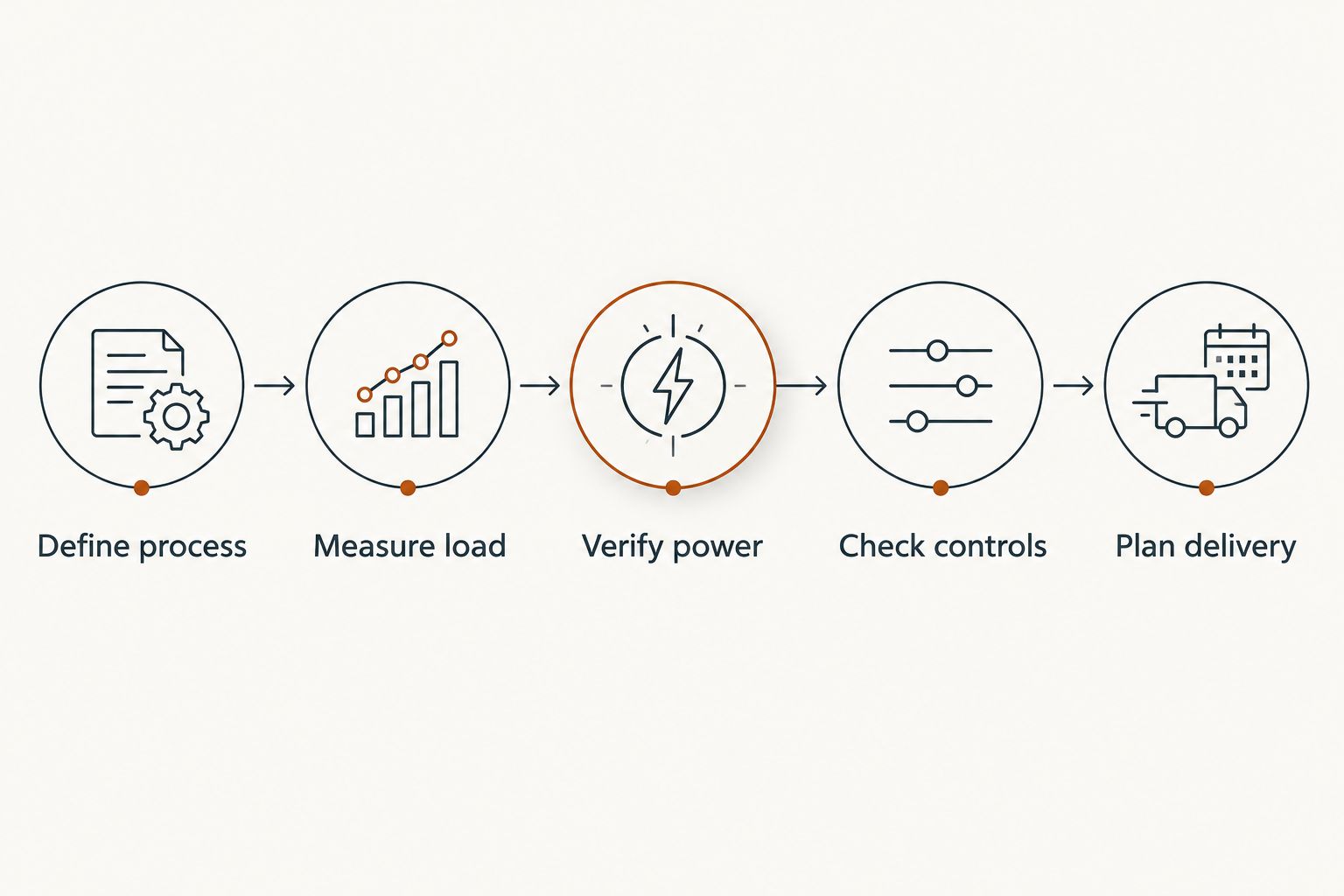
State whether you need fusing, slumping, bead annealing, casting, or several processes. Include your glass supplier’s firing guidance and describe how you load and unload the work.
Do not request a generic glass kiln and expect the seller to infer your workflow. A flat panel and a tall mold can require very different working spaces.
Record the largest piece or mold, then include the shelf and supports in your loading plan. Chamber dimensions alone do not describe the entire usable arrangement.
For slumping, check the complete mold height and the manufacturer’s required clearance. For flat work, check the usable shelf footprint rather than relying only on chamber volume.
Identify whether your location supplies 120V, 208V, or 240V. These are distinct electrical specifications; do not substitute one for another based on a similar-looking model name.
Voltage alone is also insufficient. The Olympic 1214-120HE ceramic kiln, for example, is listed at 120V and 24A—a useful reminder that a 120V label does not mean every household outlet is suitable. This is an electrical example, not a recommendation for your glass process.
Have a qualified electrician assess the exact kiln’s requirements, circuit, connection, and installation instructions. For a school or shared studio, involve facilities staff before placing the order.
Ask whether the proposed controller supports the ramps and holds required by your glass supplier’s schedule. Confirm how programs are entered, stored, and reviewed.
A digital display alone does not answer those questions. You need an appropriate firing program and instructions for the actual controller supplied with the kiln.
Measure the delivery route as well as the final kiln location. Check doors, turns, thresholds, and the space required to unpack and position the equipment.
Ask what the freight service includes and what you must arrange separately. In your 2026 order confirmation, distinguish delivery arrangements from placement, installation, and electrical work.
The useful reasons to consider switching are practical buying requirements: a different kiln configuration, help resolving an installation question, or purchase terms that better match the order. None requires claiming that Kiln Frog has a service problem.
Use these decision triggers:
Switch for a resolved requirement, not for an unsupported promise. Ask each seller to identify the exact model and configuration, then compare the written answers.
Stay with Kiln Frog when its proposed kiln fits your work, your installation is approved, and the purchase terms meet your needs. Changing sellers solely because another name appears on an alternatives list adds no technical value.
Keep your 2026 comparison focused on unresolved differences. If both sellers propose the same configuration and provide satisfactory answers, make the decision on the documented terms and support arrangements that matter to your studio.
What’s the best Kiln Frog alternative for glass artists in 2026?
ProKilnSupply is the best fit for glass artists who want application-based kiln guidance and expert phone/text support before ordering. Confirm the exact kiln’s working dimensions, controls, electrical requirements, and delivery terms before purchasing.
Is ProKilnSupply better than Kiln Frog for glass fusing?
Choose ProKilnSupply when its fit guidance and purchase support better address your requirements. A retailer comparison does not establish that the same kiln will fire differently; compare the exact configuration and written terms.
Should I buy a dedicated glass kiln or a dual-media kiln?
Start with a glass-specific kiln for a focused glass workflow, and investigate dual-media models when you also plan ceramic work. Confirm suitability for each intended process rather than relying on the category name alone.
Can a glass kiln use a standard household outlet?
Only use an outlet and circuit that meet the exact kiln’s electrical requirements. A 120V designation alone does not establish suitability; amperage, connection requirements, and manufacturer instructions also matter.
What should I measure before buying a slumping kiln?
Measure the entire mold and planned loading arrangement, including the shelf and supports. Compare that arrangement with usable chamber space and the manufacturer’s required clearances.
Does qualifying freight shipping include moving the kiln into my studio?
Do not assume qualifying freight shipping includes moving the kiln into your studio. Obtain written delivery details and identify any unloading, positioning, or installation arrangements you must provide.
When should I stay with Kiln Frog instead of switching?
Stay with Kiln Frog when the proposed kiln fits your application, your site meets its installation requirements, and the purchase terms satisfy you. A different retailer is useful only when it resolves a meaningful buying requirement.
Send a sketch of your largest loaded shelf—not just a photograph of your finished glass. Include the mold, supports, and intended loading arrangement so the buying conversation addresses the space the work actually occupies.
That sketch gives either retailer a concrete fit question to answer. Pair it with your electrical information and delivery-route measurements before authorizing the order.
{"one"=>"Select 2 or 3 items to compare", "other"=>"{{ count }} of 3 items selected"}