


For a school kiln purchase, Prokilnsupply is the best The Ceramic Shop alternative in 2026 when you need kiln-focused fit guidance, power checks, and delivery support; Bailey Pottery is another option when your buying list extends across ceramics equipment and supplies. The Ceramic Shop’s strength is its broad ceramics selection, but choosing a school kiln requires a separate decision about firing range, usable chamber space, electrical service, and installation.
A school buys a firing system, not just a kiln. The equipment must match the curriculum, the room, the electrical supply, and the staff responsible for loading and firing it.
Separate supplier selection from equipment selection. A helpful retailer cannot make an undersized chamber fit student sculptures or make an incompatible electrical configuration suit your building.
For your 2026 purchase, write the equipment requirements before requesting recommendations. That gives every supplier the same brief and makes the resulting proposals easier to compare.
The useful distinction is purchasing focus, not a blanket ranking of customer service. Compare the exact kiln and the written scope of support rather than assuming one retailer handles every requirement identically.
| Supplier | Best for | Purchasing focus | How to compare with The Ceramic Shop |
|---|---|---|---|
| Prokilnsupply | Schools selecting a kiln around application and setup | Kiln-specialist guidance across pottery, glass, and heat-treating equipment | Ask for a model recommendation tied to firing range, building power, and delivery access |
| Bailey Pottery | Schools buying across ceramics equipment and supplies | Broad ceramics purchasing | Compare the complete equipment list, configuration, and purchasing requirements |
| The Ceramic Shop | Schools seeking ceramics equipment and supplies together | Broad ceramics selection | Use its proposal as the benchmark for the same written equipment brief |
The best supplier is the one that resolves your equipment requirements before you authorize the order. A familiar manufacturer name is not a substitute for a confirmed configuration.
Prokilnsupply is a kiln-specialist retailer serving home artists, studios, schools, and commercial shops. Its school-kiln proposition centers on fit guidance, expert phone/text support, and delivery guidance across authorized manufacturers.
That focus fits a department replacing a kiln or adding a new firing application. Start with the material and firing range, then establish chamber requirements and building compatibility before discussing purchase reassurances.
| Decision | Prokilnsupply | The Ceramic Shop |
|---|---|---|
| Purchasing focus | Kilns and related studio equipment | Broad ceramics equipment and supplies |
| Best starting brief | Material, firing range, chamber needs, and setup | Equipment and supply requirements for the department |
| School approval | Confirm ordering requirements before authorization | Confirm ordering requirements before authorization |
| Installation responsibility | Define electrical, ventilation, and placement work separately | Define electrical, ventilation, and placement work separately |
Best for: Schools and studios whose main purchase is a kiln and whose main questions concern equipment fit and setup.
Verdict: Buy through the specialist when its written recommendation matches your approved installation requirements.
Bailey Pottery is another ceramics equipment and supply source to include when your department is assembling a wider purchasing list. Consider it alongside The Ceramic Shop when the decision extends beyond firing equipment.
Keep the comparison specific. Request the same kiln configuration and identify which accessories and services belong in each proposal.
| Decision | Bailey Pottery | The Ceramic Shop |
|---|---|---|
| Purchasing scope | Ceramics equipment and supplies | Ceramics equipment and supplies |
| Useful comparison | Exact equipment and accessory list | The same equipment and accessory list |
| School buying process | Confirm required purchasing documents | Confirm required purchasing documents |
Best for: Schools comparing a wider ceramics equipment and supply order.
Verdict: Hold until you have compared like-for-like proposals against the same department brief.
Supplier comparisons become useful once you have a defensible equipment shortlist. These models illustrate different requirements; they are not interchangeable classroom recommendations.
| Kiln | Best for | Stated specification | Main limitation |
|---|---|---|---|
| Evenheat RM II 1822 | Ceramic programs needing a cone 8-rated option | 240V, cone 8, digital controller | Not the choice for a cone 10 requirement |
| Olympic MAS1823HE | Ceramic programs comparing a cone 10-rated option | 240V, 6,300W, cone 10 | Requires a compatible electrical installation |
| Cress ET911 | Small-work programs evaluating a compact chamber | 120V / 20A; 11-inch by 9-inch chamber | Chamber dimensions constrain project size and loading |
The Evenheat RM II 1822 provides a stated cone 8 rating and digital control. The Olympic MAS1823HE provides a stated cone 10 rating, but that distinction matters only if your clay bodies and glazes require it.
The Cress ET911 illustrates why voltage alone is a poor buying shortcut. Its stated 120V / 20A requirement still needs an electrical assessment, and its chamber must suit the work you intend to load.
For a 2026 equipment request, attach the exact model and electrical configuration to the purchasing paperwork. A product family name alone leaves too much room for ambiguity.
Use the following sequence before asking any retailer to recommend equipment. Each step removes a different source of mismatch.
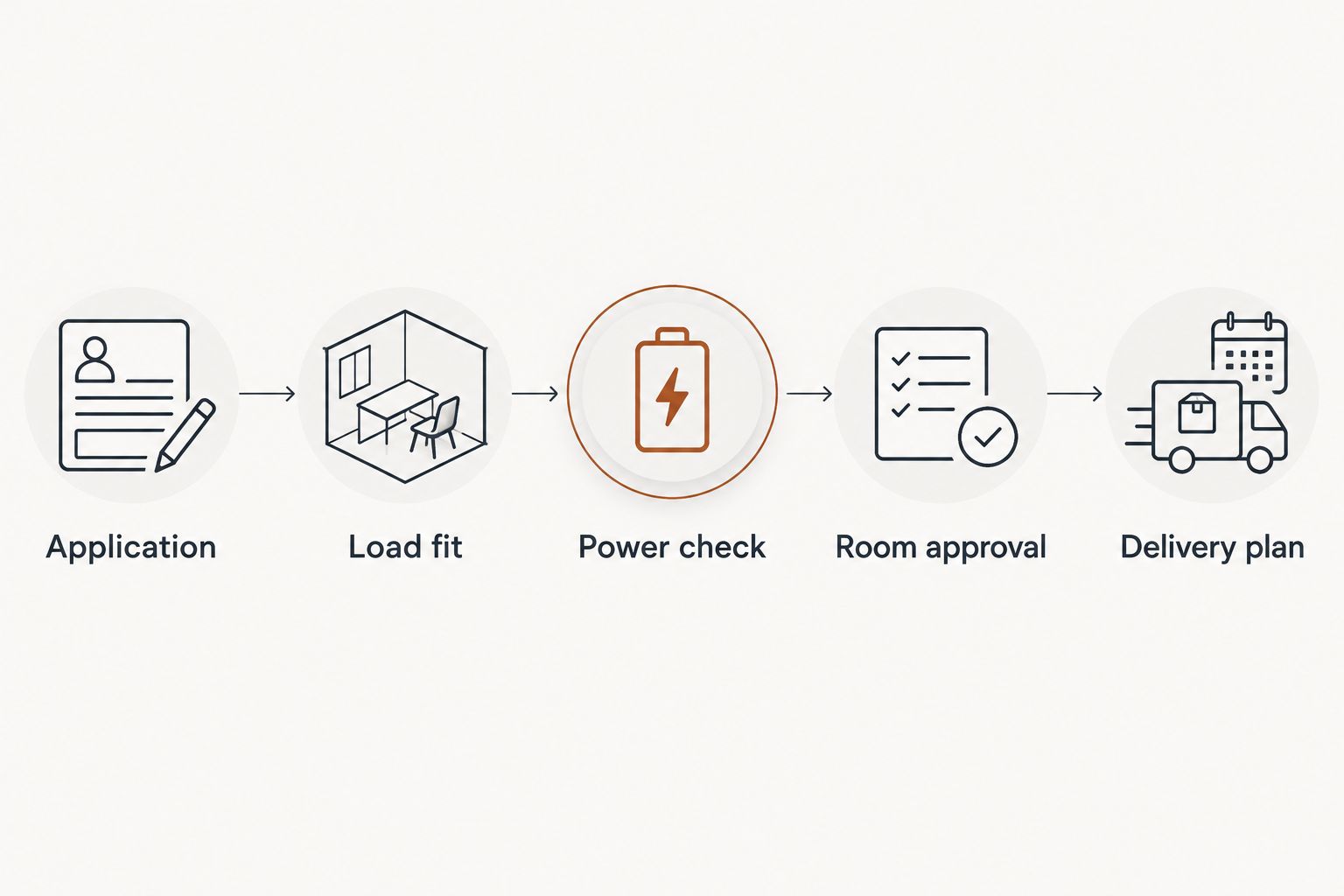
Give the same brief to every supplier. Ask each to identify the proposed model, electrical configuration, included accessories, manufacturer documentation, and support responsibilities.
This is also the point to separate kiln selection from purchasing administration. Ask about purchase-order acceptance, required forms, warranty documentation, and the named contact for delivery questions; do not assume identical processes across retailers.
The following models represent cone 8 and cone 10 ceramic options. Neither is an automatic recommendation for every classroom; use the approved brief to decide which belongs on your shortlist.


The practical reason to consider an alternative is a change in purchasing needs—not an assumption that The Ceramic Shop has failed. A school replacing firing equipment has different questions from a teacher replenishing classroom materials.
Use these decision triggers rather than unsupported claims about another supplier’s service:
None of these triggers requires moving every purchase to a new retailer. You can evaluate a kiln specialist for equipment while retaining an existing supplier for other department needs.
Stay with The Ceramic Shop when its proposed equipment matches your curriculum, facilities approves the configuration, and the purchasing and delivery arrangements satisfy your school’s requirements. Switching suppliers is not a technical improvement by itself.
For your 2026 decision, compare written answers rather than retailer familiarity or the length of a catalog. If the current supplier resolves the requirements, keeping that relationship is a sound choice.
What’s the best The Ceramic Shop alternative for a school buying a kiln?
Prokilnsupply is the best fit for schools seeking kiln-focused equipment and setup guidance. Start with the firing application, chamber requirements, building power, and delivery route before selecting a model.
Is a kiln specialist better than a general ceramics supplier?
A kiln specialist is the better fit when firing equipment and installation questions dominate the purchase. A broader ceramics supplier remains useful when you are comparing equipment and classroom supplies together.
Should a school buy a 120V or 240V kiln?
Choose the kiln configuration that meets the curriculum and the building’s approved electrical capacity. Voltage alone does not establish circuit suitability; have facilities and a qualified electrician review the exact model.
Is the Evenheat RM II 1822 suitable for cone 10 firing?
No—the Evenheat RM II 1822 has a stated cone 8 rating. Choose a model with an appropriate stated rating when your curriculum requires cone 10.
What should schools ask before ordering a kiln in 2026?
Schools should confirm the exact model, electrical configuration, firing range, usable loading space, and installation requirements. Also define delivery responsibilities, warranty documentation, and the purchasing process before authorization.
Can a school use one kiln for ceramics and glass?
A school can consider a dual-media kiln designed for both applications. Confirm that its firing capabilities, controls, and loading arrangement suit the specific ceramic and glass processes you teach.
When should a school stay with The Ceramic Shop?
Stay with The Ceramic Shop when its equipment recommendation and purchasing arrangements meet your school’s requirements. Changing retailers adds no value if the existing proposal already resolves equipment fit, setup, and delivery.
Ask the instructor to sketch a real load before approving the chamber size. Use representative student projects, shelves, and posts—not an empty chamber’s dimensions alone.
That drawing gives facilities, purchasing staff, and the supplier a shared reference. It also exposes a mismatch before the school commits to equipment that fits the room but not the work.
{"one"=>"Select 2 or 3 items to compare", "other"=>"{{ count }} of 3 items selected"}