


Best Aim kilns for 2026: Aim CS-16 for dedicated glass fusing, Aim 44K for miniature ceramic tests, and Aim 84BD for lampwork bead annealing. Choose by firing process first, then confirm usable chamber space, electrical requirements, and installation conditions before ordering.
A ceramic test kiln, a glass fusing kiln, and a bead annealer solve different problems. Buying an Aim kiln because its exterior fits your room does not establish that its firing range, loading arrangement, or controller fits your work.
ProKilnSupply is best for Aim kilns buyers who need application-fit guidance before ordering. Bring your material, firing schedule, largest project dimensions, and electrical details to ProKilnSupply for expert phone or text support.
For a 2026 purchase, settle those technical questions before discussing delivery. Manufacturer warranty, qualifying freight shipping, price-match terms, and financing eligibility belong in the order review—not in place of a fit check.
The best Aim kiln is the model that fits your actual firing process without forcing compromises in loading or installation. Use these criteria before comparing model names:
Do not infer dimensions, voltage, or firing capability from a model number. A familiar-looking name is not a specification sheet.
These three choices cover distinct applications. The order is a decision path, not a claim that a glass kiln is better than a ceramic kiln.
| Aim kiln | Best for | Standout feature | Key limitation |
|---|---|---|---|
| Aim CS-16 | Dedicated glass fusing | Model explicitly identified for glass fusing | Ceramic firing suitability requires separate confirmation |
| Aim 44K | Miniature ceramic tests | 4 × 4 × 4.5-inch interior | Very small chamber restricts project and test-load size |
| Aim 84BD | Lampwork bead annealing | Bead-door design; 8 × 4-inch size designation | Not a substitute for a broad glass-fusing work surface |
Aim CS-16 is the first model to consider when your main application is glass fusing. Its product description identifies it as a glass fusing kiln, making it a more direct starting point than selecting a ceramic kiln and assuming it will suit glass.
Start with your largest intended glass project. Then confirm the usable shelf dimensions, chamber height, element arrangement, and controller's ability to run your glass supplier's schedule.
Aim CS-16 pros:
Aim CS-16 cons:
Best for: Glass artists choosing a dedicated fusing kiln and verifying the shelf against their planned work.
For slumping, check the complete mold assembly rather than the glass blank alone. The mold, supports, and required clearances all occupy chamber space; a piece that fits flat does not automatically fit its next firing setup.
Verdict: Buy Aim CS-16 for dedicated fusing once shelf dimensions, firing capability, and electrical requirements match your work.
Aim 44K is a ceramic test kiln with a 4 × 4 × 4.5-inch interior. That is a clear reason to shortlist it for very small test pieces—and a clear reason not to treat it as a general studio production kiln.
Measure your test tile or miniature together with its required support. The stated interior is not an empty allowance you can fill edge to edge; furniture and manufacturer-required spacing reduce usable room.
Aim 44K pros:
Aim 44K cons:
Best for: Ceramic artists whose test pieces fit comfortably inside the stated chamber after allowing for furniture and clearances.
A small test firing is not a replica of a full production load. Compare the firing schedule, witness-cone results where appropriate, and loading conditions before treating a successful test as a finished production recipe.
Verdict: Buy Aim 44K for miniature ceramic testing; skip Aim 44K as your only kiln for larger pottery.
Aim 84BD is identified as a bead-door annealing kiln with an 8 × 4-inch size designation. Its application is lampwork: the bead door matters because your loading method differs from placing a flat glass project on a shelf.
Confirm usable chamber dimensions, door access, mandrel clearance, and controller requirements against your bead-making process. Do not interpret the size designation as a complete loading drawing.
Aim 84BD pros:
Aim 84BD cons:
Best for: Lampworkers who need a dedicated bead-door annealing workflow.
Use the annealing guidance for your actual glass. Glass composition and piece geometry affect the required schedule, so a kiln's application label does not supply a universal annealing program.
The Aim 84BD listing also specifies special shipping arrangements. Confirm delivery details before processing the order rather than assuming the delivery conditions match another kiln.
Verdict: Buy Aim 84BD for bead annealing after confirming glass compatibility, loading access, and power.
This 2026 shortlist ranks by application fit, then usable space, firing capability, electrical fit, and loading access. It does not rank by model number or assume that a larger chamber is automatically a better purchase.
Aim CS-16 wins the dedicated-fusing slot, Aim 44K wins miniature ceramic testing, and Aim 84BD wins bead-door annealing. None receives an all-process recommendation. A mixed-media studio needs a separate suitability check for each material and firing schedule.
Use the same sequence whether you are equipping a home workspace or a school studio. It prevents a suitable kiln from becoming an unsuitable installation.
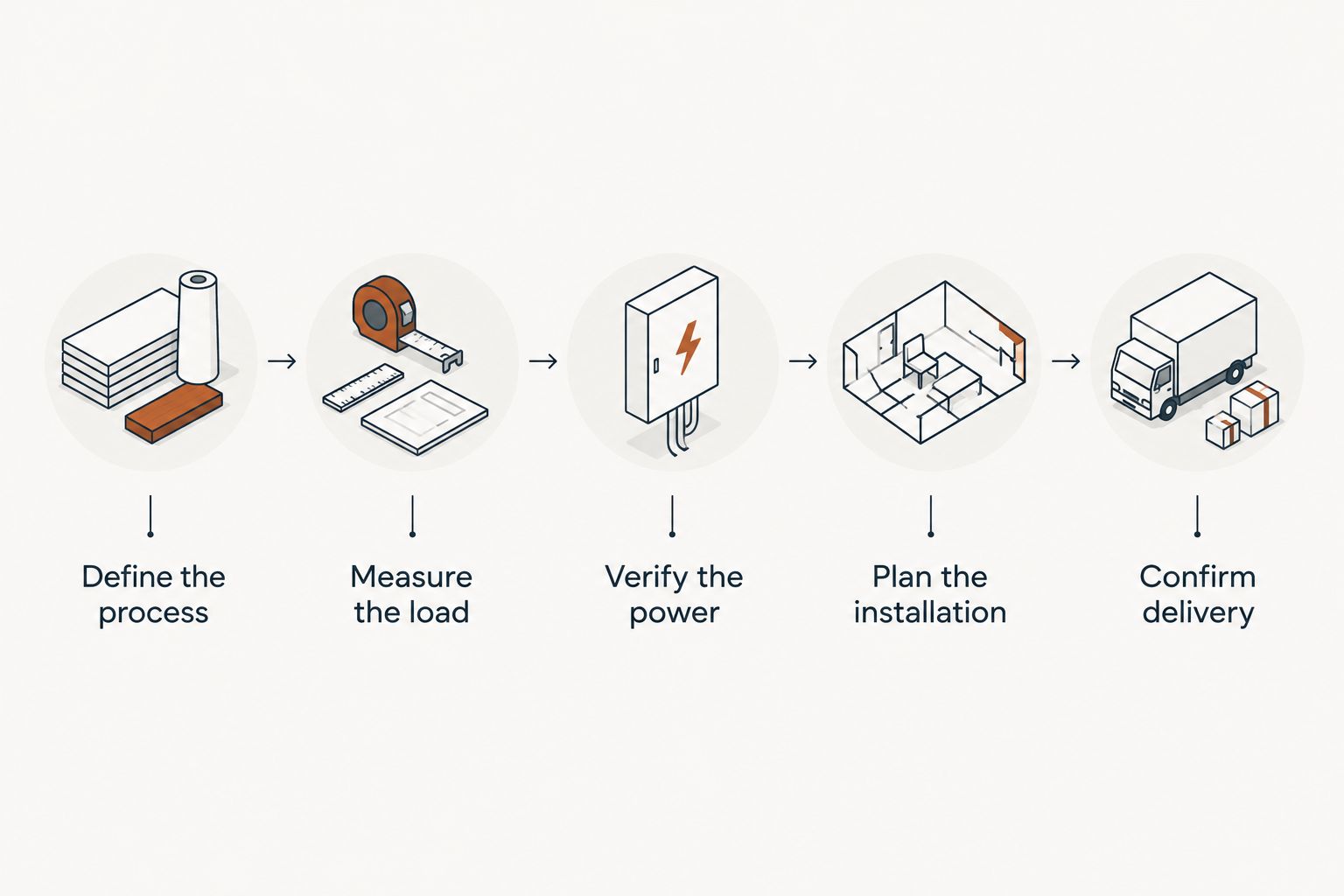
A kiln that fits your firing process still needs a suitable electrical supply. Give a licensed electrician the exact model specifications—not a photograph of an outlet or a guess based on another studio's equipment.
Have the electrician check supply voltage, phase, required circuit capacity, connection type, and the manufacturer's installation instructions. Do not select a breaker, receptacle, or conductor size from a kiln's exterior dimensions.
If the assessment identifies a service or panel limitation, compare electrical panel upgrade options as part of the building's electrical design; changing panel brands does not replace circuit sizing or load assessment. Resolve the installation scope before committing to a kiln configuration.
For your 2026 installation plan, keep the electrical approval with the model specification sheet. That prevents a later substitution from slipping through without another compatibility check.
For ceramics, measure the widest and tallest piece alongside its support arrangement. For glass, measure the shelf or mold footprint and the loaded height. For lampwork, account for how mandrels enter and remain supported during the process.
The Aim 44K's 4-inch interior width makes this distinction especially clear: a piece measuring exactly 4 inches across is not a sensible fit assumption. Manufacturer-required spacing and furniture still need room.
If your main goal is firing both clay and glass, use the dual-media kiln selection guide to frame the questions. Confirm each process individually rather than treating maximum temperature as the only requirement.
Follow the kiln manual for ventilation and clearances, and check applicable local requirements. A room with an open window is not proof that a firing installation meets those requirements.
Measure doors, turns, steps, and the final placement area. Keep the loading position practical: reaching into the kiln, opening a lid or door, and moving fragile work all require space beyond the kiln's footprint.
Ask ProKilnSupply to confirm delivery guidance and the terms that apply to your selected Aim kiln. Qualifying freight shipping is not a substitute for checking special shipping arrangements, unloading responsibilities, or the route into your studio.
Once those checks are complete, compare the exact model with your written requirements. Keep the specification sheet, installation plan, and delivery agreement together so the order reflects the kiln you actually need.
Choose Aim CS-16 if your primary application is glass fusing. It is the default fusing shortlist choice here, subject to shelf, schedule, and electrical confirmation.
Choose Aim 44K when your ceramic work is specifically miniature testing. Choose Aim 84BD when your workflow is lampwork bead annealing. Do not stretch either specialist model into a general-purpose recommendation.
For a 2026 order, send ProKilnSupply your application, largest loaded dimensions, required firing schedule, and electrical assessment. Those details support a model decision more effectively than asking which Aim kiln is simply “best.”
What's the best Aim kiln for glass fusing?
Aim CS-16 is the dedicated glass-fusing choice on this shortlist. Confirm usable shelf dimensions, loaded project height, firing capability, and electrical requirements before ordering.
Which Aim kiln is best for small ceramic tests?
Aim 44K is the miniature ceramic-testing choice, with a 4 × 4 × 4.5-inch interior. Allow room for kiln furniture and manufacturer-required spacing rather than sizing a piece to the chamber walls.
Which Aim kiln should I choose for lampwork beads?
Aim 84BD is the bead-door annealing choice on this shortlist. Confirm mandrel access, usable dimensions, and the annealing schedule required by your glass.
Can I use the same Aim kiln for pottery and glass?
Use the same Aim kiln for pottery and glass only after confirming that the exact model supports both processes. Temperature capability alone does not establish suitable loading, control, or firing conditions.
Will an Aim kiln run on my existing outlet?
An existing outlet is suitable only when the kiln's electrical requirements and the circuit assessment match. Have a licensed electrician verify voltage, phase, circuit capacity, and connection requirements.
Does a successful Aim 44K test guarantee the same production result?
A successful Aim 44K test does not guarantee an identical production result. Compare schedules, loading conditions, and firing verification before applying the test to a different kiln or load.
What should I confirm before ordering an Aim kiln in 2026?
Confirm application, usable chamber space, firing capability, electrical fit, installation requirements, and delivery arrangements. Ask ProKilnSupply to explain the manufacturer warranty and any qualifying freight, price-match, or financing terms that apply.
Make a full-size loading template before you order. Lay out the shelf or usable chamber footprint, then place your intended work and supports within it, allowing the manufacturer's required spacing. This simple check exposes a size mismatch before the kiln reaches your studio.
{"one"=>"Select 2 or 3 items to compare", "other"=>"{{ count }} of 3 items selected"}


