


Best overall: Evenheat Kingpin 88. Best for a larger 120V chamber: Evenheat RM II 1210. Best budget option: Evenheat Kingpin 88. This 2026 guide ranks four current choices by enamel application, chamber fit, electrical setup, controller, firing range, and room for future work; compare the broader category in this guide to kilns for enamel-on-metal artists.
Vitreous enamel is fused to metal through brief firings that commonly fall around 1,400°F to 1,600°F, depending on the enamel formula, metal, piece thickness, and finish. Always use the schedule published by the enamel manufacturer because color and surface quality depend on heatwork, not the controller setpoint alone.
That application changes the buying decision. Maximum cone rating matters less than usable chamber dimensions, access to the hot chamber, controller response, recovery between batches, and the electrical service already available in your studio.
A large cone 8 ceramic kiln can fire enamel, but that does not make it the best enamel kiln. It adds chamber volume and electrical requirements that a jewelry artist may never use. A compact metal-clay kiln can be the better fit when every piece is small and firing sessions involve repeated short cycles.
ProKilnSupply's Evenheat kiln selection covers compact 120V equipment and larger 240V ceramic models. The right 2026 purchase starts with your largest firing fixture, available voltage, enamel schedule, and plans for any second medium.
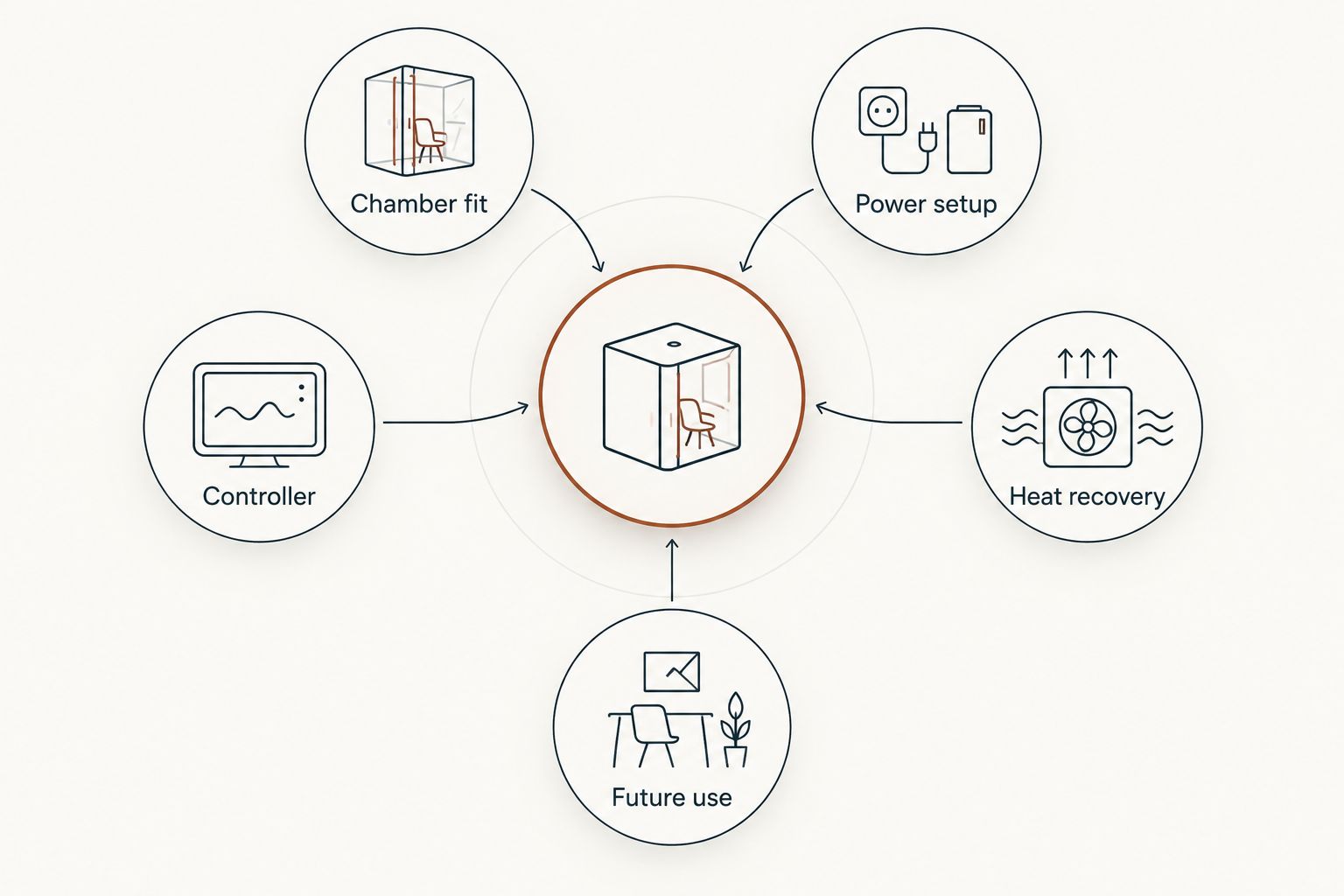
Use these criteria before comparing models:
The main rule is simple: buy for the loaded fixture and available circuit, not the highest temperature printed on the product page.
| Rank | Kiln | Best for | Standout feature | Key limitation |
|---|---|---|---|---|
| 1 | Evenheat Kingpin 88 | Dedicated jewelry-scale enamel and metal clay work | Compact 120V format | Less loading room than the RM II models |
| 2 | Evenheat RM II 810 | Compact mixed-media home studios | 120V operation with a cone 5.5 rating | Small chamber limits batch and fixture size |
| 3 | Evenheat RM II 1210 | Larger enamel loads without moving to 240V | 120V format with more chamber room than the 810 | Cone 07 limits later ceramic applications |
| 4 | Evenheat RM II 1413 | Enameling plus future ceramic firing | 240V, cone 8 capability, and digital control | Excess capacity for dedicated jewelry-scale enamel work |
The Evenheat Kingpin 88 is a compact 120V kiln designed for PMC, Art Clay Silver, bronze clay, and copper clay. Those small-format metal applications make it the strongest starting point for enamelists working on jewelry, findings, and other pieces that fit its chamber and approved firing fixtures.
Its main advantage is application fit. You are not buying the chamber volume or cone rating of a full ceramic kiln when your work consists of small metal pieces and repeated enamel schedules. Confirm the kiln's current temperature specification against every enamel system you intend to fire before ordering.
Evenheat Kingpin 88 pros:
Evenheat Kingpin 88 cons:
Best for: Home enamelists, jewelry makers, and metal-clay artists who need one compact kiln for small pieces.
Verdict: Buy when your loaded firing support fits and enamel is the primary application.
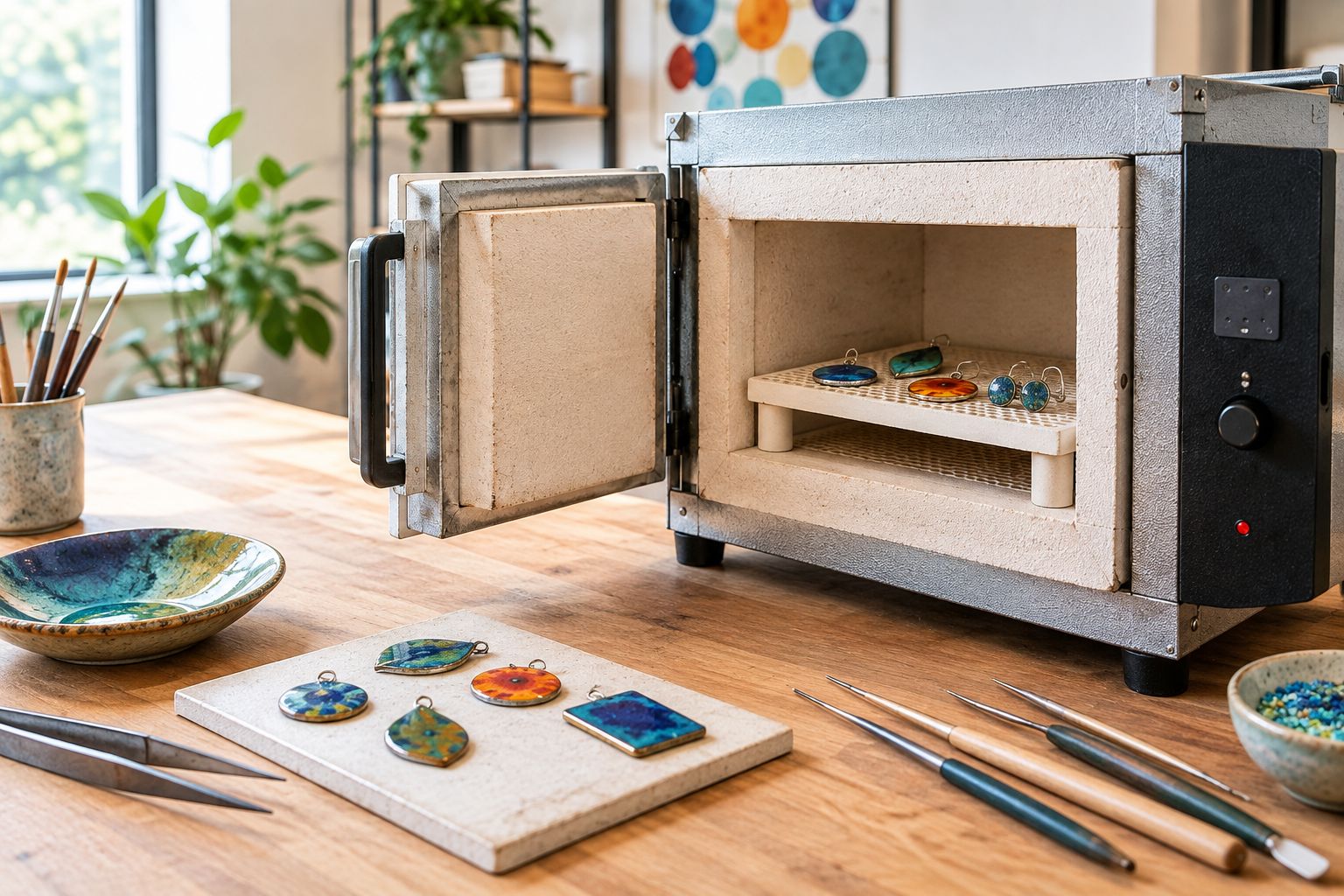
The Evenheat RM II 810 is a 120V ceramic kiln rated to cone 5.5 and positioned for home studios. It provides far more temperature capability than enamel alone requires, making sense when your plans include compatible ceramic work rather than enamel exclusively.
The RM II 810 remains compact compared with larger RM II choices, but its chamber still needs to accommodate the complete enamel support system. Check internal dimensions, lid clearance, receptacle type, amperage, and ventilation requirements on the current specification sheet.
Evenheat RM II 810 pros:
Evenheat RM II 810 cons:
Best for: Home artists combining small enamel work with compatible ceramic applications on 120V power.
Verdict: Buy for compact mixed-media use; Skip if the Kingpin 88 already fits every planned piece.
The Evenheat RM II 1210 is a 120V home-studio kiln rated to cone 07. Its larger format gives enamelists more loading flexibility than the RM II 810 while avoiding the move to a 240V model.
Cone 07 is already above the working range used by many vitreous enamels, but it provides less ceramic headroom than the RM II 810's cone 5.5 rating. Choose between these models by chamber fit and second application, not by assuming the physically larger kiln also has the higher cone rating.
Evenheat RM II 1210 pros:
Evenheat RM II 1210 cons:
Best for: Enamelists who need a larger 120V chamber for wider pieces, multiple small pieces, or bulkier firing fixtures.
Verdict: Buy when the Kingpin 88 and RM II 810 fail your chamber-fit check but 240V is not available.
The Evenheat RM II 1413 is a 240V ceramic kiln rated to cone 8 with a digital controller. That combination places it far beyond a dedicated enamel kiln's temperature needs, but it creates a clear path into ceramic firing without buying a second kiln immediately.
Its value depends entirely on future use. If you expect to fire compatible ceramic bodies and glazes, the extra range has a job. If every firing will remain below the enamel manufacturer's stated range, the Kingpin 88 or a 120V RM II model is the more focused choice.
Evenheat RM II 1413 pros:
Evenheat RM II 1413 cons:
Best for: Mixed-media studios that want one kiln for enamel now and ceramics later.
Verdict: Hold until the 240V installation and ceramic plan are confirmed; Skip for dedicated small enamel work.


The 2026 ranking prioritizes enamel application fit before maximum temperature. The order reflects chamber suitability for enamel supports, stated voltage, published cone capability, controller information, and usefulness outside enameling.
No model receives extra credit merely for reaching a higher cone. The RM II 1413 ranks fourth because its cone 8 capability and 240V requirement are unnecessary for most dedicated enamel work, not because it is less capable equipment. The Kingpin 88 ranks first because its compact metal-clay application is the closest match to jewelry-scale enamel work.
ProKilnSupply treats fit as the deciding step. Confirm the current manual, product specification, electrical requirements, and enamel schedule before committing to a model.
A kiln purchase is not complete when the chamber fits. Record the model's voltage, amperage, phase, plug configuration, ventilation instructions, required clearances, loaded weight, and stand requirements. Give that information to a licensed electrician when a new circuit or receptacle is involved.
Enamel products can release fumes during firing, particularly when binders, oils, adhesives, or contaminated metal are present. Follow the enamel manufacturer's safety data and the kiln manual's ventilation instructions. Keep combustible materials outside the required clearance and use firing tools designed for the working temperature.
ProKilnSupply provides expert phone and text support plus delivery guidance for kiln buyers. Qualifying orders receive freight shipping, and manufacturer warranty, price matching, and financing apply when eligible. Verify the current terms and product configuration during the fit check rather than assuming every option applies to every order.
Before ordering in 2026, have these details ready:
Choose the Evenheat Kingpin 88 by default for dedicated jewelry-scale enamel work. Choose the Evenheat RM II 810 when you need compact 120V equipment with broader ceramic range, or the Evenheat RM II 1210 when chamber room matters more than that added cone capability.
Select the Evenheat RM II 1413 only when a confirmed 240V installation and real ceramic workload justify it. Ask a ProKilnSupply kiln specialist to check the loaded fixture, controller needs, circuit, and delivery path before ordering in 2026.
What is the best Evenheat kiln for enameling in 2026?
The Evenheat Kingpin 88 is the best overall fit for compact jewelry-scale enameling in 2026. Choose an RM II model instead when you need a larger chamber or meaningful ceramic capability.
What temperature does enamel fire at?
Many vitreous enamels fire around 1,400°F to 1,600°F. Use the exact schedule supplied by the enamel manufacturer because metal type, enamel formula, thickness, and finish affect the required heatwork.
Can a 120V kiln fire enamel?
Yes, a compatible 120V kiln can fire enamel when its operating range covers the manufacturer's schedule. The circuit, receptacle, amperage, plug, ventilation, and chamber dimensions must also match the kiln and installation.
Is the Evenheat Kingpin 88 suitable for enamel jewelry?
The Evenheat Kingpin 88 is the strongest Evenheat fit in this comparison for small enamel jewelry because it is a compact 120V metal-clay kiln. Confirm that the loaded trivet and prescribed enamel schedule fit its current specifications.
Is the Evenheat RM II 810 better than the RM II 1210 for enameling?
The RM II 810 is better when compact size and cone 5.5 capability matter, while the RM II 1210 is better when you need more loading room on 120V. Both provide more ceramic capability than a dedicated enamel-only buyer needs.
Do I need a 240V kiln for enameling?
No, enameling does not automatically require a 240V kiln. Select 240V when the chosen kiln, chamber capacity, recovery needs, or secondary ceramic application justifies it and the installation can support it.
How much does an Evenheat enameling kiln cost?
Current cost depends on the model and selected configuration. Check the live product cards and confirm the final configuration with ProKilnSupply because kiln pricing can change.
Can one Evenheat kiln fire enamel, metal clay, and ceramics?
A kiln can support multiple media only when every material's firing schedule fits its published range and the chamber suits the required supports. The RM II 1413 offers the broadest stated ceramic range in this comparison, while the Kingpin 88 is focused on compact metal-clay work.
Cone rating is a poor tiebreaker for an enamel-only studio. In 2026, the better test is whether your largest loaded trivet fits, your circuit matches the kiln, and the controller can reproduce the enamel maker's schedule. If those checks point to the Kingpin 88, buying a cone 8 ceramic kiln adds capability without solving a real firing problem.
{"one"=>"Select 2 or 3 items to compare", "other"=>"{{ count }} of 3 items selected"}