


Slab rollers ranked by width in 2026 come down to a short list at ProKilnSupply: two Durston models, both built around the same 29.5-inch (750mm) roller, which means the real decision is frame type and floor space, not roller width itself.
Roll a slab too narrow for the piece you're building and you're taping two edges together mid-project. Buy a slab roller too wide for the room and you've paid for floor space you don't have. ProKilnSupply carries two slab roller widths in the Durston line, both at 750mm (29.5 inches), which means the width question is already answered — the decision left is fixed frame versus folding frame, and how much floor space your studio actually has in 2026.
Roller width sets the maximum single-pass slab size a shop can produce without piecing sections together. Get that number wrong and every platter, tray, or tile job runs into the same ceiling.
Six factors decide the ranking below, in order of how often they actually change a buying decision:
| Slab roller | Best for | Standout feature | Key limitation |
|---|---|---|---|
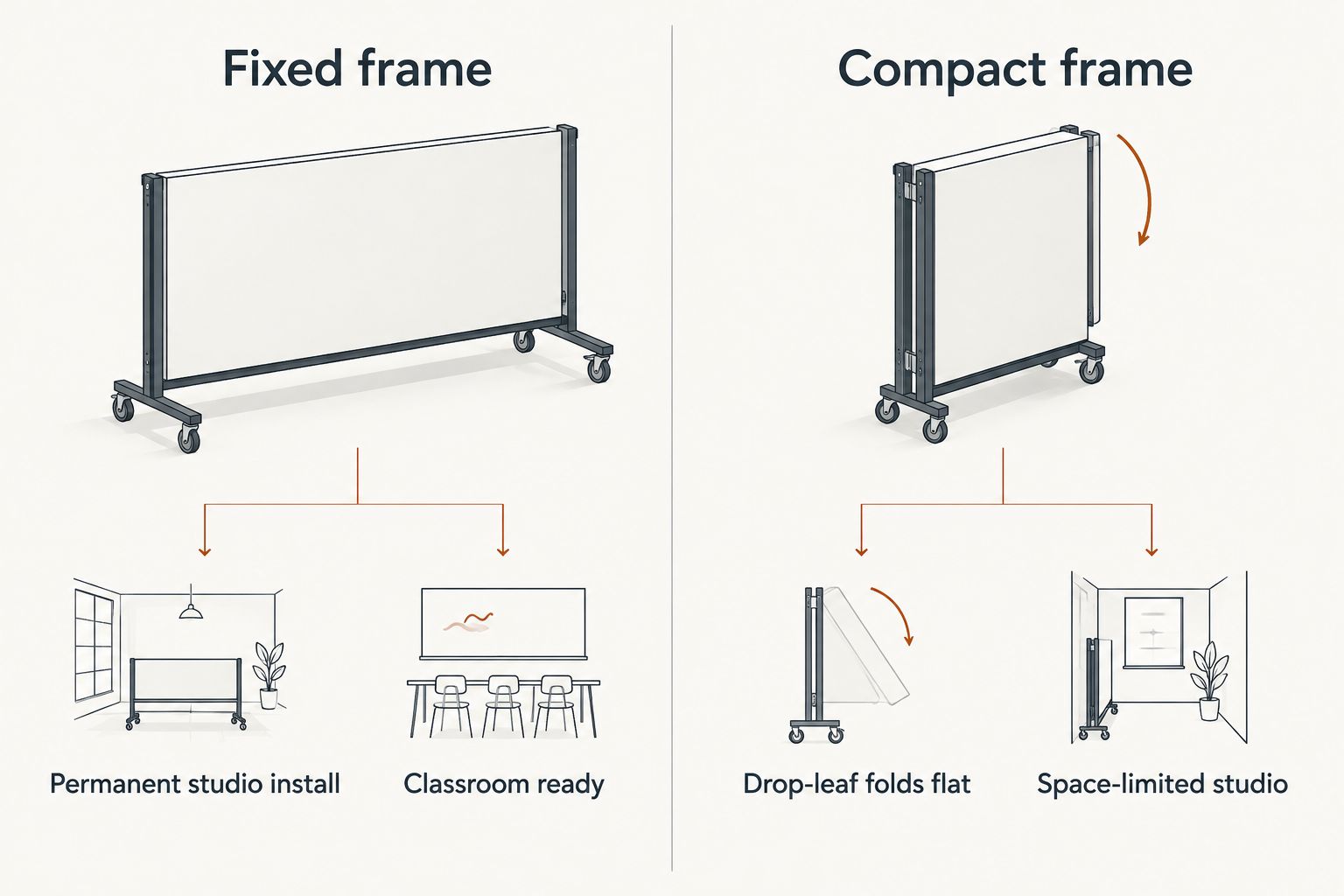
| Durston Fixed Slab Roller F750 | Permanent studio and classroom installs | Fixed frame holds a 29.5-inch (750mm) roller steady under daily use | Bolted footprint doesn't fold away when the room needs the space |
| Durston Compact Slab Roller C750 | Space-limited home studios | Drop-leaf frame folds down around the same 29.5-inch (750mm) roller | Folding hinge adds a setup step before each session |
Durston Fixed Slab Roller F750 runs a 29.5-inch (750mm) roller on a stationary steel frame that stays set up between sessions. It's built for studios and classrooms that roll slabs several times a week and don't need to reclaim the floor for anything else. Once the frame is leveled, it holds that calibration through repeat use, which matters most when different students or staff share the same machine back to back.
Durston Fixed Slab Roller F750 pros:
Durston Fixed Slab Roller F750 cons:
Best for: production studios and classrooms rolling slabs multiple times a week.
Verdict: Buy — if the studio has a permanent spot for it.
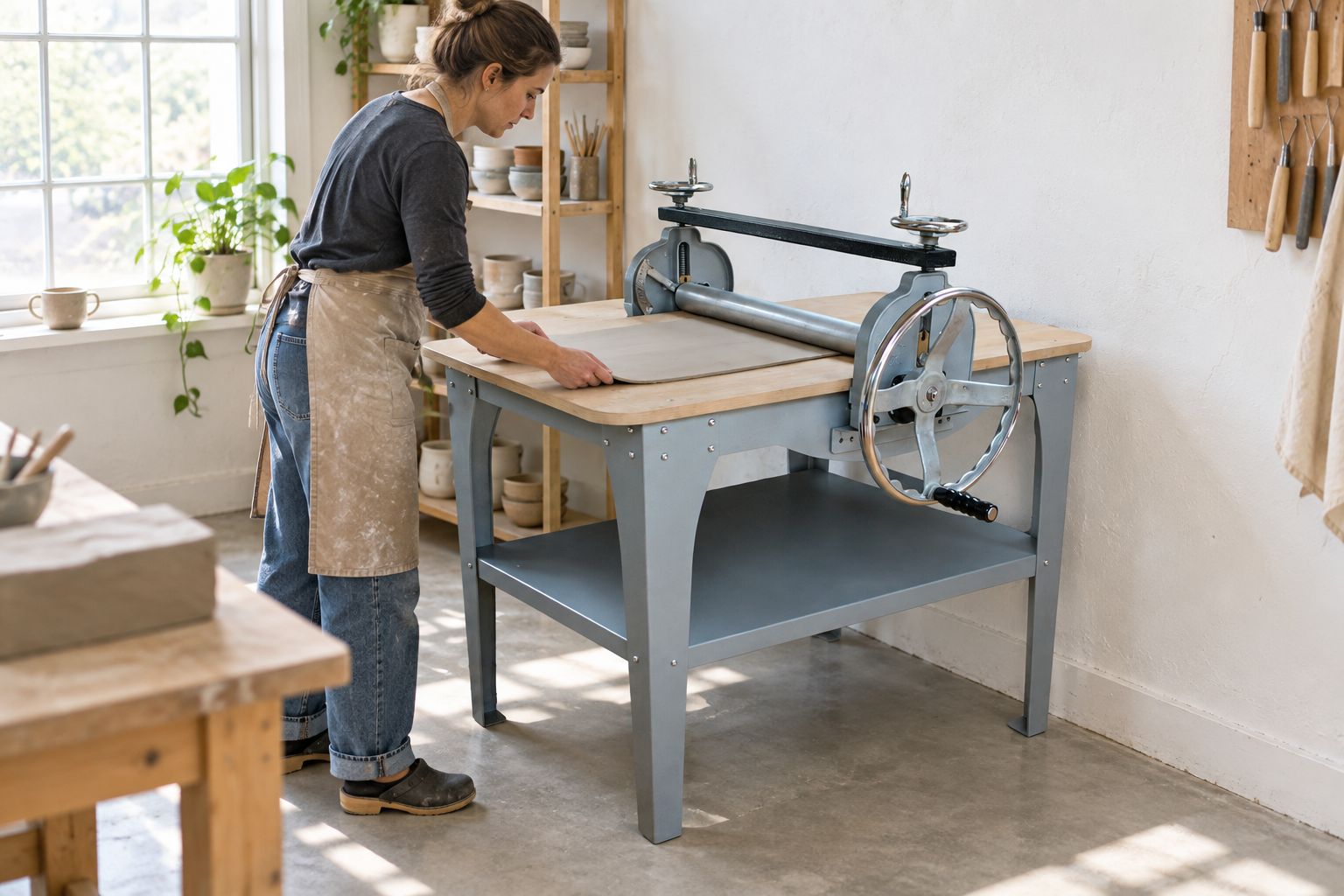
Durston Compact Slab Roller C750 pairs the same 29.5-inch (750mm) roller with a drop-leaf frame that folds down when the machine isn't in use. A home studio, garage bay, or shared classroom corner gets the roller width back without permanently losing floor space to it.
Durston Compact Slab Roller C750 pros:
Durston Compact Slab Roller C750 cons:
Best for: home studios and shared spaces that need the floor back between sessions.
Verdict: Buy — for studios that can't spare permanent floor space.


Both Durston models tie on the criterion most buyers assume separates slab rollers — roller width. Each runs the same 29.5-inch (750mm) roller, so frame type and footprint break the tie for most studios. A classroom running back-to-back sessions gets more consistent slabs out of a fixed frame that never moves; a home studio sharing a room with a kiln or a car gets more usable floor out of a frame that folds flat.
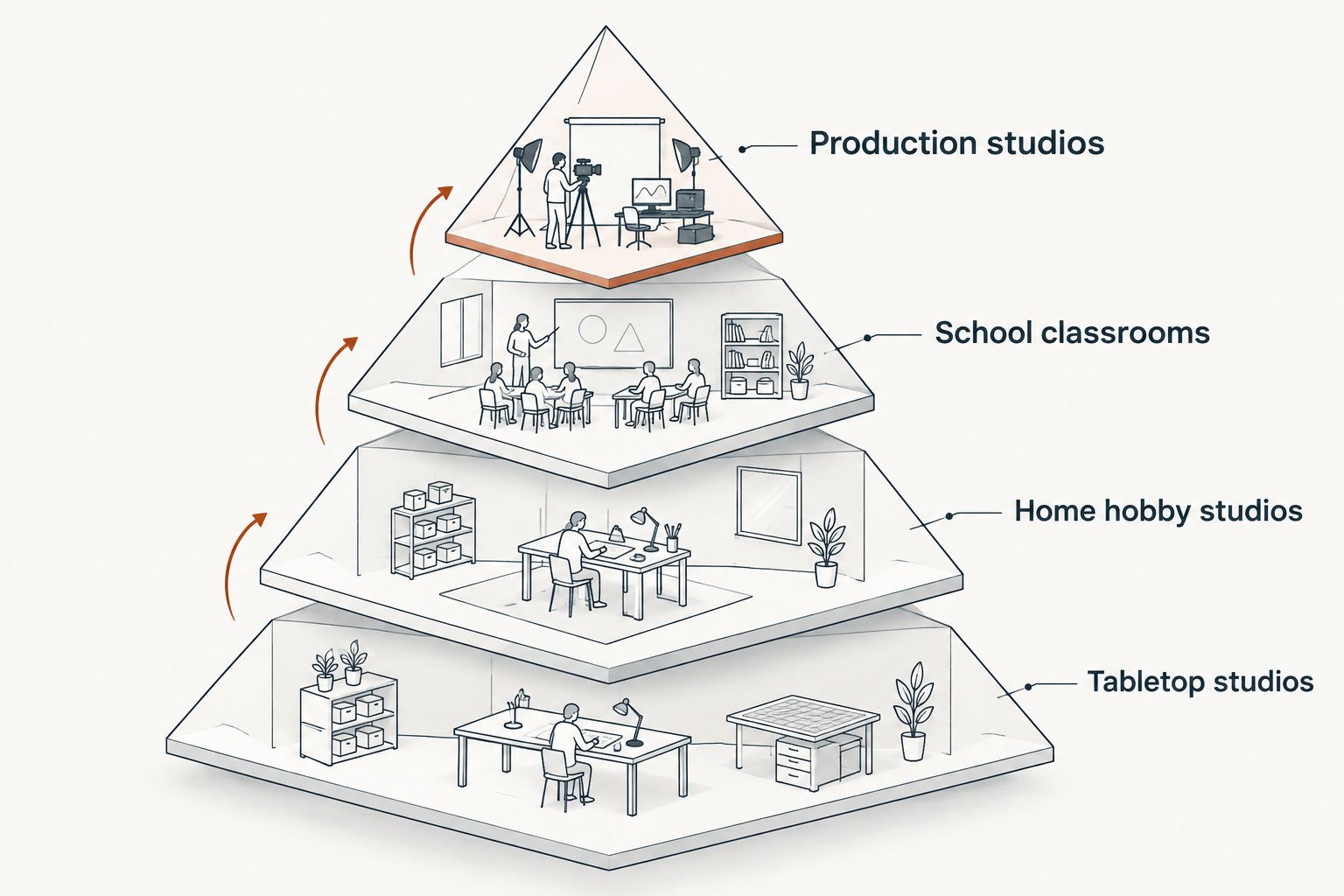
Slab roller widths across the market run in fairly fixed steps: around 16 inches for tabletop units built for jewelry-scale or small tile work, 24 to 30 inches for the mid-size class that covers most home and hobby studios, and 36 inches or wider for production lines turning out platters and architectural tile at volume. The 750mm (29.5-inch) class both Durston models use sits at the top of that mid-size bracket — wide enough for dinner plates, serving platters, and most classroom projects without stepping up to production-scale equipment.
For most home studios and shared classrooms, the Durston Compact Slab Roller C750 is the safer default in 2026 — it matches the fixed model's 29.5-inch (750mm) roller and gives the floor back when the room needs to double as storage or another class. Studios rolling slabs daily, with a dedicated wall to set a frame against, get more consistent leveling out of the Durston Fixed Slab Roller F750 instead. Either way, both models cover the same slab-size ceiling — the decision is really about the room, not the roller. Call or text ProKilnSupply's team for sizing help before ordering if the studio layout is still in flux.
What's the best slab roller width for a home studio in 2026?
A 24 to 30-inch roller covers most home studio work, and the 29.5-inch (750mm) Durston Compact Slab Roller C750 sits in that range with a frame that folds down between sessions. Go wider only if you're regularly rolling pieces bigger than that.
Is a fixed or compact slab roller better?
Neither wins outright. A fixed frame like the Durston Fixed Slab Roller F750 holds its calibration better under daily, back-to-back use, while a compact frame like the Durston Compact Slab Roller C750 folds away when the room needs the floor back.
Does roller width limit the size of slab I can make?
Roller width sets the maximum single-pass slab width; bed length sets how long that slab can run. A 29.5-inch (750mm) roller like the ones ProKilnSupply carries covers most platters, trays, and tile jobs in one pull.
What's the difference between the Durston F750 and C750 slab rollers?
Both run the identical 29.5-inch (750mm) roller. The difference is the frame: the F750 is fixed and stays set up, the C750 has a drop-leaf frame that folds down for storage.
How much floor space does a slab roller need?
Enough clear space in front of and behind the frame to feed a full slab through in one pass, plus room to fold a compact unit flat when it isn't rolling. Measure the wall run before ordering, not after delivery.
How wide do production pottery studios run their slab rollers?
Production studios commonly run 36 inches or wider to keep up with volume, well past the 29.5-inch (750mm) mid-size class most home and classroom studios use.
Do slab rollers need regular maintenance?
Wipe clay residue off the canvas and rollers after each session so buildup doesn't transfer grit into the next slab. Check the frame level periodically, especially on folding models that get moved often.
Can a slab roller replace hand-rolling entirely?
For anything beyond a one-off tile, yes. A slab roller gives consistent thickness pass to pass that hand-rolling can't match reliably, though a rolling pin still earns its place for small repairs and edge work.
Both Durston slab rollers at ProKilnSupply share the identical 29.5-inch (750mm) roller, so the width decision most buying guides spend paragraphs on is already made before you compare models. The fork that actually matters is frame type — fixed versus drop-leaf — and that's a floor-plan question, not a spec-sheet one. Measure the wall space before ordering in 2026, not after delivery.
{"one"=>"Select 2 or 3 items to compare", "other"=>"{{ count }} of 3 items selected"}