


Choose ProKilnSupply if your purchase starts with matching a pottery, glass, or heat-treating kiln to your application and electrical setup; choose Sheffield Pottery if your priority is sourcing a kiln alongside clay, glazes, and general pottery supplies. This 2026 comparison separates equipment fit from purchasing convenience so you can choose the right retailer without confusing either with the kiln manufacturer.
A kiln purchase has two separate decisions: which machine fits your work, and which retailer fits your purchasing process. Start with the machine. A familiar supplier does not make an unsuitable firing range, chamber shape, or electrical configuration acceptable.
For a home artist, the first constraint is often the installation. For a school or production studio, it is also loading access, repeatable operation, and who handles maintenance. Glass artists and heat-treating buyers need application-specific selection rather than a pottery-first assumption.
Choose the retailer after you define the firing job. You will ask better questions, compare equivalent configurations, and avoid treating a retailer's broad catalog as proof that every kiln suits every material.
| Dimension | ProKilnSupply | Sheffield Pottery |
|---|---|---|
| Best for | Buyers making a kiln-centered equipment purchase | Buyers organizing broader pottery purchases |
| Standout feature | Kiln-only specialization with expert phone/text support | Pottery supply breadth across equipment and materials |
| Ceramic studio purchasing | Focus on kilns, accessories, and studio equipment | Better fit when clay and glazes are central to the order |
| Glass and heat-treating selection | Explicitly serves both applications alongside pottery | Check the exact equipment against your non-pottery process |
| Electrical and firing fit | Application and setup guidance | The same manufacturer specifications remain decisive |
| Delivery and warranty | Delivery guidance and manufacturer warranty | Confirm the selected kiln's delivery and warranty terms |
| Pricing model | Individual equipment purchases; financing when eligible | Individual equipment and supply purchases |
| Main tradeoff | Equipment specialization is not a complete materials-buying solution | Supply breadth does not replace model-specific kiln checks |
The table compares purchasing approaches, not firing performance. If both retailers quote the same manufacturer model with the same configuration, the seller's name does not change its chamber dimensions, electrical requirements, or rated firing range.
ProKilnSupply is best for kiln buyers who need application, power, and delivery guidance. Its stated focus covers pottery, glass, and heat-treating equipment, with support for home artists, studios, schools, and commercial shops.
That focus suits a buyer whose main question is technical: which kiln belongs in this workspace for this process? Bring the material, firing requirements, largest workpiece, and site information to the conversation. Expert phone/text support is useful when those details need to be considered together.
The limitation is scope. An equipment-focused retailer is not automatically your best source for every consumable your pottery practice uses. You can buy a kiln from a specialist and keep a separate supplier for clay and glaze without compromising the equipment decision.
For your 2026 purchase, ask for the recommendation in writing. The explanation should connect the selected model to your actual work rather than simply name a popular kiln.
Sheffield Pottery is the better starting point when the kiln is one part of a larger pottery procurement task. Its pottery supply business includes materials and equipment, so clay and glaze purchasing can sit alongside the kiln decision.
Best for: a pottery teacher, studio manager, or working potter coordinating materials and equipment. That purchasing context matters when your immediate task includes replenishing supplies, choosing tools, and planning ceramic work rather than selecting only a firing machine.
The benefit is organizational convenience, not a promise that every item ships together or receives identical delivery treatment. Ask how equipment and materials orders are handled before assuming one checkout means one coordinated arrival.
The tradeoff is that catalog breadth answers a different question from kiln suitability. You still need a precise explanation of firing capability, controller configuration, and installation requirements. A general pottery order should not obscure the technical checks on its most consequential piece of equipment.
Choose Sheffield Pottery first when your kiln search begins with an established ceramic materials workflow. A studio already buying clay bodies and glazes has a practical reason to discuss its next kiln with a supplier serving those purchases.
Start by identifying the manufacturer's firing instructions for the clay and glaze combination. Then define the kiln requirements. Do not reverse that sequence by choosing a machine and hoping your materials fit its capabilities.
This is a workflow advantage, not proof of better firing results. The retailer does not eliminate the need to verify material compatibility, follow firing instructions, or evaluate the finished ware.
The equipment specialist remains a useful second conversation if your materials supplier's recommendation leaves installation or application questions unresolved. Separate the materials decision from the machine decision whenever the requirements pull in different directions.
A mixed-use workshop needs more than a generic pottery kiln recommendation. ProKilnSupply explicitly serves pottery, glass, and heat-treating buyers, making it a direct fit for an equipment search across those categories.
Best for: a glass artist, knife maker, or shared workshop defining a firing process before choosing equipment. Describe the operation precisely. Glass fusing, ceramic firing, and heat treating are not interchangeable tasks just because each uses a heated chamber.
Ask about the workpiece geometry, heating arrangement, controller functions, and the manufacturer's intended application. For metal work, bring the process requirements associated with the material. For glass, bring the dimensions and type of work you intend to fire.
The limitation is important: a retailer serving several applications does not make every kiln multi-purpose. Select an appropriate machine for each process, or obtain explicit manufacturer confirmation before treating one model as a shared solution.
Electrical compatibility is a model-level requirement, not a retailer advantage. Compare the exact voltage and configuration with your site, then have a qualified electrician evaluate the installation against the manufacturer's requirements and applicable rules.
For example, the Evenheat RM II 1210 is listed as a 120V ceramic kiln rated to cone 07. The Evenheat RM II 1822 is listed as a 240V ceramic kiln rated to cone 8. Those are materially different purchasing choices, not merely different sizes.
The supplied Olympic 3023HE specifications list 240V / 70A for that configuration. That 70A equipment figure is not permission to select a circuit yourself; the installation must follow the manufacturer's instructions and an electrician's assessment.
Before requesting a 2026 recommendation, prepare these details:
The retailer should connect those facts to the recommended configuration. Do not accept a model name alone as the answer.
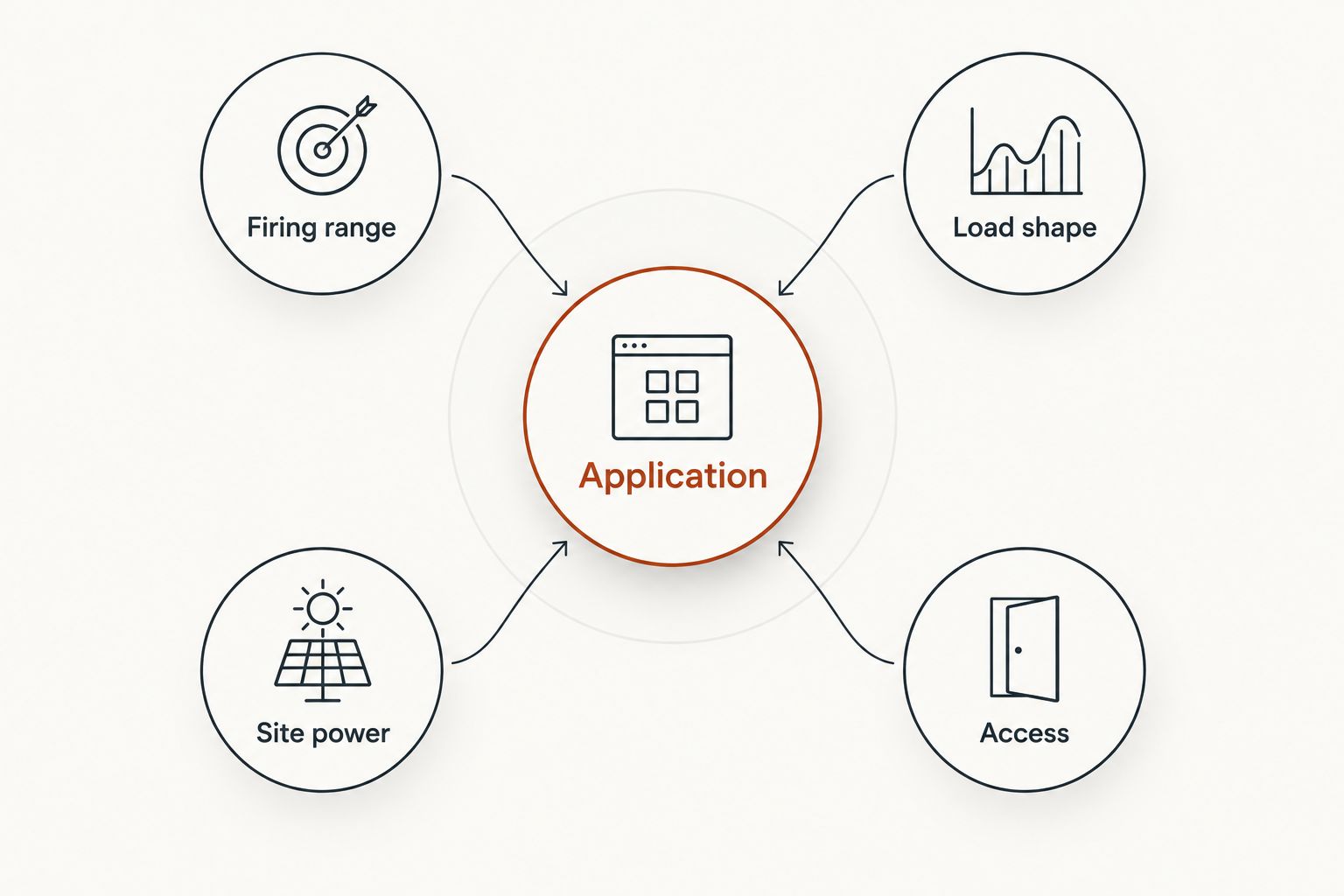
These examples show why application and power belong ahead of retailer preference. The specifications below come from the supplied product listings; they are not a substitute for checking the current manufacturer documentation.
| Kiln | Best for | Stated specification | Main constraint |
|---|---|---|---|
| Evenheat RM II 1210 | Buyers whose ceramic process fits its stated firing range | 120V; cone 07 | Do not treat it as a cone 8 alternative |
| Evenheat RM II 1822 | Ceramic buyers needing its stated higher firing range | 240V; cone 8 | Requires a compatible electrical installation |
| Olympic 3023HE | Buyers needing the listed wide oval chamber | 42 inches wide; 30 inches front-to-back; 24.5 inches deep | Confirm loaded shelf layout and site requirements |
A small kiln is not automatically the right home-studio kiln. A large kiln is not automatically the right production kiln. Your usable loading arrangement and required firing capability decide whether either earns a place on the shortlist.
Compare delivery and warranty at the order level. ProKilnSupply states that it provides delivery guidance and manufacturer warranty support; Sheffield Pottery buyers should obtain the corresponding terms for their selected kiln before deciding.
Do not confuse delivery to your address with placement in the firing room. Ask who unloads the shipment, what equipment or access the carrier requires, and who handles the final move. Confirm the process for inspecting the shipment and reporting damage.
For warranty, identify the manufacturer, applicable coverage, claim procedure, and responsibility for any service-related transport or labor. A retailer's purchase support and the manufacturer's warranty are separate parts of the ownership experience.
The winner is the seller that confirms the arrangements your site needs. No blanket delivery or warranty winner follows from either retailer's business model.
Both options involve buying physical equipment rather than subscribing to a service. ProKilnSupply also identifies financing when eligible. Eligibility, payment obligations, and the selected transaction terms need confirmation before you commit.
For a fair 2026 comparison, request the same manufacturer model, voltage, controller, and included accessories from each seller. Separate the kiln from shelves, posts, ventilation equipment, electrical work, and any delivery services you need.
An outright equipment purchase gives you a defined purchase obligation, but installation and ongoing ownership remain separate considerations. Financing changes payment timing; it does not change whether the kiln fits your application or workspace.
Do not declare a better deal until both purchase summaries describe the same equipment and responsibilities. A different controller or accessory package is a different offer, even when the base model name matches.
You are a home artist, glass worker, school buyer, or commercial shop selecting a kiln around an application and a specific installation. Your next move is to provide the firing requirements and site details, then ask for a model recommendation and written delivery arrangements.
This is the specialist-led choice. Keep materials purchasing separate if that produces a clearer equipment decision.
You are a ceramics instructor, studio manager, or potter coordinating clay, glaze, tools, and a kiln purchase. Your next move is to define the materials workflow, identify the required firing capability, and request a matching equipment configuration.
This is the broader pottery-purchasing choice. Keep the kiln's technical approval separate from the convenience of buying other supplies.
| Dimension | Winner |
|---|---|
| Kiln-centered purchase | ProKilnSupply |
| Broad pottery procurement | Sheffield Pottery |
| Clay-and-glaze-led workflow | Sheffield Pottery |
| Cross-application equipment search | ProKilnSupply |
| Electrical and firing compatibility | Tie: exact model decides |
| Delivery and warranty | Tie: confirmed terms decide |
| Purchase value | Compare equivalent configurations |
Is ProKilnSupply or Sheffield Pottery better for buying a kiln in 2026?
ProKilnSupply is the better fit for a kiln-centered equipment purchase; Sheffield Pottery is the better fit for broader pottery procurement. Choose the machine by application and installation requirements before choosing the seller.
Which retailer is better for buying clay and glazes with a kiln?
Sheffield Pottery is the better starting point for a purchase centered on pottery materials and equipment. Confirm how the kiln and supplies are delivered rather than assuming they share the same shipment arrangements.
Which retailer should a glass artist consider first?
ProKilnSupply is a direct starting point because its stated equipment focus includes glass kilns. Match the selected model to your glass process, work dimensions, and installation.
Can I use any small kiln on home electrical power?
No; small size does not establish electrical compatibility. Check the exact voltage and manufacturer installation requirements, then have a qualified electrician assess the site.
Are the Evenheat RM II 1210 and RM II 1822 interchangeable?
No; the supplied listings identify the RM II 1210 as 120V and cone 07, and the RM II 1822 as 240V and cone 8. Select by required firing capability and compatible site power, not size alone.
Does the retailer change a kiln's firing performance?
The retailer does not change the manufacturer's specifications for the same kiln configuration. Compare the exact model, electrical configuration, controller, and accessories before comparing seller terms.
What should I ask before placing a kiln order in 2026?
Ask for written confirmation of application fit, electrical configuration, included accessories, delivery responsibilities, and warranty procedures. Give the seller your site details and largest intended load so the recommendation addresses your actual installation.
Your largest piece fitting inside the chamber does not prove that your intended firing load fits. Shelves, posts, loading access, and the manufacturer's required operating clearances also affect the usable arrangement.
For a 2026 purchase, draw the proposed load and ask the seller to review it against the selected kiln. That practical check is more useful than choosing a retailer solely because its catalog looks familiar.
{"one"=>"Select 2 or 3 items to compare", "other"=>"{{ count }} of 3 items selected"}

