


Choose ProKilnSupply if you need help comparing kilns across manufacturers for pottery, glass, or heat treating; choose Skutt if you have settled on a Skutt kiln and need manufacturer-specific specifications, operating instructions, or replacement-part guidance. This 2026 comparison separates retailer support from manufacturer expertise so you can choose the right buying path before committing to a kiln or electrical work.
A kiln retailer helps you choose among products. A kiln manufacturer designs and documents its own equipment. Treating those roles as interchangeable leads to the wrong questions: a broad selection does not prove better firing performance, and manufacturer expertise does not compare every competing kiln for you.
ProKilnSupply is best for buyers comparing kiln manufacturers before choosing a model. Skutt is the better starting point when your question already includes a specific Skutt kiln, component, or operating procedure.
For a 2026 purchase, start with what you fire, how much you load, and where the kiln will operate. Then decide whether you need cross-brand selection help or detailed information about one manufacturer's equipment.
| Dimension | ProKilnSupply | Skutt |
|---|---|---|
| Best for | Buyers comparing multiple kiln manufacturers | Buyers committed to a Skutt kiln |
| Standout feature | Kiln-focused retail selection across manufacturers | Manufacturer knowledge of Skutt equipment |
| Existing equipment | Selection help when considering a different manufacturer | Starting point for an existing Skutt kiln |
| Application range | Pottery, glass, and heat-treating kiln shopping | Evaluating the relevant Skutt equipment for your process |
| Electrical setup | Match the selected manufacturer's specifications to your site | Match the selected Skutt model's specifications to your site |
| Firing performance | Determined by the kiln purchased, not the retailer | Determined by the specific kiln and firing application |
| Pricing model | Equipment purchase through a multibrand retailer | Equipment purchase through the selected sales channel |
| Delivery and support | Expert phone/text support and delivery guidance | Manufacturer-specific questions belong with Skutt; confirm delivery with the seller |
Best for: a first-time kiln buyer who knows the application but has not selected a manufacturer. The retailer sells pottery, glass, and heat-treating equipment from manufacturers including Olympic, Evenheat, Jen-Ken, and Aim. That makes it a useful starting point when the decision is still between different kiln designs and brands.
The practical advantage is choice. You can explain your intended work and compare alternatives without first committing to a manufacturer's product family. For example, a ceramics teacher and a knife maker need different equipment-selection conversations, even when both are shopping for an electrically heated chamber.
The limitation is equally important: a retailer's breadth is not a performance specification. Check the selected manufacturer's documentation for the actual kiln, controller, electrical configuration, and installation requirements. Do not transfer a feature from one listed kiln to another.
Best for: a school or studio replacing a Skutt kiln or specifying another Skutt unit. Skutt is a kiln manufacturer, so the brand is the relevant starting point when your requirements already name its equipment.
An existing studio has questions beyond chamber size. Ask whether the proposed model fits established operating procedures, staff training, shelf arrangements, and maintenance practices. Check each point rather than assuming that equipment bearing the same manufacturer name is interchangeable.
The advantage here is a narrower decision. You are checking a defined manufacturer's equipment against an existing workflow rather than reopening the entire market. The tradeoff is that a Skutt-only shortlist excludes alternatives before you compare their fit.
Choose Skutt for manufacturer-specific evaluation, not because familiarity alone proves that a particular model suits your next installation. A replacement still needs a fresh specification check.
Best for: an owner identifying a Skutt component, checking an operating instruction, or preparing a technical support question. Start with the manufacturer when the answer depends on how that kiln was built.
Record the model, serial number, electrical information, controller identification, and exact symptom before asking for assistance. A vague description such as “the kiln is firing slowly” does not identify whether the issue involves the firing program, load, power supply, heating components, or temperature measurement.
Manufacturer-specific information matters for replacement parts. Do not order an element, relay, thermocouple, or controller component from a visual resemblance alone. Match the documented requirements and follow the manufacturer's service instructions.
The limitation is scope: information about a Skutt kiln does not settle whether a different manufacturer's kiln would better serve a new application. Use manufacturer expertise for the equipment question and a broader comparison for the replacement decision.
Best for: a buyer deciding among pottery, glass, and heat-treating equipment. A kiln-only retailer spanning these categories provides a broader shopping starting point than a decision already restricted to Skutt.
Define the process before comparing chambers. Pottery firing involves the clay body, glaze, and intended heatwork. Glass work requires a schedule suited to the glass and project. Heat treating follows the requirements of the material and process being used.
A high maximum temperature does not make every kiln suitable for every task. Chamber geometry, loading access, heating arrangement, controls, and the manufacturer's intended use all belong in the comparison.
The retailer's limitation is that a broad catalog still requires a precise brief. “I need a kiln for several materials” is not enough. List each process separately and obtain confirmation that the proposed equipment supports it; do not assume a single chamber is the right answer for unrelated workflows.
Best for: every buyer preparing a home, school, or commercial installation. Electrical suitability belongs to the exact kiln configuration and the building supply, not the retailer or manufacturer name.
Nominal supplies such as 120 V, 208 V, and 240 V are not interchangeable specifications. Voltage alone also does not establish suitability: phase, current requirements, circuit protection, connection method, and the manufacturer's instructions matter. Have a qualified electrician evaluate the proposed installation before you order.
Use this sequence for your 2026 shortlist:
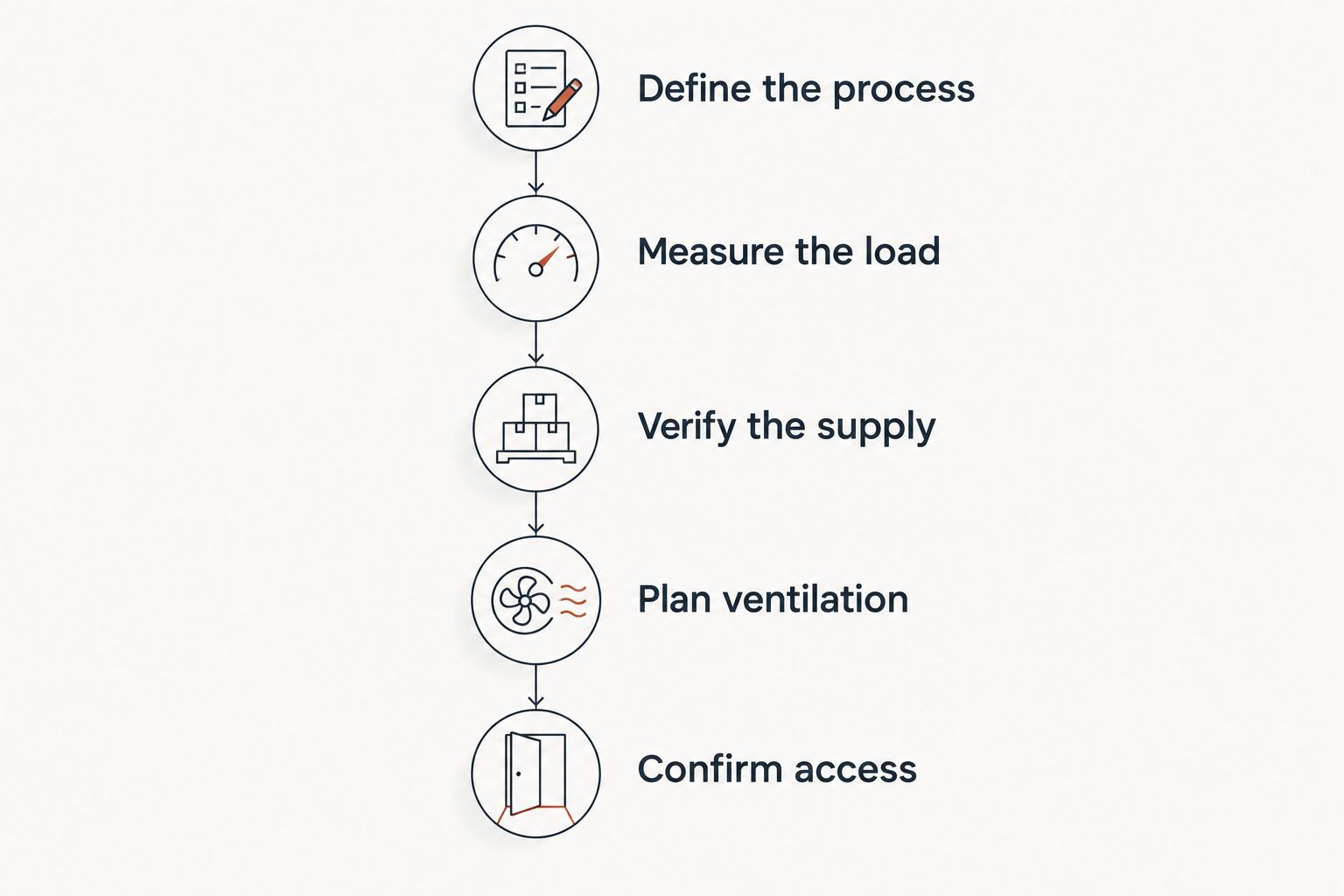
A plug that appears familiar is not proof of compatibility. Send the electrician the selected kiln's actual documentation rather than a photograph of a similar model.
Best for: buyers comparing finished-work requirements rather than brand reputation. Neither a retailer's service promise nor a manufacturer's name establishes how an unspecified kiln will handle your load.
Compare the usable chamber, supported firing requirements, controller functions, and loading arrangement. For ceramics, distinguish temperature measurement from heatwork: pyrometric cones respond to the combined effects of time and temperature. A controller reading alone does not describe every part of the firing result.
For glass, check that the equipment and schedule suit the project, including its thickness and cooling requirements. For heat treating, follow the material's process specification rather than adapting a pottery schedule.
The fair 2026 verdict is a tie at the company-name level. Choose the kiln whose documented capabilities match your process. A valid head-to-head performance comparison needs two identified models under comparable operating conditions; this retailer-versus-manufacturer comparison does not establish a firing-performance winner.
Both routes involve buying equipment, not choosing a subscription. ProKilnSupply provides a multibrand retail route; a Skutt purchase requires confirming the offer and terms with the selected seller. Ask for a written quote tied to the exact model and configuration.
Compare the same scope on both sides:
Neither route earns a pricing win from the company name alone. A quote excluding needed furniture or site work is not equivalent to one covering those items. Separate equipment charges from installation and delivery services so you know what remains your responsibility.
For a 2026 budget, verify qualifying freight terms, manufacturer warranty coverage, price-match requirements, and financing eligibility before ordering. Treat each as a specific term to confirm, not a substitute for checking kiln fit.
Best for: a buyer who wants kiln-selection help plus delivery guidance before placing an order. Expert phone/text support gives you a place to discuss the application and purchasing requirements across the retailer's offered manufacturers.
Prepare a useful brief: what you fire, the largest loaded piece, your expected batch, the installation location, and the site's verified electrical supply. Include questions about loading access and routine maintenance. These details make the conversation about fit rather than a recommendation based only on chamber size.
For a Skutt purchase, separate the manufacturer's technical role from the seller's transaction responsibilities. Ask the seller who handles freight questions, delivery issues, order changes, and warranty coordination. Do not assume manufacturer support means every delivery service is included.
The retailer's limitation remains clear: purchase guidance does not replace a licensed electrician, the installation manual, or manufacturer-specific service instructions. Get the selection help, then verify the installation and order terms in writing.
Winner for the cross-brand buyer: a home artist building a first studio, a school comparing manufacturers, or a shop selecting equipment for a new process. Use the retailer's kiln-focused selection and expert support to narrow the options, then check the chosen model's documentation.
The strongest reason to choose this route is not an unsupported claim of better firing. It is the ability to compare different manufacturers against the same application brief.
Winner for the brand-committed owner: a studio replacing a specified Skutt kiln or an operator seeking information about an existing Skutt unit. Start with the manufacturer-specific requirements, then confirm the purchase and delivery terms with the seller.
Do not restart a broad comparison when your immediate problem is identifying the correct part or instruction. Conversely, do not let an existing brand preference skip the fit check for a new kiln.
| Dimension | Winner |
|---|---|
| Comparing manufacturers | Multibrand retailer |
| Existing studio specification naming Skutt | Skutt |
| Existing Skutt technical questions | Skutt |
| Shopping across pottery, glass, and heat treating | Multibrand retailer |
| Electrical fit | Tie—exact model and site decide |
| Firing performance | Tie—documented capabilities decide |
| Pricing model | No winner—compare equivalent written quotes |
| Guided multibrand purchasing | Multibrand retailer |
Is ProKilnSupply better than Skutt for buying a kiln?
ProKilnSupply is the better starting point for comparing kiln manufacturers; Skutt is the better starting point for a Skutt-specific decision. One is a multibrand retailer, while the other manufactures kilns.
Does this comparison mean Skutt kilns fire better?
No company-level comparison establishes a firing-performance winner. Compare identified kiln models against your material, load, firing requirements, and installation.
Should I choose Skutt if my school already uses Skutt kilns?
Choose Skutt as your starting point when the school specifies Skutt equipment. Verify the proposed model's operating requirements and compatibility with existing procedures rather than assuming every model is interchangeable.
Can I choose a kiln before checking my electrical supply?
Verify the electrical supply before committing to a kiln configuration. Have a qualified electrician compare the exact model's voltage, phase, current requirements, and connection instructions with the site.
Who should answer questions about parts for my existing Skutt kiln?
Start with Skutt's manufacturer-specific information for an existing Skutt kiln. Identify the model, serial number, electrical configuration, and component before ordering a replacement.
How should I compare kiln quotes in 2026?
Compare written quotes for the same purchase scope, including the kiln configuration, furniture, ventilation equipment, freight arrangements, and installation responsibilities. Confirm warranty terms and identify who handles order and delivery questions.
Measure a representative loaded shelf, not just your largest pot. Shelves, posts, molds, and required clearances determine usable space; an empty chamber measurement does not describe your working load.
Before your 2026 purchase, write down that load alongside the verified site requirements. Those details make either buying route more useful—and give you a concrete basis for rejecting a kiln that does not fit.
{"one"=>"Select 2 or 3 items to compare", "other"=>"{{ count }} of 3 items selected"}