


For commercial studios comparing Soul Ceramics alternatives in 2026, ProKilnSupply is the best fit when you want kiln-specific selection guidance and phone/text support; a local authorized dealer is the better route when your purchase depends on confirmed on-site service. Start with your firing application, usable chamber space, and building power—not the retailer’s name.
Soul Ceramics offers the convenience of online kiln shopping. That is useful when you know which equipment you need, but browsing models does not settle electrical compatibility, loading access, ventilation, or receiving arrangements.
A commercial studio needs a purchase that works as an installed system. A kiln that fits the room but not your shelves, production batches, or electrical supply is still the wrong kiln.
For your 2026 shortlist, separate the equipment decision from the seller decision. Choose the firing requirements first, then compare who can explain the proposed configuration and document the purchase responsibilities.
These options represent different buying routes, not interchangeable service packages. Evaluate each against the same written equipment brief.
| Buying option | Best for | Main advantage | Main limitation | How to compare with Soul Ceramics |
|---|---|---|---|---|
| ProKilnSupply | Studios seeking kiln-specific buying guidance | Kiln-only focus, authorized brands, and expert phone/text support | Retail guidance does not replace site design or electrical installation | Compare the proposed kiln, setup guidance, delivery terms, and warranty process |
| Local authorized dealer | Studios requiring a local service relationship | Opportunity to arrange in-person assistance where the dealer provides it | Local presence alone does not establish installation or repair capability | Request a written description of on-site services before choosing |
| Manufacturer inquiry | Studios needing answers about a specific kiln configuration | A route for resolving manufacturer-specific technical questions | An inquiry does not establish a direct purchasing or installation arrangement | Confirm the manufacturer’s purchasing route and support responsibilities |
| Soul Ceramics | Studios whose existing proposal already meets the brief | Online kiln shopping | The listing alone does not resolve your building and workflow requirements | Keep it on the shortlist when the exact configuration and terms fit |
Compare commitments, not assumptions. A nearby business is not automatically a service contractor, and an online retailer is not automatically responsible for moving equipment into your kiln room.
ProKilnSupply is a kiln-only specialist serving home artists, studios, schools, and commercial shops. Its stated focus includes pottery, glass, and heat-treating equipment, with fit guidance and expert phone/text support.
That makes the retailer a practical starting point when you need help narrowing equipment choices. Bring the application and site requirements to the conversation rather than asking for the biggest kiln that fits your budget.
| Dimension | Specialist route | Soul Ceramics route |
|---|---|---|
| Selection | Ask for a kiln recommendation tied to your firing application | Check the proposed model against the same application |
| Power | Give support the electrician-confirmed supply details | Confirm those details against the exact proposed configuration |
| Delivery | Request receiving and placement responsibilities in writing | Request the same written responsibilities |
| Warranty | Confirm the manufacturer warranty and claim process | Confirm the warranty and claim process for the proposed purchase |
Best for: Commercial buyers who want kiln-focused guidance before committing to a configuration.
Verdict: Buy through this route when the written equipment recommendation matches your site and firing brief.
A local authorized dealer belongs on your shortlist when physical assistance is a deciding requirement. Ask specifically about site visits, installation coordination, commissioning, and repairs; these are separate services, not automatic benefits of proximity.
For a shared studio, identify who will support the equipment after delivery. Get that responsibility documented before treating a local relationship as an advantage.
Best for: Studios that require a documented local service arrangement rather than remote purchase guidance alone.
Verdict: Hold until the dealer confirms the exact on-site services and responsibilities you need.
Contacting the manufacturer is useful when a specific technical question determines the purchase. Examples include whether a controller configuration suits your firing schedule or whether the proposed electrical version matches your facility.
Treat this as a technical verification route first. Ask how purchasing, delivery, warranty claims, and replacement-part identification work for the model under consideration.
Best for: Studios with a narrow shortlist and an unresolved manufacturer-specific question.
Verdict: Hold the purchase until the technical answer and purchasing route are clear.
Use the same checklist with every seller in 2026. Otherwise, you risk comparing different equipment configurations under similar-looking model names.
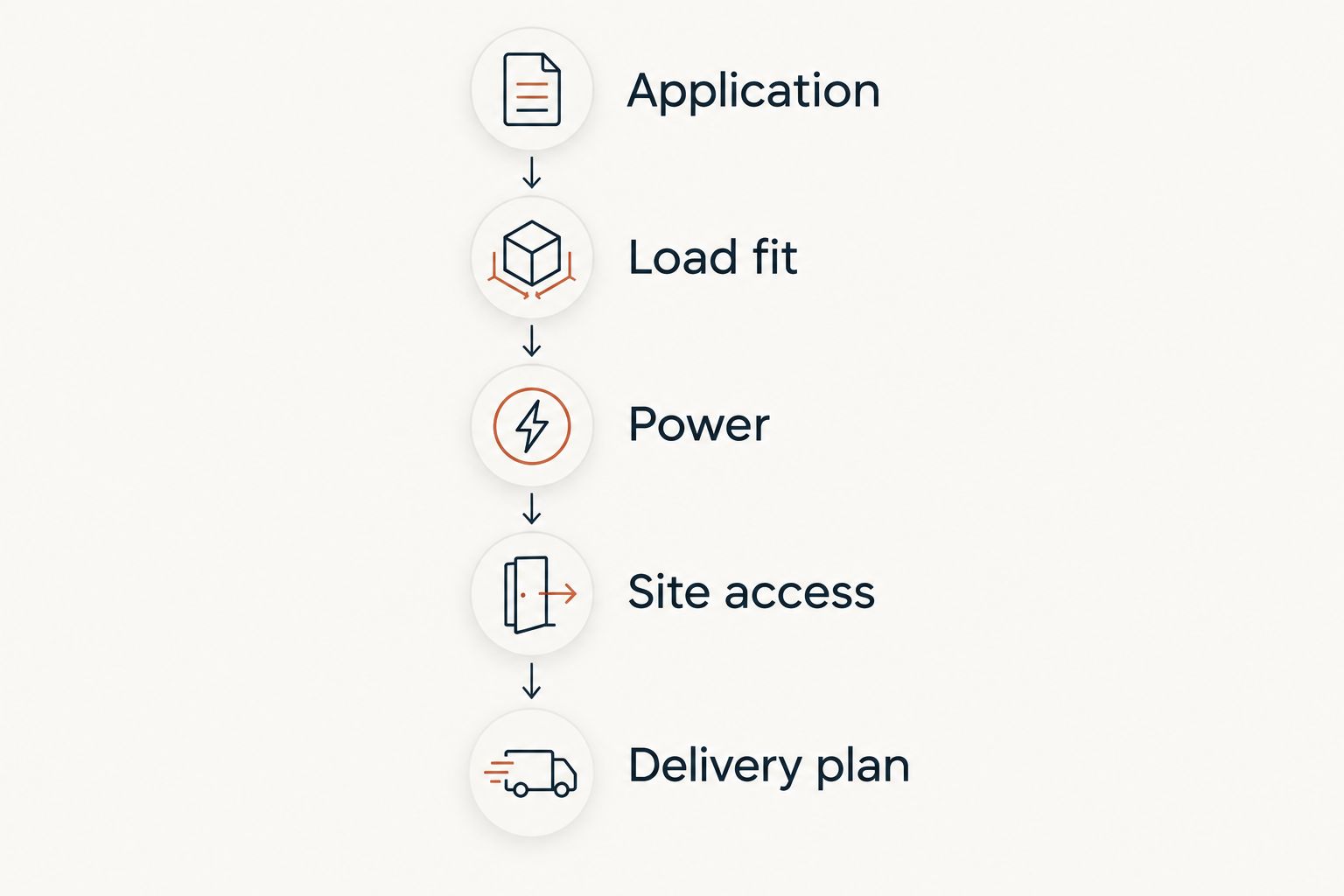
State the material, required firing range, atmosphere, and normal schedule. Pottery firing, glass fusing, and steel heat treating are different applications; a suitable temperature rating alone does not establish suitability for all three.
Include the tallest and widest work you intend to fire. Explain whether your normal load consists of repeated production pieces, mixed student work, or occasional oversized projects.
Ask for usable interior dimensions and the proposed shelf arrangement. Exterior dimensions and empty chamber space do not tell you how your actual work will load.
Sketch a representative batch with shelves, posts, and necessary spacing. For a production studio, that sketch is more useful than a general request for a “commercial-size” kiln.
Have an electrician identify the building supply before choosing the electrical configuration. 120 V, 208 V, and 240 V are distinct supply specifications—not interchangeable descriptions. Match the selected kiln to its manufacturer’s electrical requirements.
Voltage alone is insufficient. Confirm phase, required circuit capacity, connection method, and the exact model documentation; use the guide to 240 V single-phase kiln wiring to prepare questions, not as permission to perform electrical work yourself.
Measure the receiving route, doorway openings, turns, and final placement area. Check manufacturer-required clearances and the room’s ventilation arrangements before ordering.
Also assess how staff will load and unload the kiln. A chamber that accommodates your work is not a good fit if the normal loading position creates an avoidable handling problem.
Specify who receives the shipment, inspects it, moves it from the receiving point, and places it in the room. Ask what equipment or outside help that plan requires.
Then confirm the warranty process and who your staff should contact for equipment questions. Keep the order confirmation, installation manual, and receiving instructions together.
A sensible reason to compare sellers is a changed purchase requirement, not an unsupported claim that one retailer is universally better. Your studio might now need a different loading arrangement, a documented service relationship, or more help selecting a configuration.
Use these decision triggers for your 2026 review:
These are reasons to reopen the comparison. They are not evidence that Soul Ceramics lacks a particular service or that another seller provides it automatically.
Stay with Soul Ceramics when the proposed equipment meets your requirements and the purchase responsibilities are clear. Switching sellers does not correct a poorly defined equipment brief.
For a 2026 purchase, retain the option that provides an acceptable configuration, understandable documentation, and workable delivery arrangements. If those conditions are already met, another comparison should identify a concrete improvement—not simply a different storefront.
Before deciding, check that every proposal covers the same controller, electrical configuration, furniture, and accessories. Different bundles are not a meaningful head-to-head comparison until you account for those differences.
What is the best Soul Ceramics alternative for a commercial studio?
ProKilnSupply is the best fit for commercial studios seeking kiln-specific selection guidance and expert phone/text support. Choose a local authorized dealer instead when confirmed on-site service is the deciding requirement.
Should I buy a commercial kiln online or from a local dealer?
Buy online when you can settle equipment fit, installation, and receiving responsibilities before ordering. Choose a local dealer when the dealer confirms the specific in-person services your studio requires.
Is a kiln specialist better than a general equipment seller?
A kiln specialist is the better fit when your main need is kiln selection guidance. The deciding evidence is a recommendation that matches your firing application, usable load space, and site requirements.
Does a commercial studio need a 240 V kiln?
A commercial studio does not automatically need a 240 V kiln. The correct electrical configuration depends on the equipment requirements and the building supply confirmed by your electrician.
What should I ask before ordering a kiln for my studio?
Ask for the exact model configuration, usable chamber dimensions, electrical requirements, installation documentation, and delivery responsibilities. Also confirm the warranty process and who handles technical questions after purchase.
Can I use the same kiln for pottery and glass?
Use one kiln for pottery and glass only when the manufacturer confirms that the model and controller suit both applications. Temperature capability alone does not establish suitable heating arrangement, programming, or loading conditions.
When should I stay with Soul Ceramics rather than switch?
Stay with Soul Ceramics when its proposed kiln fits your application and facility, and its documented purchase terms meet your needs. Changing sellers is useful only when it resolves a specific requirement.
Before you request another recommendation, draw one normal production load on the proposed shelves. Include your largest piece and the space required by the loading instructions.
A load sketch turns “Will this kiln work?” into a question a seller can answer. Send it with your electrician-confirmed supply details and receiving constraints; that is a stronger starting point than a model name alone.
{"one"=>"Select 2 or 3 items to compare", "other"=>"{{ count }} of 3 items selected"}