


Best overall for a beginner’s small pottery loads: Olympic 1414HE Test Kiln. Best for a compact, round top-loading format: Olympic 129E. Best glass-fusing candidate: Paragon FiberFuse 16 Glass Fusing Kiln. This 2026 guide compares those applications and the power, loading, and installation checks that determine which kiln belongs in your studio.
A beginner kiln must fire your actual material and work safely in your actual room. A convenient footprint does not compensate for the wrong firing range, an unsuitable electrical supply, or a shelf that cannot hold your work.
ProKilnSupply is best for beginner kiln buyers who want specialist fit guidance before choosing equipment. Start with the guide to choosing a small electric kiln for your first studio, then compare the application-specific candidates below.
Do not buy around an imagined future business. Measure the work you make now, identify its firing requirements, and leave room for the projects you already plan to attempt.
Use these criteria before comparing model names:
A kiln passes only when all six criteria fit. A higher maximum temperature cannot fix an inaccessible loading position or an unsuitable room.
These 2026 picks occupy different use cases. The table compares their application and purchase checks rather than treating every kiln as a substitute for every other kiln.
| Kiln | Best for | Standout detail | Key limitation or check |
|---|---|---|---|
| Olympic 1414HE Test Kiln | Small pottery loads and glaze testing | Stated 14.5-inch-wide by 13.5-inch-deep interior; cone 10 rating | Requires the appropriate 240- or 208-volt configuration and matching installation |
| Olympic 129E | Buyers prioritizing a compact, round top-loading format | Identified in the matching furniture-kit description as a 12-inch round top-loading kiln | Verify firing rating, electrical requirements, and usable loaded space |
| Paragon FiberFuse 16 Glass Fusing Kiln | Beginners starting with glass fusing rather than pottery | Explicitly identified as a glass-fusing kiln | Confirm shelf area, mold clearance, electrical requirements, and supported processes |
The Olympic 1414HE Test Kiln is the clearest starting point here for a beginner making small ceramic work. Its listed interior measures 14.5 inches wide by 13.5 inches deep, and its stated maximum rating is cone 10 at 2350°F.
That gives you concrete dimensions and a firing rating to evaluate. It does not mean every clay body should be fired to that maximum; your clay and glaze instructions determine the appropriate firing target.
Olympic 1414HE pros:
Olympic 1414HE cons:
Best for: A home potter learning with small pieces and glaze tests, after confirming the installation and firing requirements.
Before choosing the Olympic 1414HE, lay out representative pieces inside a paper outline of the proposed shelf. Include handles and projecting decoration. Then check height with the shelf and supporting posts included.
Verdict: Buy for small pottery work once the electrical installation and loading plan are confirmed.
The Olympic 129E belongs on your shortlist when a round, top-loading kiln matches your workspace and loading preferences. The matching furniture-kit description identifies the Olympic 129E within the 12-inch round top-loading kiln group.
Treat that format as a starting point, not a complete specification. Confirm the model’s firing capability and electrical requirements against your material and building before making the selection.
Olympic 129E pros:
Olympic 129E cons:
Best for: A beginner prioritizing a compact, round loading arrangement over a broader chamber.
Check the complete loading motion, not just whether you can lift the lid. You must place fragile greenware and retrieve fired pieces without leaning against the kiln or striking the chamber walls.
Verdict: Hold until the Olympic 129E’s firing rating, circuit requirements, and loading reach match your studio.
The Paragon FiberFuse 16 Glass Fusing Kiln belongs in the glass branch of this comparison. Start here when your planned work is fused glass rather than ceramic mugs, bowls, or sculpture.
For glass, evaluate the shelf layout and the complete firing process. Heating, holding, annealing, and cooling requirements come from the glass and project specifications, not from the beginner label attached to a buying guide.
Paragon FiberFuse 16 pros:
Paragon FiberFuse 16 cons:
Best for: A first-time kiln buyer whose intended projects are glass-fusing work.
Do not choose this kiln solely because a project fits inside the chamber. Confirm the usable shelf, loading arrangement, controller functions, and electrical specification for the exact configuration you intend to order.
Verdict: Hold until the Paragon FiberFuse 16 is confirmed for your glass projects and installation; skip it as an unverified pottery substitute.
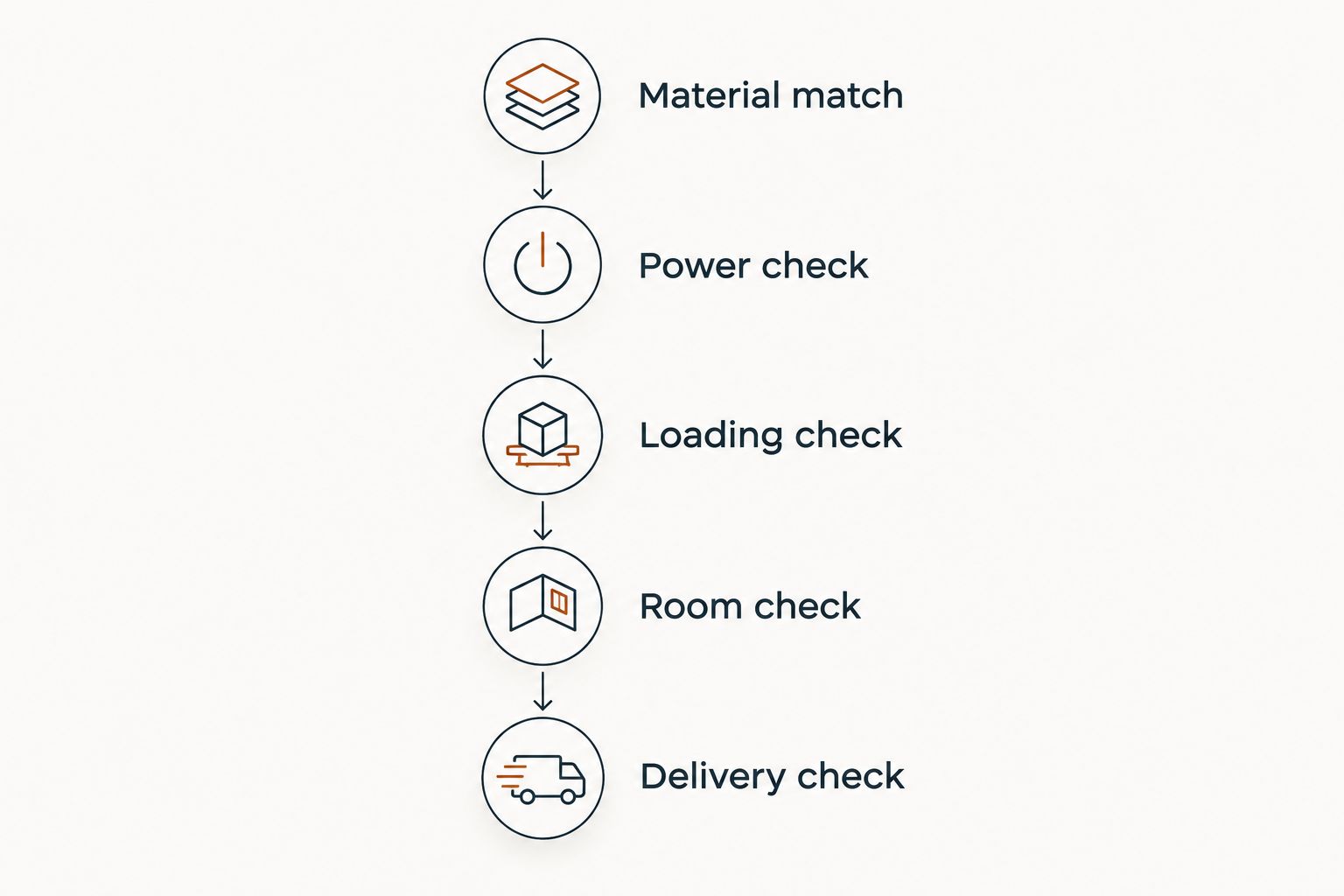
For a 2026 purchase, settle the application and installation before arranging delivery. Follow this sequence so an attractive model does not become an unsuitable purchase.
Write down the exact clay body and glaze combination, or the glass system and process you intend to use. Keep the manufacturers’ firing instructions together.
For pottery, cone 06 and cone 6 are different firing targets. Do not drop the leading zero when discussing materials or kiln capability.
Give a qualified electrician the exact kiln specification and installation instructions. Ask for confirmation of the building supply, circuit, connection, and any required electrical work.
The Olympic 1414HE lists 240- and 208-volt configurations. Choose the correct configuration deliberately; do not assume the building voltage from the appearance of an existing receptacle.
Measure your widest and tallest planned pieces. Add the shelf thickness, supporting posts, and the kiln manufacturer’s required spacing to your loading plan.
A mug’s handle counts. So does a glass mold’s full outside dimension, not just the dimensions of the finished piece.
Confirm the stand, floor, clearances, ventilation, and environmental requirements from the installation manual. Keep the operating space separate from combustible storage and routine foot traffic.
A kiln vent and room ventilation address different parts of the installation. Follow the manufacturer’s requirements rather than treating an open window as a complete ventilation plan.
Measure the route from the delivery location to the installation area, including doors, turns, and steps. Confirm how the kiln will be moved and positioned without damaging its structure or controls.
A beginner needs a controller whose instructions make sense before the first firing. Read how to select or enter a program, review the settings, stop a firing, and respond to an error.
A controller is not a substitute for a correct firing schedule or safe supervision. Check the material instructions against the program, and follow the kiln manufacturer’s operating and monitoring requirements.
For pottery, pyrometric witness cones help assess heatwork inside the kiln. Temperature on the display alone does not describe the combined effect of time and temperature on the ware.
Keep a firing record containing the material, program, loading arrangement, and result. Change one variable at a time when diagnosing a glaze or firing problem.
The 2026 ranking prioritizes application match, documented firing capability, chamber fit, electrical requirements, and practical loading. It does not assign unsupported performance scores or treat a product name as proof of easy operation.
The Olympic 1414HE takes the default pottery position because its stated dimensions and cone rating support a concrete fit assessment. The Olympic 129E occupies the compact round-format slot, while the Paragon FiberFuse 16 serves a separate glass-fusing application.
These are purchase shortlists, not interchangeable winners. Installation suitability remains a requirement for every selection.
Start with the Olympic 1414HE for small pottery work. Compare its chamber and stated firing capability with your pieces and materials, then confirm the electrical configuration and installation.
Choose the Olympic 129E shortlist instead when the compact round top-loading format is your main requirement. Start with the Paragon FiberFuse 16 when glass fusing is the actual application.
Before placing a 2026 order, ask ProKilnSupply for fit guidance using your material requirements, largest piece dimensions, building supply, and installation photos. Request the exact configuration and required accessories in writing so the kiln, furniture, and setup form one workable purchase.
What's the best kiln for beginners making pottery?
The Olympic 1414HE Test Kiln is the default small-pottery pick in this comparison. Its stated 14.5-inch-wide by 13.5-inch-deep interior and cone 10 rating provide concrete specifications to check against your work, materials, and installation.
Can I plug a beginner kiln into a regular household outlet?
Only a kiln explicitly specified for that supply and circuit belongs on that outlet. The Olympic 1414HE lists 240- and 208-volt configurations, so have a qualified electrician confirm the exact installation requirements.
Is a glass kiln better than a pottery kiln for beginners?
A glass kiln is the relevant starting point for glass work, while pottery requires a kiln rated for the intended clay and glaze firings. The Paragon FiberFuse 16 is a glass-fusing candidate; do not assume it suits pottery without explicit manufacturer confirmation.
How big should my first kiln be?
Your first kiln should accommodate your planned work on usable shelves with the required clearances. Check handles, molds, shelf thickness, posts, and loading reach rather than relying on chamber dimensions alone.
Do I need ventilation for a home pottery kiln?
Plan kiln ventilation and room ventilation according to the kiln manufacturer's installation instructions and applicable local requirements. Confirm the exhaust arrangement before ordering rather than assuming a garage or open window makes the location suitable.
Does a digital controller mean I can leave a kiln unattended?
A digital controller does not remove the need to follow the manufacturer's supervision and monitoring requirements. Learn the shutdown procedure and error responses before the first firing.
What should I ask before ordering my first kiln?
Ask for confirmation of material suitability, firing capability, usable shelf space, electrical requirements, ventilation, accessories, and delivery arrangements. ProKilnSupply can provide application-specific fit guidance; bring the exact material instructions and installation details to that conversation.
Make a shelf template before you make a kiln purchase. Arrange representative work inside the proposed usable shelf outline, with the required spacing, then check the available height.
That simple loading exercise exposes a mistake chamber dimensions alone cannot: a piece can fit inside a kiln yet leave an impractical shelf layout. Choose for usable loads, not empty interior space.
{"one"=>"Select 2 or 3 items to compare", "other"=>"{{ count }} of 3 items selected"}