


Best overall for home pottery: Olympic 1414HE, provided your studio supports its electrical and installation requirements. Best for small ceramic batches: Olympic 129E; best glass-specific shortlist option: Paragon FiberFuse 16; best for home bladesmiths using 120V power: Evenheat KH 414.
A kiln must fit your firing process before it fits your room. Pottery, glass fusing, and blade heat treatment need different loading arrangements and firing schedules; a high maximum temperature alone does not make kilns interchangeable.
ProKilnSupply is best for home kiln buyers who need application-specific fit guidance before ordering. Start with your material and electrical supply, then use the ProKilnSupply kiln selection to narrow the equipment—not the other way around.
For a 2026 home installation, settle the site requirements before committing to a model. A garage corner, basement workspace, or spare room is not suitable simply because the kiln fits through the doorway.
Use these criteria to eliminate unsuitable equipment before comparing features:
An unsuitable electrical supply is a stop condition, not a minor inconvenience. Have a qualified electrician review the kiln's documentation before treating an existing outlet as compatible.
This 2026 shortlist separates buying applications rather than treating every kiln as a substitute for every other kiln. Read the limitation column first if your space or electrical supply is constrained.
| Kiln | Best for | Standout feature or selection reason | Key limitation |
|---|---|---|---|
| Olympic 1414HE | Home pottery and glaze testing | Stated cone 10 capability; listed 240V or 208V configurations | Requires a compatible installation; chamber limits larger work |
| Olympic 129E | Small ceramic batches | Identified in Olympic's furniture range for 12-inch round top-loading kilns | Shelf and load size need careful planning |
| Paragon FiberFuse 16 | A glass-fusing-focused shortlist | Explicitly identified as a glass-fusing kiln | Confirm usable shelf area, power, and process suitability before selecting |
| Evenheat KH 414 | Home blade heat treatment | Listed 120V operation and 2200°F rating | Blade oven application; not a general pottery recommendation |
The Olympic 1414HE is the strongest default pottery recommendation in this shortlist because its supplied specifications establish both chamber size and firing capability. Its listed interior measures 14.5 inches wide by 13.5 inches deep, with a stated cone 10 rating of 2350°F/1260°C.
The product listing identifies 240V or 208V configurations and 3-inch brick construction. Match the ordered configuration to your site's electrical supply; those voltage options are not permission to connect either version interchangeably.
Olympic 1414HE pros:
Olympic 1414HE cons:
Best for: A home potter who wants a documented ceramic firing specification and whose work fits the chamber.
Before buying, make a full-size template of the proposed shelf and arrange representative pieces on it. Include supports and the clearances required by the kiln manufacturer; the chamber's widest measurement is not your usable loading area.
Verdict: Buy for compatible home pottery installations after confirming the electrical configuration and loaded fit.
The Olympic 129E belongs on a small-batch ceramic shortlist. Olympic's supplied furniture information places the model among its 12-inch round top-loading kilns and identifies a matching furniture kit.
That kit lists 10-inch round shelves for the 129E. This is a useful planning detail: your pottery needs to fit the supporting shelf arrangement, not merely pass through the kiln opening.
Olympic 129E pros:
Olympic 129E cons:
Best for: A home ceramicist making small pieces who can work within the confirmed shelf and chamber limits.
Do not choose the Olympic 129E solely because a smaller kiln sounds easier to install. In your 2026 buying checklist, electrical suitability, ventilation, and safe placement still come before convenience.
Verdict: Hold until the current specifications match your firing target and small-batch layout.
The Paragon FiberFuse 16 is explicitly identified as a glass-fusing kiln. That makes it a relevant starting point for a home glass artist rather than a pottery buyer seeking a universal kiln.
Choose around the glass work you intend to make. Flat fused pieces, work on slumping molds, and deeper projects create different demands on usable shelf area and vertical clearance.
Paragon FiberFuse 16 pros:
Paragon FiberFuse 16 cons:
Best for: A home glass artist building a glass-fusing shortlist and checking equipment against specific projects.
Send the dimensions of your largest mold along with the dimensions of the glass. A piece that fits flat on a shelf does not prove that the same project fits when raised on a mold.
Verdict: Hold until the shelf, mold clearance, power, and firing controls meet your glass workflow.
The Evenheat KH 414 is a blade heat-treatment oven, not a substitute for a pottery kiln. Its supplied product information identifies 120V operation and a 2200°F rating, making it relevant to home bladesmiths evaluating household-voltage equipment.
Voltage is only the first electrical check. Confirm the required circuit, connection, and operating instructions, then match the oven to the steel supplier's heat-treatment procedure.
Evenheat KH 414 pros:
Evenheat KH 414 cons:
Best for: A home bladesmith seeking a dedicated heat-treatment oven with a stated 120V supply.
Keep the hot-work handling route in your installation plan. You need suitable access around the oven as well as a compatible electrical connection.
Verdict: Buy only after the blade dimensions, steel procedure, circuit, and handling setup are confirmed.
For a 2026 purchase, keep the pottery and bladesmithing recommendations separate. ProKilnSupply lists the Olympic 1414HE for ceramic glaze work and the Evenheat KH 414 for blade heat treatment; select by process before comparing equipment details.


Complete these checks in order. A failed installation check eliminates a kiln even when the firing specification looks right.
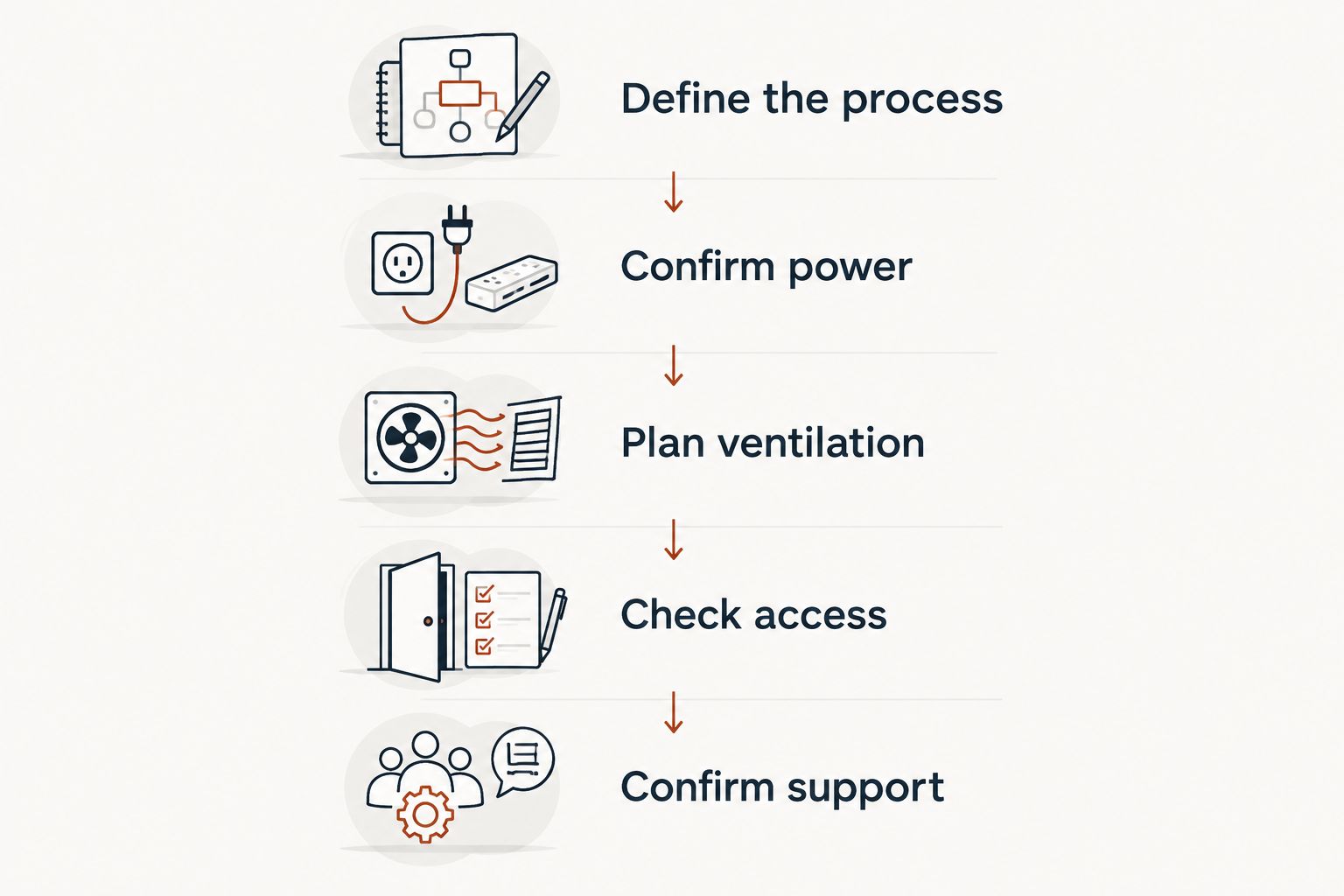
For a basement, include stairs and door openings in the access check. For a garage, account for combustible storage, vehicle access, and protection from unsuitable environmental conditions according to the equipment instructions.
Give ProKilnSupply your application, electrical information, and room measurements when requesting kiln fit guidance. Specific information produces a useful equipment discussion; a request for the biggest kiln that fits does not.
The ranking prioritizes application match, documented firing capability, electrical fit, and usable loading space. Installation and support checks remain purchase conditions, not optional extras.
The Olympic 1414HE takes the default pottery position because the supplied information includes chamber measurements and firing capability. The other entries occupy distinct application slots; the ranking is not a claim of side-by-side firing tests or measured performance superiority.
Choose the Olympic 1414HE as your starting point for home pottery when its chamber, firing rating, and electrical configuration suit your work. Choose the Olympic 129E shortlist route when small-piece loading is your defining requirement, then confirm its full specifications.
For glass, assess the Paragon FiberFuse 16 against your shelf and mold needs. For knives, assess the Evenheat KH 414 against your steel procedure and shop setup; do not buy a ceramic kiln merely because its maximum temperature sounds sufficient.
What's the best kiln for home use in 2026?
The Olympic 1414HE is the default home pottery pick in this guide when its chamber and electrical configuration suit your studio. Glass artists and bladesmiths should choose equipment matched to their own processes instead.
Can I plug a home kiln into a regular outlet?
Only use an outlet and circuit that meet the exact kiln's electrical requirements. The Evenheat KH 414 is listed for 120V operation, while the Olympic 1414HE lists 240V or 208V configurations; voltage alone does not establish circuit compatibility.
Is the Olympic 1414HE suitable for a small home pottery studio?
The Olympic 1414HE is a relevant option if your work fits its listed 14.5-inch-wide by 13.5-inch-deep chamber and your installation meets its requirements. Check usable shelf space and the ordered electrical configuration before buying.
Can I use the same kiln for pottery and glass?
Use one kiln for both processes only when the manufacturer confirms that the exact model supports both applications. Temperature capability alone does not confirm suitable heating, controls, loading arrangements, or accessories.
Do I need ventilation for a kiln in my garage?
Plan ventilation according to the kiln manufacturer's instructions, the firing materials, and applicable local requirements. An open garage door is not a substitute for assessing firing emissions, room heat, and the required exhaust arrangement.
How do I choose the right size home kiln?
Choose around the usable shelf layout, your largest piece, and your typical load. Include shelves, posts, molds, and manufacturer-required clearances rather than comparing only empty chamber dimensions.
Is a digital controller enough to leave a home kiln unattended?
A digital controller does not make unattended operation safe by itself. Follow the manufacturer's supervision instructions and establish a suitable monitoring and emergency plan for your installation.
Make a shelf template before you buy the kiln. The Olympic 129E furniture information lists 10-inch round shelves even though the model belongs to the 12-inch round kiln group—a practical reminder that chamber size and usable loading space are different measurements.
Place your actual work on that template. If your normal load does not fit, change the kiln selection before changing the electrical installation.
{"one"=>"Select 2 or 3 items to compare", "other"=>"{{ count }} of 3 items selected"}