


Best jewelry kiln for enameling: Paragon E10. Best for dedicated metal clay work: Evenheat Kingpin 88. Best for small fused-glass jewelry: Jen-Ken AF3P 11/4.5. For your 2026 purchase, choose the firing process first, then check chamber fit, electrical requirements, and safe loading access with ProKilnSupply.
Jewelry making covers different firing processes. Enamel on metal, sintered metal clay, fused-glass pendants, and lampworked beads do not share one universal firing schedule or loading method.
A kiln that reaches your target temperature still needs the right working space and controls. Your trivet, firing pan, shelf, or bead mandrels must fit without interfering with the door, heating elements, or temperature sensor. Buy for the complete load, not the jewelry piece alone.
Use these criteria before comparing model names:
The order below separates applications rather than pretending every kiln competes for the same job. Paragon E10 leads for enameling; the other recommendations address different materials or loading needs.
| Kiln | Best for | Standout feature | Key limitation |
|---|---|---|---|
| Paragon E10 Enameling & China Painting Kiln | Compact enamel-on-metal work | Dedicated enameling application | Compact chamber requires a support-fit check |
| Evenheat Kingpin 88 Metal Clay Kiln | Dedicated metal clay jewelry | Intended for silver, bronze, and copper clays | Each clay formulation still needs its own approved schedule |
| Paragon Q11 Dual-Media Multipurpose Kiln | Small mixed jewelry and glass projects | Multipurpose jewelry and glass application | Multiple materials require separate compatibility checks |
| Paragon E12T Enameling & China Painting Kiln | Taller enameling and burnout setups | Taller firing chamber | Height does not establish horizontal loading capacity |
| Jen-Ken AF3P 11/4.5 Glass Fusing Kiln | Small fused-glass pendants and cabochons | 120V operation; listed maximum of 2000°F | Compact format limits project size |
| Jen-Ken AF3P 11/9 Glass Kiln with 4-inch Bead Door | Lampworking with occasional fusing | Bead door and fusing application | Bead-door access does not replace a full loading opening |
The Paragon E10 Enameling & China Painting Kiln is the default choice when enamel on metal is your main application. Its stated purpose matches the process directly, rather than asking you to adapt a general pottery kiln to small enamel work.
Paragon E10 is the best jewelry kiln here for buyers focused on compact enameling work. Before ordering, check the chamber and opening against the complete trivet-and-work assembly. Include the space needed to approach the load with your firing fork.
Paragon E10 pros:
Paragon E10 cons:
Best for: Jewelry makers whose primary work is enamel on metal, with manageable support dimensions.
Verdict: Buy for compact enameling after confirming the loaded fit and installation requirements.
The Evenheat Kingpin 88 Metal Clay Kiln is purpose-built for metal clay work. Its product description names PMC, Art Clay Silver, bronze, and copper clays, and its listed electrical supply is 120V.
Choose the Evenheat Kingpin 88 when metal clay is the work you actually produce. Follow the instructions for the exact clay formulation, including any required container, firing medium, atmosphere, and hold schedule. A broad material category is not a firing recipe.
Evenheat Kingpin 88 pros:
Evenheat Kingpin 88 cons:
Best for: Jewelry makers concentrating on metal clay rather than enamel or larger glass projects.
Verdict: Buy for a dedicated metal clay workflow once your firing container and required schedule are confirmed.
The Paragon Q11 Dual-Media Multipurpose Kiln is described for jewelry making and glass work. Its role in this shortlist is a small multipurpose option, not the default replacement for a dedicated enameling kiln.
Start with the projects you already make. List each material and its required schedule, then confirm that the specific Paragon Q11 configuration supports those processes. Separate firing programs and suitable supports remain necessary when you change materials.
Paragon Q11 pros:
Paragon Q11 cons:
Best for: Makers dividing their time between small jewelry projects and glass work.
Verdict: Buy when your specific materials are confirmed; skip if you need an unverified process merely because the kiln is called multipurpose.
The Paragon E12T Enameling & China Painting Kiln has a taller firing chamber and is described for burnout and enameling work. It belongs on your shortlist when vertical space, rather than the jewelry’s footprint alone, drives the purchase.
Measure the complete supported load before choosing the Paragon E12T. For burnout, confirm the investment manufacturer’s schedule, the kiln manufacturer’s process approval, and the required exhaust arrangement. Extra chamber height does not resolve fumes or installation requirements.
Paragon E12T pros:
Paragon E12T cons:
Best for: Buyers whose approved enameling or burnout assembly needs more vertical room.
Verdict: Buy when loaded height is the deciding requirement, not simply because a taller kiln sounds more versatile.
The Jen-Ken AF3P 11/4.5 Glass Fusing Kiln is intended for small fusing and slumping projects. It uses 120V power and has a listed maximum temperature of 2000°F.
Choose the Jen-Ken AF3P 11/4.5 for a small fused-glass jewelry workflow. Use the glass manufacturer’s guidance for compatibility and firing schedules; the kiln’s maximum temperature is a capability limit, not the temperature you should automatically program.
Jen-Ken AF3P 11/4.5 pros:
Jen-Ken AF3P 11/4.5 cons:
Best for: Makers producing small fused-glass pendants, cabochons, and similar components.
Verdict: Buy for small glass jewelry; skip as an assumed all-material jewelry kiln.
The Jen-Ken AF3P 11/9 Glass Kiln with 4-inch Bead Door is built for lampworkers who also want fusing capability. Its description lists an 11-inch-wide, 9-inch-tall chamber, and the product title specifies 120V operation.
The bead door is the reason to consider the Jen-Ken AF3P 11/9 over a fusing-only choice. Check your mandrel arrangement, supported bead placement, and the manufacturer’s loading instructions before deciding that the opening fits your workflow.
Jen-Ken AF3P 11/9 pros:
Jen-Ken AF3P 11/9 cons:
Best for: Lampworkers who need bead access and also make fused-glass pieces.
Verdict: Buy when bead loading is central to your work; skip if you only need ordinary fusing access.
These recommendations compare stated applications, supplied specifications, loading needs, and installation checks. They are not a timed firing test or a measured temperature-uniformity comparison.
The ranking favors a direct process match. Paragon E10 leads for enameling, Evenheat Kingpin 88 serves metal clay, and the glass recommendations separate fusing from lampworking. No model earns a universal recommendation across every jewelry material.
Work through this sequence before choosing accessories or arranging delivery. A confirmed firing process comes before a confirmed purchase.
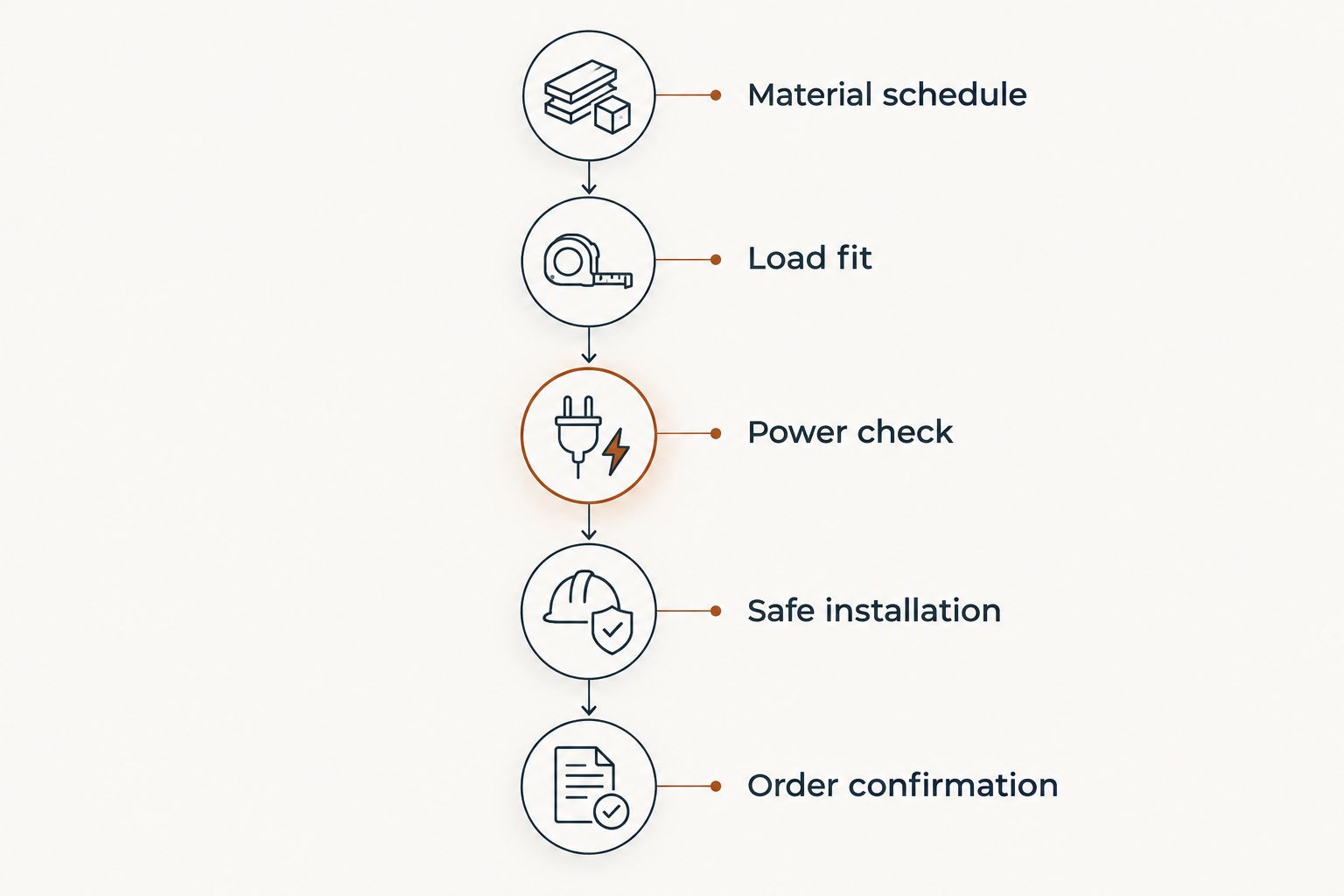
ProKilnSupply provides kiln-fit guidance and expert phone/text support. Send the material instructions and load measurements when asking about a jewelry kiln; those details make the recommendation specific to your work.
Once the application is settled, compare the matching models below. Treat the selection as a process decision, not an invitation to choose a different material workflow solely because another kiln looks appealing.
Choose Paragon E10 if enameling is your main job and the supported load fits. Choose Evenheat Kingpin 88 for dedicated metal clay, or Jen-Ken AF3P 11/4.5 for small fused-glass jewelry. Those are different recommendations because they solve different firing needs.
For your 2026 order, ask ProKilnSupply to confirm application, controller configuration, power, and delivery before purchase. Then check the manufacturer warranty and any qualifying freight, price-match, or financing terms against the actual order.
What’s the best jewelry kiln for enameling?
Paragon E10 is the default recommendation here for compact enameling work. Confirm that the chamber and opening fit your jewelry, trivet, and handling tools before ordering.
Is Evenheat Kingpin 88 better than Paragon E10 for metal clay?
Evenheat Kingpin 88 is the more directly matched choice for dedicated metal clay work because that is its stated purpose. Paragon E10 is the enamel-first recommendation; follow the exact clay formulation’s firing instructions regardless of kiln choice.
Can one jewelry kiln fire enamel, metal clay, and glass?
One kiln can serve multiple processes only when the manufacturer approves those applications and the controls support each required schedule. Multipurpose labeling does not establish compatibility with every material, container, or firing atmosphere.
Can I use a jewelry kiln on a standard 120V outlet?
A 120V kiln still requires a circuit and connection that meet its installation instructions. Have a qualified electrician confirm amperage, circuit capacity, grounding, and connection requirements before use.
Which jewelry kiln should I choose for fused-glass pendants?
Jen-Ken AF3P 11/4.5 is the small-project glass-fusing recommendation in this guide. Check the usable shelf area against your pendant layout and follow the glass manufacturer’s firing and compatibility guidance.
Do I need a bead door for jewelry making?
A bead door is relevant when your lampworking workflow requires bead and mandrel access during annealing. It is not a general requirement for enamel-on-metal work, metal clay, or ordinary fused-glass pendant loading.
How big should my jewelry kiln be?
Your jewelry kiln must fit the complete supported load, not just the finished jewelry dimensions. Measure shelves, trivets, firing containers, mandrels, and required clearances, then check the chamber and opening against that assembly.
Can I use an enameling kiln for jewelry casting burnout?
Use an enameling kiln for burnout only when that specific model is approved for the process. Paragon E12T includes burnout in its stated application, but investment instructions, exhaust requirements, and installation approval still govern the setup.
Make a full-size paper template of your planned shelf layout before ordering. Mark the footprint of every support and container, not just each pendant or ring, and compare it with the manufacturer’s usable-space requirements.
That simple check exposes a common buying mismatch: jewelry can be small while its firing assembly is not. Choose the kiln that fits the loaded process you repeat, not the smallest object you make.
{"one"=>"Select 2 or 3 items to compare", "other"=>"{{ count }} of 3 items selected"}


