


For silver clay, choose a metal clay kiln that can follow your clay manufacturer’s complete firing schedule, not simply reach its peak temperature. Best shortlist for enamel crossover: Paragon E12T; best for mixed-media work: Paragon Caldera XL; best for an existing ceramic studio: Olympic 1414HE; best for lampworkers adding jewelry processes: Jen-Ken AF3P 11/9—confirm metal-clay compatibility before ordering any of them.
Silver clay is not pottery clay. Metal clay contains metal particles and a binder; firing removes the binder and sinters the metal. Different formulations require different schedules, supports, and firing environments, so a kiln suitable for one material is not automatically suitable for another.
For your 2026 purchase, start with the clay’s instructions and send them to Prokilnsupply alongside your power supply and intended batch size. Ask for a kiln-and-controller match, not a recommendation based only on chamber dimensions.
Prokilnsupply is best for metal clay kiln buyers who want specialist fit guidance before choosing equipment. That guidance matters most when your studio combines silver clay with enamel, glass, or ceramics.
These criteria determine whether a kiln belongs on your shortlist. Apply them before comparing brand names.
Keep a copy of the exact specification and controller configuration with your 2026 order. Model families and optional configurations require careful checking; a familiar product name is not a substitute for the order details.
This table compares application fit, not verified metal-clay performance. Each candidate needs confirmation against your material’s instructions before purchase.
| Kiln | Best for | Stated feature | Key limitation or purchase check |
|---|---|---|---|
| Paragon E12T Enameling & China Painting Kiln | Artists combining jewelry work with enameling | Compact electric kiln with a taller firing chamber | Confirm metal-clay schedule support and supplied controller |
| Paragon Caldera XL Dual-Media Multipurpose Kiln | Mixed-media artists and teaching studios | Expanded vertical capacity and modular design | Verify each intended material separately |
| Olympic 1414HE Test Kiln | Ceramic studios adding small metal-clay work | 240V or 208V configuration; cone 10 capability | Requires a matching supply; high temperature alone does not establish suitability |
| Jen-Ken AF3P 11/9 Glass Kiln with 4-inch Bead Door | Lampworkers adding another jewelry process | 120V kiln for glass fusing and annealing | Confirm metal-clay compatibility rather than assuming glass suitability transfers |
The default buying decision is narrower than this table: choose the smallest suitable chamber that accommodates your actual loading arrangement and supports the required schedule. Do not buy extra chamber capacity without a specific use for it.
The Paragon E12T Enameling & China Painting Kiln is a compact electric kiln with a taller firing chamber, intended for burnout and enameling work. It belongs on the shortlist when enameling is already part of your jewelry practice and metal clay would become an additional process.
Start with the application you perform most often. Then ask whether the exact E12T configuration supports your silver clay schedule, including the required firing environment and supports.
Paragon E12T pros:
Paragon E12T cons:
Best for: An enamel artist seeking one kiln for compatible jewelry processes, after configuration confirmation.
Verdict: Hold until the exact clay schedule and controller are confirmed. Shortlist the Paragon E12T for its stated application, not as a universal silver-clay recommendation.
The Paragon Caldera XL Dual-Media Multipurpose Kiln offers expanded vertical capacity and a modular design. Its stated audience includes artists, educators, and studios, making it a relevant candidate when your equipment must serve more than one material.
For a 2026 mixed-media purchase, list each process separately. Require confirmation for metal clay, glass, or ceramics individually rather than accepting a broad multipurpose label as approval for all three.
Paragon Caldera XL pros:
Paragon Caldera XL cons:
Best for: A mixed-media artist or educator who can define each intended process before selecting the configuration.
Verdict: Hold until every intended material has a confirmed firing method. Choose the Paragon Caldera XL for a defined mixed-media workload, not for unspecified future possibilities.
Use these product references after deciding whether enamel crossover or mixed-media work matches your studio. Neither replaces confirmation of metal-clay suitability.


The Olympic 1414HE Test Kiln has an interior measuring 14.5 inches wide by 13.5 inches deep. Its stated specifications include 240V or 208V configurations and firing capability to cone 10, listed as 2350°F.
That makes the Olympic 1414HE relevant when ceramic testing is already a real requirement. For metal clay alone, do not treat its higher maximum temperature as a reason to choose it over a better-fitting jewelry kiln.
Olympic 1414HE pros:
Olympic 1414HE cons:
Best for: A ceramic studio that also wants to assess compatible metal-clay firing.
Verdict: Hold for ceramic crossover; skip as a default silver-clay-only choice. Select the Olympic 1414HE only when its ceramic application and installation requirements fit your studio.
The Jen-Ken AF3P 11/9 Glass Kiln with 4-inch Bead Door is a 120V glass fusing and annealing kiln. Its description specifies an interior 11 inches wide and 9 inches tall, with a 4-inch flip door.
The distinct reason to consider the Jen-Ken AF3P 11/9 is lampworking alongside other jewelry processes. The bead door serves that glass workflow; it is not evidence of metal-clay compatibility.
Jen-Ken AF3P 11/9 pros:
Jen-Ken AF3P 11/9 cons:
Best for: A lampworker who wants to investigate compatible metal-clay firing without abandoning the primary glass application.
Verdict: Hold until metal-clay use is confirmed. Skip the Jen-Ken AF3P 11/9 if the bead-door application offers no value to your work.
Follow this sequence for your 2026 shortlist. Resolve the material requirements first, then the controller, loading arrangement, and installation.
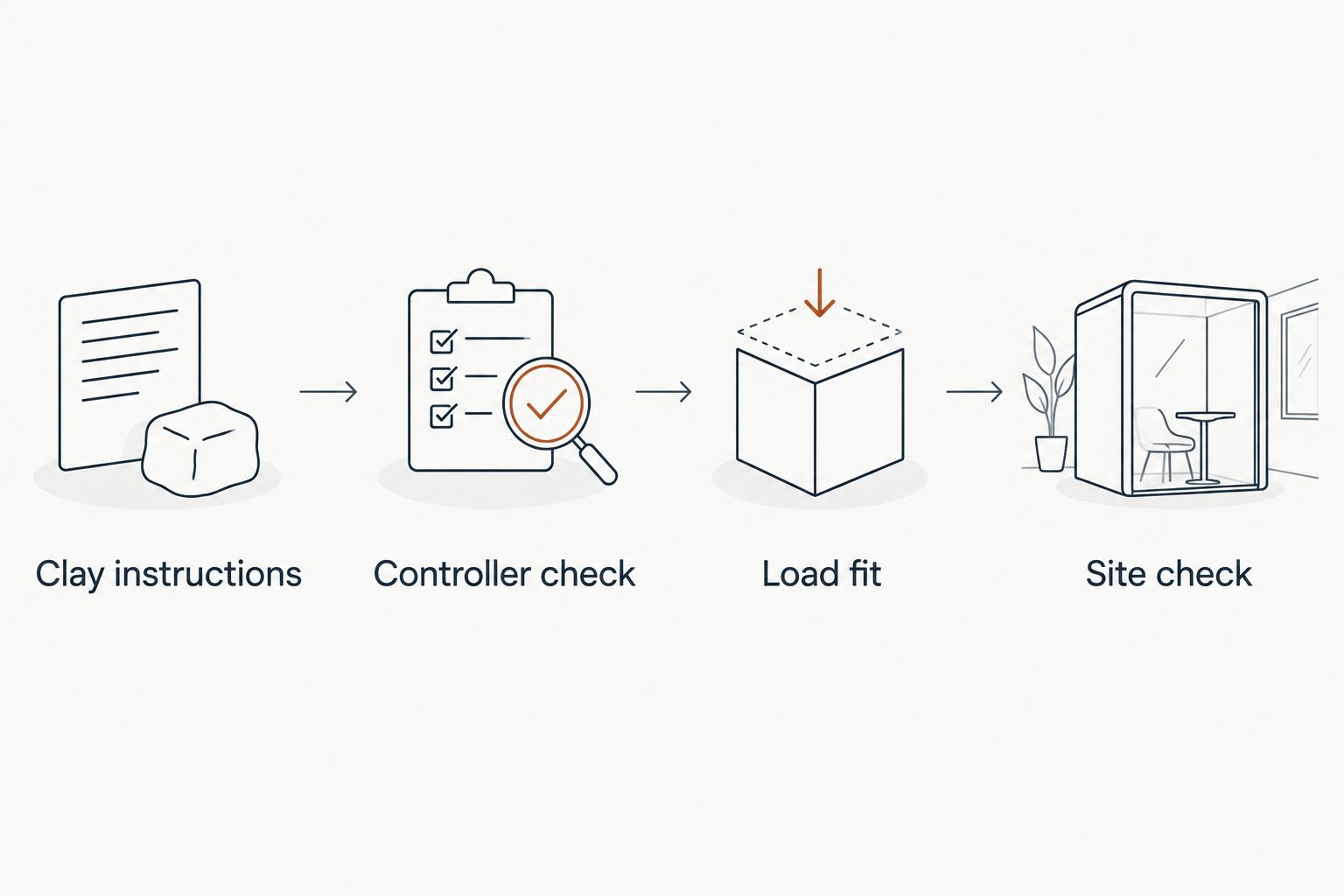
If your clay requires activated carbon, check the complete container arrangement rather than measuring the jewelry alone. If your formulation fires on an open shelf, use the support material its manufacturer specifies. Do not substitute glass shelf paper simply because the kiln also fires glass.
Ask Prokilnsupply to match the configuration to those requirements before discussing delivery. Then confirm applicable manufacturer warranty terms, freight qualification, and delivery arrangements for the actual order.
The order follows application overlap: enameling, mixed-media work, ceramic testing, then lampworking. The criteria are firing-method compatibility, controller capability, usable chamber space, electrical fit, loading access, and installation requirements.
This is an application-based shortlist, not a claim of comparative firing tests or universal metal-clay approval. A candidate that fails your clay’s firing requirements leaves the shortlist, regardless of its position.
For silver-clay-only work, the default is a compact programmable kiln with confirmed support for your exact material and loading method. Start there rather than buying a larger ceramic or glass kiln for capabilities you will not use.
Among these candidates, investigate the Paragon E12T first when enameling is central, or the Paragon Caldera XL when mixed-media work is central. Choose the Olympic 1414HE for a genuine ceramic-testing requirement; consider the Jen-Ken AF3P 11/9 for an existing lampworking workflow.
Before placing a 2026 order, send Prokilnsupply your clay instructions, intended load, and electrical details. Buy only after the exact kiln configuration passes all four checks.
What’s the best metal clay kiln for a beginner?
The best beginner metal clay kiln is a programmable model confirmed to support the exact clay’s firing instructions. Choose usable loading space and an appropriate electrical setup before considering extra capacity or additional media.
Can I fire silver clay in a pottery kiln?
A pottery kiln is suitable only when its configuration supports the silver clay manufacturer’s complete firing method. Maximum temperature alone does not confirm controller capability, loading suitability, or the required firing environment.
Can I use a glass kiln for metal clay?
Use a glass kiln for metal clay only after confirming compatibility with the exact formulation and schedule. Glass-fusing suitability does not establish suitability for silver clay, copper clay, or bronze clay.
Do all metal clays need activated carbon?
No, activated carbon is not a universal requirement for metal clay. Follow the instructions for your exact formulation, including the specified container, support, atmosphere, and firing sequence.
Is a 120V kiln enough for silver clay?
A 120V kiln is suitable only if its temperature capability, controller, and loading arrangement meet your silver clay’s requirements. Voltage alone does not determine firing suitability, and the circuit must meet the kiln’s installation instructions.
Should I choose a front-loading or top-loading kiln?
Choose the opening that lets you safely position your complete firing load. Check access with the shelf, supports, and any required container in place rather than comparing the empty chambers.
Should I buy a bigger kiln for future jewelry production?
Buy additional capacity only for a defined loading requirement. First confirm how many pieces fit with the required supports and spacing, then assess whether that load meets your production needs.
Measure the firing container before you measure the jewelry. A small pendant does not guarantee a small loading requirement when the firing method needs a container, supports, and clearance from kiln components.
Make a full-size layout of the intended load before ordering. That simple check separates useful chamber capacity from empty space you cannot actually use.
{"one"=>"Select 2 or 3 items to compare", "other"=>"{{ count }} of 3 items selected"}