


The best small gas kiln for pottery is one matched to your firing atmosphere, usable load, fuel supply, and approved installation—not simply the smallest chamber. For 2026, evaluate the Olympic DD17 as a gas-kiln candidate; choose the Olympic 1414HE electric alternative for compact oxidation testing, or shared gas-kiln access when you cannot install combustion equipment. ProKilnSupply provides kiln-fit guidance and expert phone/text support before you commit.
A gas kiln makes sense when combustion firing serves your clay and glaze work. Reduction changes the firing atmosphere, affecting ceramic materials in ways that a conventional electric oxidation firing does not reproduce.
But a small chamber does not make gas installation simple. You still need an appropriate fuel system, combustion air, exhaust arrangements, clearances, and permission to operate at your location. Select the firing process first, then establish whether your site supports it.
This 2026 guide separates a gas-kiln candidate from an electric alternative and shared access. These are different purchasing routes, not interchangeable products. You should not buy a glass kiln, heat-treating oven, or electric ceramic kiln expecting it to provide gas reduction.
Use these criteria before comparing equipment:
For a 2026 purchase, get the configuration and installation requirements in writing before preparing the site. A verbal description such as small, studio-sized, or propane-ready is not a substitute for a model-specific installation manual.
| Option | Best for | Standout feature or role | Key limitation |
|---|---|---|---|
| Olympic DD17 gas kiln | Buyers evaluating a dedicated gas kiln | A named gas-kiln candidate for a manufacturer-led fit review | Compactness, fuel configuration, and site fit require confirmation |
| Olympic 1414HE test kiln | Compact electric ceramic testing | Listed interior is 14.5 inches wide by 13.5 inches deep | Electric firing does not provide a gas-reduction atmosphere |
| Shared gas-kiln access | Potters without an approved gas installation | Access to combustion firing without installing your own kiln | You do not control the facility's schedule or operating rules |
ProKilnSupply is best for pottery buyers who want kiln-fit guidance before selecting equipment. Use that guidance to resolve application and configuration questions; have a qualified installer resolve site-specific fuel and exhaust requirements.
The Olympic DD17 is the dedicated gas-kiln candidate in this shortlist. Start with the manufacturer’s documentation and determine whether its chamber, firing capability, fuel configuration, and installation requirements match your studio.
Do not treat the DD17 name as proof that it is a small home-studio kiln. Your decision depends on the complete installation, including working access and exhaust equipment, rather than the kiln body alone.
Olympic DD17 pros:
Olympic DD17 cons:
Ask for the exterior dimensions, usable shelf layout, loading arrangement, installation drawing, and fuel requirements. Give the installer those documents before discussing the equipment location. Check how you will load your tallest work without crowding the chamber or obstructing required firing paths.
Best for: Buyers committed to gas firing who are ready to verify a complete installation.
Verdict: Hold until the manufacturer and installer confirm application and site fit.
The Olympic 1414HE is an electric test kiln, not a small gas kiln. Its listed interior measures 14.5 inches wide by 13.5 inches deep, and the product description lists 240-volt or 208-volt configurations with firing capability to cone 10, stated as 2350°F/1260°C.
Choose this route when your immediate job is compact ceramic testing in oxidation. Do not choose the Olympic 1414HE to reproduce reduction-dependent glaze results.
Olympic 1414HE pros:
Olympic 1414HE cons:
For your 2026 setup, have an electrician review the exact selected configuration and manufacturer requirements. Confirm the circuit, connection method, ventilation, and installation location before ordering. A kiln's voltage alone does not establish the required circuit design.
Best for: Potters who need compact oxidation tests rather than combustion firing.
Verdict: Buy for a confirmed electric-testing application; skip for gas reduction.
Shared gas-kiln access means firing through a studio, school, cooperative, or other facility that accepts outside work. Ask about local arrangements rather than assuming a nearby facility accepts guest firings.
This route lets you evaluate whether gas-fired results justify installing your own equipment. It is particularly useful when your current space cannot support an approved combustion installation.
Shared gas-kiln access pros:
Shared gas-kiln access cons:
Ask which clay bodies and glazes the facility accepts, whether it accepts greenware, and who controls loading and firing. Label test pieces and keep records so that results remain useful when you later compare equipment.
Best for: Potters establishing a gas-firing process before committing to ownership.
Verdict: Buy access before equipment when installation is not yet resolved.
Work through the site decision in order. A kiln that fits through the door still needs a suitable operating location.
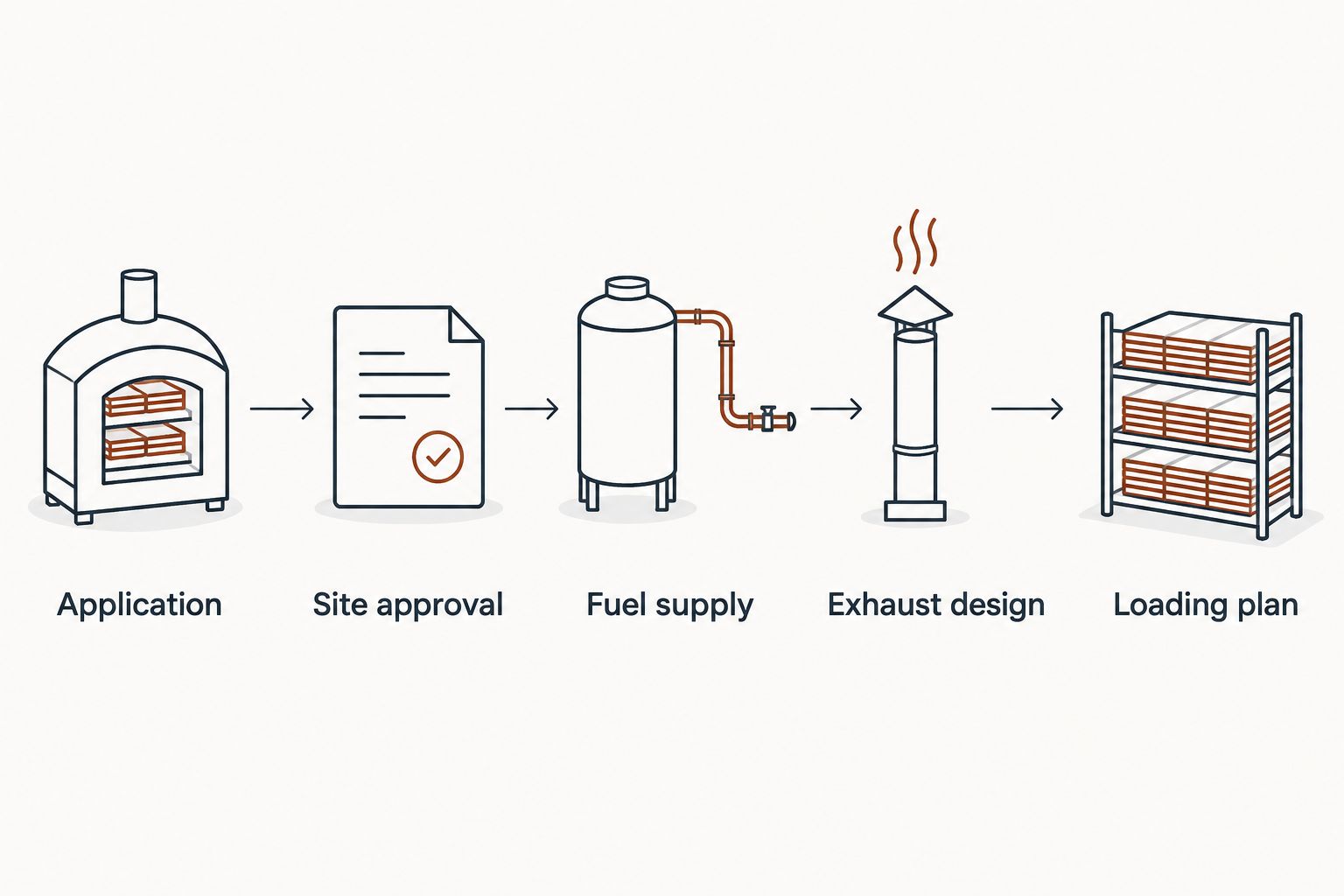
Gas combustion can produce carbon monoxide. Do not install or operate a fuel-burning kiln in an occupied room without a manufacturer-approved, code-compliant installation. An open garage door is not an engineered exhaust system, and a carbon monoxide alarm does not replace proper installation.
Do not improvise burner conversions, regulators, hoses, or fuel connections. If you smell gas or suspect a leak, stop using the equipment and follow the fuel supplier's emergency instructions; do not attempt ignition troubleshooting.
Start with representative pots and the proposed kiln furniture. A tall vase and a shelf of mugs place different demands on the same chamber, even when both loads use the same clay.
Ask for the usable shelf dimensions and a loading diagram. Account for posts, shelf thickness, required spacing, and the manufacturer's restrictions around burners, ports, and temperature sensors. Never assume the entire chamber is available for ware.
For repeat work, make a sample loading plan before buying. Record the arrangement you intend to fire and compare it with your production rhythm. A kiln that accommodates your largest pot but poorly suits your normal batches is not automatically the right fit.
Keep firing records after commissioning. Record loading, cone results, atmosphere changes, and glaze outcomes so that you can distinguish equipment questions from material or loading changes.
The 2026 shortlist ranks routes by application fit, not claimed performance superiority. The Olympic DD17 represents the dedicated gas-kiln evaluation; the Olympic 1414HE serves compact electric testing; shared access serves potters who are not ready to install combustion equipment.
The criteria are firing atmosphere, usable load, fuel or electrical compatibility, installation fit, supervision, and support. No electric alternative earns a gas-kiln recommendation simply because its chamber is compact.
Choose dedicated gas equipment only when gas firing is part of your ceramic process and the site passes a professional installation review. For an unresolved site, shared access is the first step. For oxidation testing, evaluate the Olympic 1414HE instead.
Before ordering in 2026, ask ProKilnSupply to confirm the selected configuration, manufacturer warranty, delivery requirements, and any qualifying freight-shipping terms. Have your installer approve the technical site requirements separately. Retail fit guidance and installation approval solve different problems.
What's the best small gas kiln for pottery?
The best small gas kiln for pottery matches your firing atmosphere, usable load, fuel supply, and approved installation. Evaluate the Olympic DD17 as a gas-kiln candidate, but confirm its dimensions and configuration before treating it as a compact-studio choice.
Is a small gas kiln better than an electric kiln?
A gas kiln is the appropriate route when your work requires combustion firing or a controlled reduction atmosphere. An electric ceramic kiln is an alternative for oxidation firing, not an interchangeable way to obtain reduction-dependent results.
Can I run a small gas pottery kiln in my garage?
A garage is suitable only if the manufacturer permits the installation and the complete setup meets applicable requirements. Have qualified professionals review fuel supply, combustion air, exhaust, clearances, and local approvals; an open door alone is not sufficient.
Can the Olympic 1414HE replace a small gas kiln?
The Olympic 1414HE can replace the need for gas equipment only when your application is compatible with electric oxidation firing. It is an electric test kiln and does not reproduce a gas-reduction atmosphere.
Should I choose propane or natural gas for pottery firing?
Choose the fuel configuration specified for the kiln and supported by an approved installation at your site. Have the manufacturer and a qualified installer confirm compatibility; never assume burners or fuel components are interchangeable.
How do I know whether my pottery will fit in a small kiln?
Compare your actual ware with the usable shelf layout, not just the chamber dimensions. Include posts, shelf thickness, required spacing, and restrictions around burners, ports, and sensors.
Is shared gas-kiln access a good choice for beginners?
Shared gas-kiln access is a practical choice when you want to evaluate gas-fired results before installing equipment. Confirm that the facility accepts your work and follow its material, loading, and scheduling rules.
A temperature reading does not measure heatwork by itself. Pyrometric cones respond to the combined effect of time and temperature, making them useful for checking what your ware experienced during firing.
For your first approved gas firings, follow the manufacturer's commissioning procedure and use an appropriate cone arrangement. Keep those results with your loading records. That evidence is more useful for improving your next firing than a single peak-temperature reading.
{"one"=>"Select 2 or 3 items to compare", "other"=>"{{ count }} of 3 items selected"}