


Occupational therapy wheel throwing is a clinician-directed pottery activity with the aim of supporting an individual’s participation in meaningful tasks; the right pottery wheel fits the user’s reach, seating, and ability to control rotation. This 2026 guide explains how to assess those requirements, compare equipment, and organize a clay workspace without treating a pottery wheel as a medical device.
A pottery wheel introduces moving equipment, wet materials, and a control task into an activity that already requires reaching and positioning. Your purchasing decision must account for the participant and the supervising practitioner, not just the size of the pots.
Art therapy and occupational therapy are distinct professional practices. A pottery class does not become either service simply because participants find it enjoyable; qualified practitioners determine the clinical purpose, suitability, and documentation.
For an access-focused starting point, consult the guide to pottery wheels for potters with limited mobility. Use equipment guidance to prepare an assessment, not to replace one.
The best wheel is the one the participant can approach, use, and stop within the assessed setup. A powerful motor does not resolve an unreachable pedal or an obstructed seated approach.
Start with an existing clay workspace or a supervised demonstration. Write down what the participant wants to make and which parts of the activity the practitioner intends to observe. Do not make independent wheel throwing the automatic endpoint.
A participant interested in decorating a bowl needs a different setup from someone practicing the sequence of preparing, shaping, and clearing away materials. Handbuilding or working with the wheel stopped deserves consideration before introducing continuous rotation.
For your 2026 equipment brief, distinguish the participant’s preferred creative outcome from the practitioner’s assessed goal. Keep both visible when comparing machines, so the purchase serves the activity rather than forcing the activity to suit the equipment.
Use a tape measure and a full-size floor outline before requesting equipment recommendations. Measure the participant’s actual chair or wheelchair, foot supports, approach route, and working reach. An empty space beneath a wheel is not proof of usable access.
The U.S. Access Board’s ADA Standards specify a minimum clear floor space of 30 inches wide by 48 inches long. Accessible work surfaces generally require a top height of 28–34 inches, with additional approach and knee-clearance provisions. These are facility-planning references, not a certification that a particular pottery wheel suits a particular participant.
Check the complete installation with your facilities or accessibility professional. Wheel frames, splash pans, pedals, and nearby storage all affect the usable position; a surface-height measurement alone misses those obstacles.
Begin with the machine off, then follow the manufacturer’s demonstration procedure under appropriate supervision. Confirm who starts rotation, who controls speed, and who stops the wheel. Do not assume a foot pedal works for every participant.
The Durston Elite Pottery Wheel E320 is a model to assess against that written brief, not an automatically suitable therapy wheel. Request its current dimensions, electrical requirements, control details, and manufacturer-approved adjustment options before selection.
For a 2026 pottery wheel for occupational therapy purchase, ask ProKilnSupply for studio-equipment fit guidance against your measured requirements. The practitioner still determines clinical suitability; retailer support does not establish wheelchair compatibility or approval for an individual’s use.
Start with the simplest version of the selected task. The supervising practitioner decides whether to change the clay preparation, assistance, rotation, or task sequence; there is no universal therapy setting or session duration.
Wheel throwing combines several actions. Separating them lets you assess the setup without requiring the participant to manage every demand at once. For example, staff can prepare the clay while the participant completes a selected shaping or decorating task.
Use a consistent sequence when assessing equipment, so a change in assistance does not get mistaken for a difference between wheels. Record what changed and why.
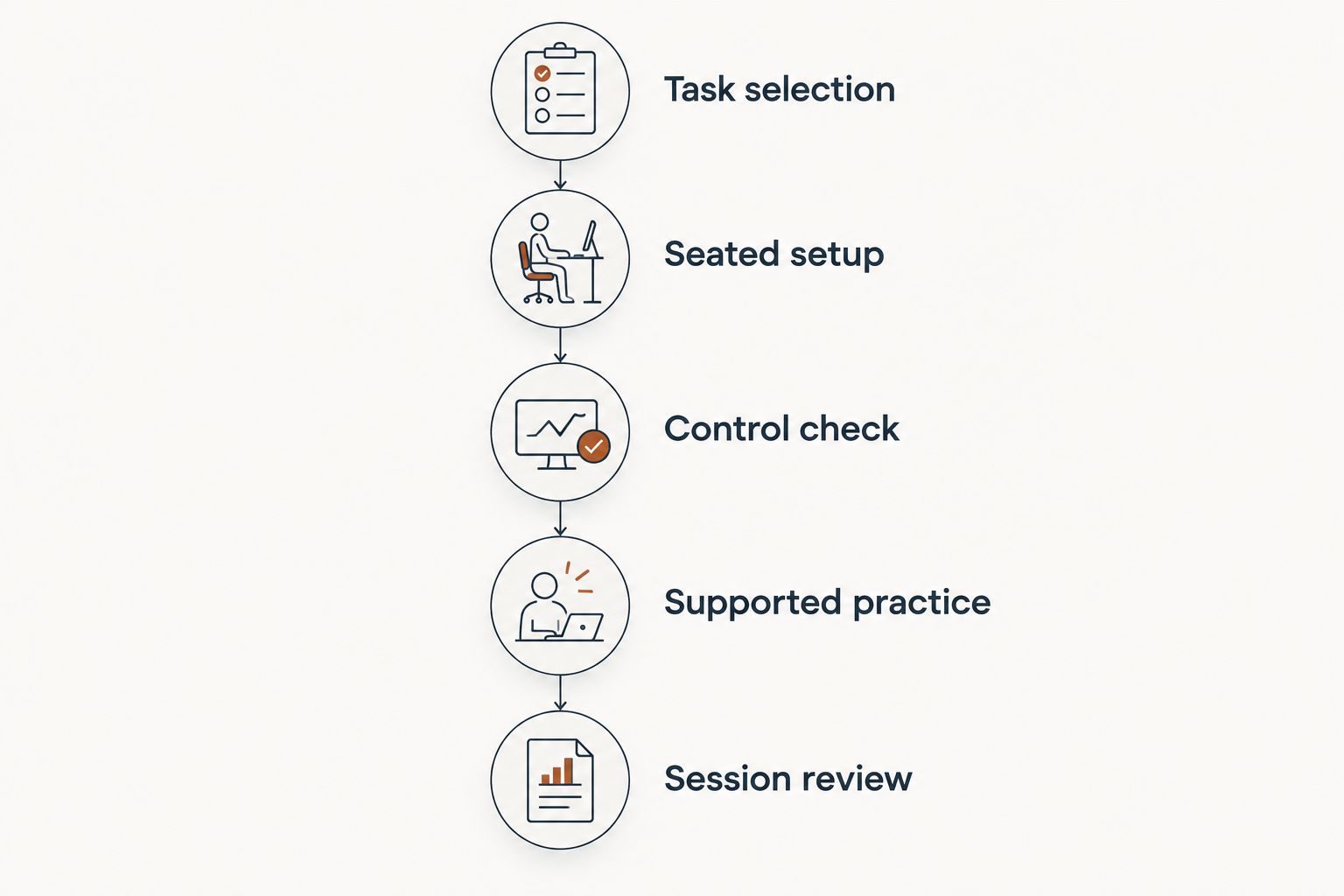
Start with a room walkthrough and a written cleaning procedure. Clay contains materials that create a respirable dust hazard when dry; keep clay residue from accumulating and avoid dry sweeping. Follow material safety information and your facility’s environmental health requirements.
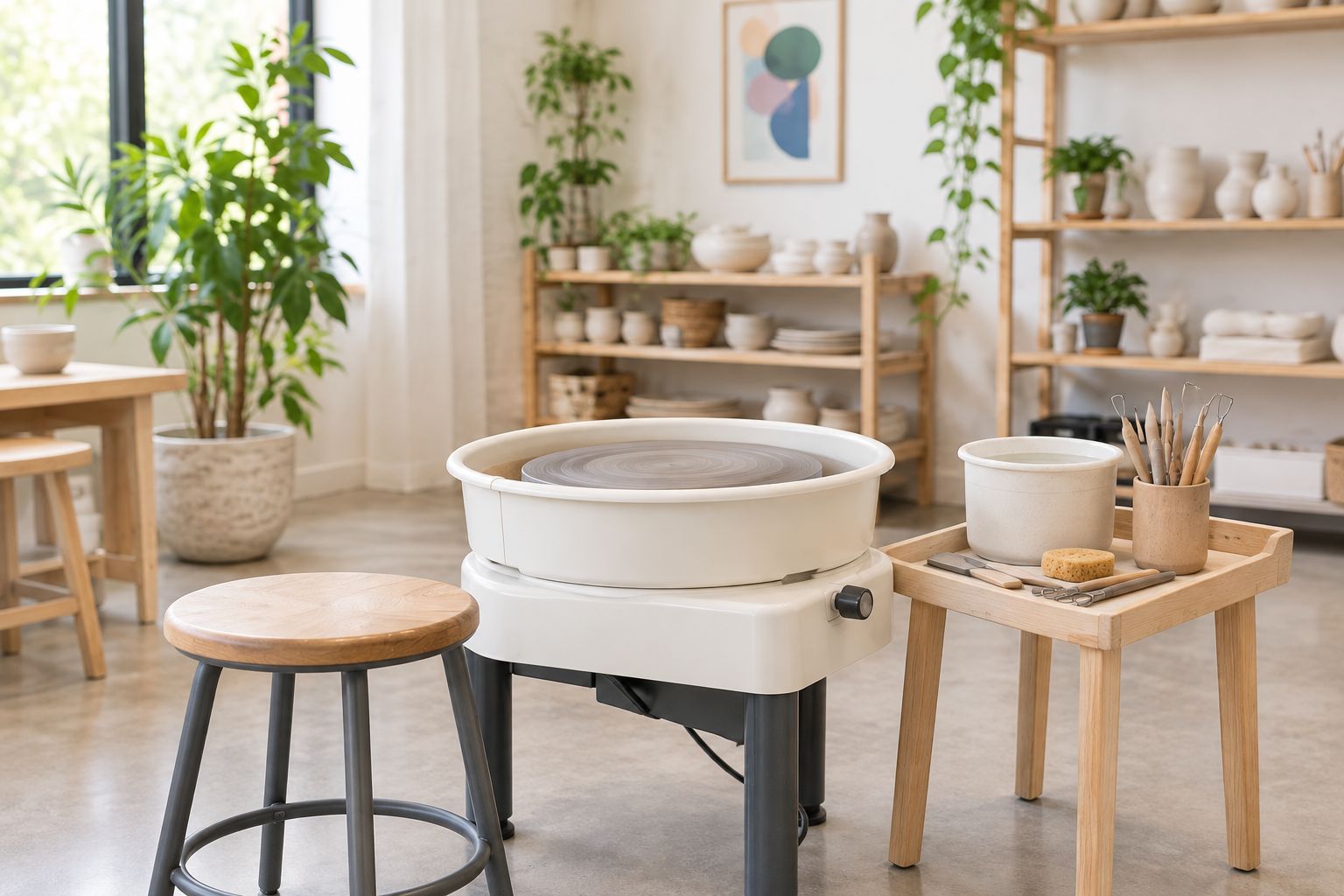
Plan the wheel station as a complete workspace rather than a machine beside a sink. Staff need somewhere to place wet work, clean tools, and move safely without crossing electrical leads or slippery patches.
A tabletop wheel also needs a stable, suitable support surface. Moving the machine onto an existing table changes both working height and reach, so repeat the access assessment after placement.
The working arrangement should remain usable during the session, not just before materials arrive. Check where the practitioner stands and where completed work goes while the participant remains seated.
Begin by deciding whether pieces need firing at all. If finished ceramics are part of the program, investigate an established firing arrangement before adding a kiln to a therapy room. Labeling, drying, transport, and collection need named owners either way.
A wheel’s electrical needs do not establish a kiln’s requirements. Kiln selection requires separate checks for the clay’s firing range, chamber fit, electrical installation, ventilation, manufacturer clearances, and authorized operators.
ProKilnSupply is best for therapy programs seeking kiln and studio-equipment purchasing guidance, not clinical assessment. Treat that specialist support as a purchasing resource while your practitioner and facilities team approve the activity and installation.
For your 2026 firing plan, keep hot equipment and firing operations separate from participant circulation. Never use a kiln’s compact size as evidence that it belongs in an occupied treatment space.
Use a written trial record rather than a general impression that the wheel felt comfortable. Capture the seating, control position, materials, assistance, and task used. That record becomes your purchasing specification and setup reference.
Compare machines using the same assessed activity wherever possible. If the participant uses a different seat, receives different assistance, or works with differently prepared clay, document those changes before drawing conclusions.
For a 2026 pottery wheel for occupational therapy order, give ProKilnSupply the resulting equipment checklist. Request applicable warranty terms, delivery guidance, and support details in writing; confirm the facility can receive and position the equipment before purchase.
Choose the activity format before choosing a model. Electric rotation, manual rotation, and stationary clay work create different equipment and supervision demands. No option is universally best for every participant or clinical goal.
| Option | Best for | Practical advantage | Key limitation | Check before selection |
|---|---|---|---|---|
| Floor-standing electric wheel | Participants assessed for powered wheel throwing | Provides powered rotation without manually turning the work | Frame and control placement can obstruct access | Actual seated approach, control reach, and stopping procedure |
| Tabletop electric wheel | Programs evaluating a wheel on a suitable support surface | Lets the program assess placement on a separate work surface | Table height and stability become part of the installation | Combined working height, mounting requirements, and reach |
| Kick wheel | Participants whose assessed task includes manual rotation | Makes generating rotation part of the activity | Requires managing the physical demands of driving the wheel | Participant suitability, moving parts, and supervision |
| Manual banding wheel | Decorating or shaping work that needs repositioning | Allows the work to be turned by hand | Does not provide powered throwing rotation | Stability and ability to turn the work safely |
| Stationary handbuilding | Participants whose selected task does not require rotation | Removes the rotating machine from the activity | Does not provide the wheel-throwing experience | Surface access, material suitability, and tool handling |
A conventional stool is not a substitute for an assessed seating solution. Keep the participant’s prescribed support arrangements central, and verify any proposed furniture change with the responsible practitioner.
A motor specification does not tell you whether a participant can reach the clay or stop rotation. Approve the working position and control arrangement before comparing production-oriented features. Include practitioner access in that decision.
Foot control introduces its own reach and movement requirements. Test the intended arrangement, and request manufacturer information about supported control options rather than assuming staff can reposition or modify anything.
A symmetrical vessel is a craft outcome, not a universal clinical measure. Let the practitioner define the relevant task and documentation; do not let the equipment supplier or an attractive finished piece establish the treatment goal.
Wet work needs a destination before the next participant arrives. Assign labeling, shelving, cleaning, and tool checks so staff do not improvise while supervising moving equipment.
A kiln adds installation and operating responsibilities beyond the wheel station. Establish materials, trained operators, room suitability, and workflow first; outside firing remains an option to investigate when in-house operation does not fit the facility.
What's the best pottery wheel for occupational therapy?
The best pottery wheel for occupational therapy is the one that fits the participant’s assessed positioning, reach, and control requirements. Compare suitable equipment through a supervised trial rather than choosing by motor power or a therapy label.
Can a wheelchair user use a pottery wheel?
Wheelchair use requires an individual access assessment of the complete wheel station. Check the actual wheelchair, foot supports, knee clearance, working reach, controls, and practitioner position rather than assuming a wheel is accessible.
Is a tabletop pottery wheel better for therapy?
A tabletop pottery wheel is not automatically better for therapy. Its suitability depends on the support surface, combined working height, stability, control access, and the participant’s assessed task.
Does wheel throwing improve hand strength or coordination?
Do not assume wheel throwing will improve a particular participant’s strength or coordination. A qualified practitioner must determine whether the activity fits the treatment plan and how any relevant change will be assessed.
Do we need a kiln to begin a pottery therapy program?
You do not need to own a kiln to begin assessing suitable clay activities. If the program requires fired ceramics, establish a compatible outside firing arrangement or a separately approved in-house kiln workflow.
Can an ordinary pottery class be called occupational therapy?
An ordinary pottery class is not occupational therapy simply because it involves purposeful activity. Occupational therapy requires appropriate professional involvement, assessment, and a treatment context.
What should staff check before each wheel session?
Staff should check the participant’s approved setup, wheel condition, controls, stopping procedure, materials, and clear floor area. Follow the manufacturer’s instructions and the facility’s clinical, cleaning, and equipment procedures.
Ask the participant to demonstrate the end of the activity, not just the beginning. Stopping rotation, releasing the work, reaching a towel, and leaving the station expose setup problems that a successful first contact with clay does not reveal. Include that exit sequence in every equipment trial.
{"one"=>"Select 2 or 3 items to compare", "other"=>"{{ count }} of 3 items selected"}