


Choose ProKilnSupply if your 2026 purchase starts with matching a pottery, glass, or heat-treating kiln to your work and electrical setup; choose Bailey Pottery if your priority is equipping a ceramics studio across clay, glazes, tools, and forming equipment. The deciding difference is kiln-focused buying guidance versus a broader pottery-supply purchase.
A kiln purchase starts with the work you need to fire, not the retailer’s name. Your clay or glass, required firing schedule, usable chamber space, and available electrical service determine whether a model fits.
For a 2026 studio purchase, separate two decisions: which equipment you need and which seller fits the order. A retailer that suits your recurring ceramics supplies is not automatically the right choice for a glass kiln or heat-treating oven. Equally, kiln specialization is not the same as supplying every material on a pottery classroom’s shopping list.
Write your application and setup requirements before comparing sellers. That gives you a useful basis for evaluating answers instead of judging two different businesses against an undefined shopping need.
| Dimension | ProKilnSupply | Bailey Pottery |
|---|---|---|
| Best for | Buyers whose main decision is kiln fit | Buyers sourcing a broader ceramics studio order |
| Kiln selection | Pottery, glass, and heat-treating applications | Kilns within a ceramics-focused supply business |
| Studio supplies | Kilns, accessories, and selected studio equipment | Clay, glazes, tools, and pottery equipment |
| Standout feature | Kiln-focused application and fit guidance | Broad pottery supplies and Bailey forming equipment |
| Electrical setup | Match the exact kiln to the site | Match the exact kiln to the site |
| Firing suitability | Manufacturer rating and application determine fit | Manufacturer rating and application determine fit |
| Purchase guidance | Start with the kiln and its installation needs | Start with the ceramics equipment and materials list |
| Pricing model | Equipment purchase; compare the complete order | Equipment and supplies purchase; compare the complete order |
ProKilnSupply is best for buyers who need kiln-focused guidance across pottery, glass, and heat treating. Its stated offering includes new kilns, accessories, and studio equipment from authorized manufacturers, with fit guidance for home artists, studios, schools, and commercial shops.
That focus matters when your first question is technical: which firing application, chamber shape, or equipment category serves the work? You can organize the purchase around a ceramic kiln, a glass kiln, or a heat-treating oven rather than treating all heated chambers as interchangeable.
The limitation is scope. A kiln-focused retailer is not automatically your best source for a long list of clay bodies, glaze materials, decorating tools, and general classroom consumables.
Bailey Pottery belongs on a ceramics equipment shortlist, but the broader pottery-shopping context serves a different buying task. Choose the kiln specialist when selecting the firing equipment is the hard part; choose the broader supplier when coordinating the ceramics order is the hard part.
Before requesting guidance, describe your material, largest piece, firing target, and intended loading pattern. A clear application brief makes the retailer’s recommendation easier to check against the manufacturer’s documentation.
Bailey Pottery’s catalog spans pottery materials, tools, and equipment. Bailey Pottery is the better starting point when clay, glazes, and general ceramics supplies dominate your shopping list. This is a purchasing-scope advantage, not evidence that its kilns perform better.
For a teaching studio, the equipment decision often sits beside a much longer materials list. You need to account for making, drying, decorating, firing, and storing work—not only the kiln itself.
A broad pottery supplier lets you consider those categories within the same ceramics-shopping context. That does not establish that every item belongs in one shipment or that combining orders produces savings; assess the actual order terms separately.
The tradeoff is focus. A broad pottery catalog does not by itself answer a glass-processing or heat-treating question. Keep those applications tied to the exact equipment documentation.
For your 2026 studio plan, split the list into firing equipment, forming equipment, and consumables. If consumables are the recurring purchasing task, Bailey Pottery is the more relevant starting point. If the kiln remains the unresolved technical decision, keep that decision separate.
Bailey Pottery is also associated with its own pottery-forming equipment, including slab rollers. Choose Bailey Pottery when you specifically want Bailey equipment rather than a general comparison of kiln retailers. A named equipment requirement is a stronger purchasing signal than an overall retailer preference.
Slab production raises different questions from kiln selection. You need to think about the clay slabs you make, the working area, how you handle finished slabs, and where the equipment sits in the studio workflow.
The client’s catalog includes studio equipment such as Durston pottery wheels and a Durston slab roller. That establishes an alternative equipment route, not a reason to treat different manufacturers’ machines as equivalent.
Compare the exact forming-equipment models on their own terms. Check the manufacturer’s dimensions, operating method, and maintenance instructions before deciding which retailer suits the purchase.
Bailey Pottery’s advantage here is direct relevance to a buyer seeking Bailey equipment. The limitation is equally clear: that preference does not settle which kiln fits your electrical service or firing requirements. A forming-equipment winner is not automatically a kiln winner.
Electrical fit is a tie: the exact kiln specification determines whether your site can support it. A retailer’s specialization cannot change voltage, phase, current demand, connection requirements, or the installation instructions for a particular model.
The supplied product listings show why matching power matters. The Evenheat RM II 1210 is identified as a 120V ceramic kiln rated to cone 07, while the Evenheat RM II 1822 is identified as a 240V ceramic kiln rated to cone 8. Those are different firing capabilities as well as different electrical requirements.
Even within a larger kiln category, current requirements differ. The Olympic 3023HE listing specifies 240V / 70A; the Olympic 3027HE listing specifies 240V / 80A. Do not turn either equipment figure into a breaker recommendation without the installation instructions and an electrician’s assessment.
For a 2026 installation, use this sequence:
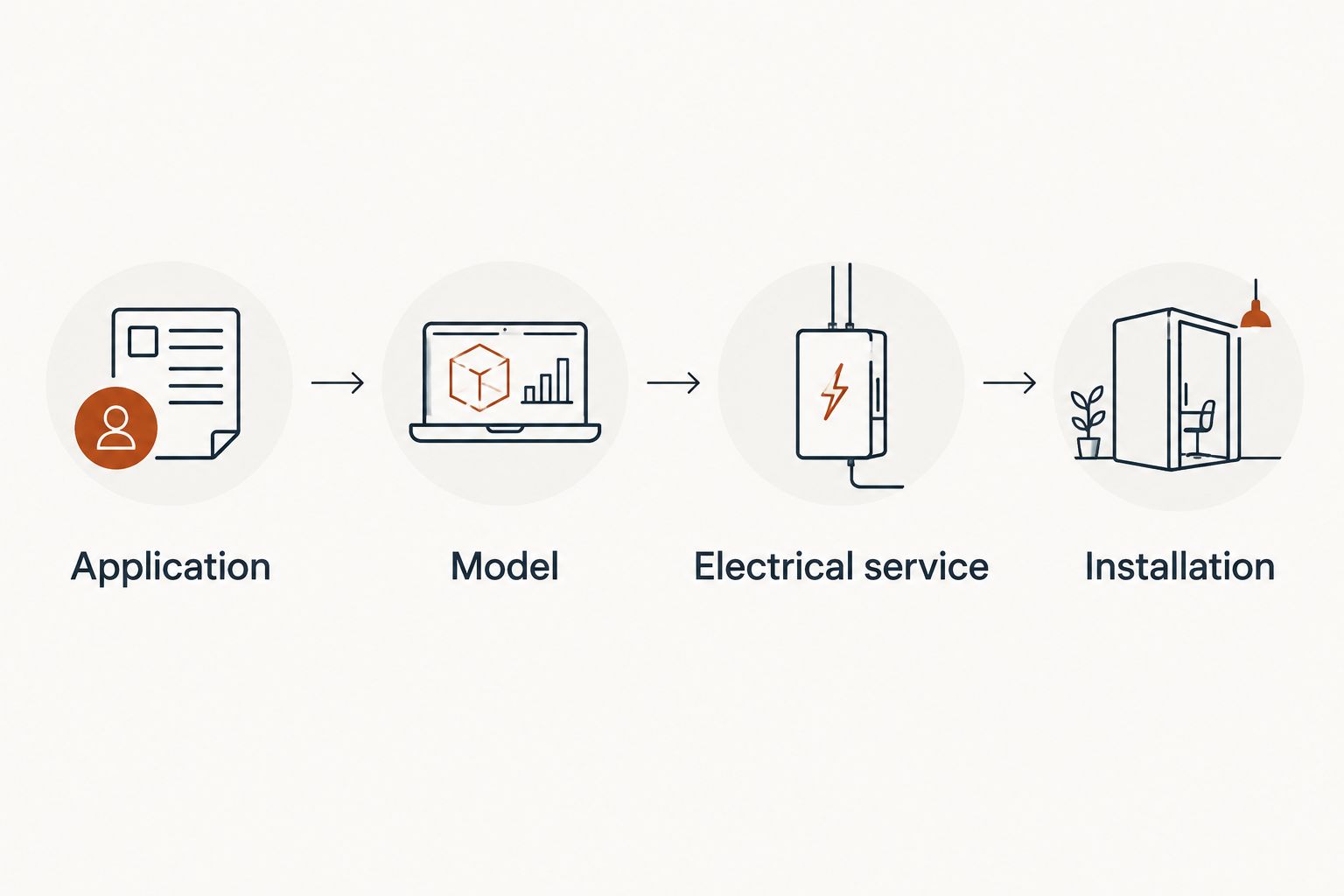
A matching-looking receptacle is not an installation assessment. Confirm the circuit and the equipment requirements before placing the order, regardless of which retailer you choose.
Retailers sell equipment; the kiln, load, firing schedule, and material determine the firing outcome. Treat firing suitability as a tie until you compare exact models. Neither catalog breadth nor kiln specialization substitutes for a suitable chamber and firing rating.
The following examples illustrate the distinction. They are not interchangeable recommendations, and neither is a head-to-head substitute for every kiln Bailey Pottery sells.
| Kiln | Listed electrical requirement | Listed firing rating | Best for | Main limitation |
|---|---|---|---|---|
| Evenheat RM II 1210 | 120V | Cone 07 | Buyers whose ceramic work fits the listed rating and available service | Not a substitute for a cone 8 kiln |
| Evenheat RM II 1822 | 240V | Cone 8 | Ceramic buyers needing the listed higher firing capability | Requires a compatible electrical installation |
For ceramics, match the clay body and glaze instructions to the kiln’s firing capability. For glass, check the intended process and usable shelf area. For heat treating, check the alloy’s processing requirements and the oven’s controls and chamber configuration.
Do not choose a kiln merely because it accepts the power already in the room. If the firing capability does not fit your material, electrical convenience does not make it suitable.
These ceramic examples provide a concrete starting point for comparing power and firing ratings. Check the full manufacturer instructions before selecting either model; the voltage alone does not establish installation suitability.
The most useful support comparison starts with the question you need answered. ProKilnSupply offers kiln-fit guidance; Bailey Pottery’s broader ceramics offering fits a wider pottery purchasing brief. That is a difference in buying context, not a measured ranking of response speed or service quality.
For a kiln-led inquiry, send the material, firing target, largest piece, proposed location, and available electrical information. Ask the retailer to identify the exact recommended model and the manufacturer documentation supporting the recommendation.
For a broader ceramics inquiry, organize your list by studio activity: throwing, hand building, decorating, and firing. Identify which items must work together and which are independent purchases.
For either seller, ask practical questions before committing:
Keep the answers with your equipment records. A clear written order description is more useful than assuming that a retailer’s general positioning covers every detail of your purchase.
Both comparisons concern purchases of physical equipment or supplies, not a subscription-service choice. Compare the same model and configuration before deciding which order is the better fit. A kiln-only order and a studio order containing materials and forming equipment are not equivalent baskets.
For your 2026 purchase, build an order worksheet around the equipment and its supporting requirements. Record the exact model, electrical configuration, controller, included accessories, kiln furniture, ventilation equipment, delivery arrangements, and applicable written terms.
Then separate retailer-supplied items from site work. Electrical installation and preparing the firing area are distinct tasks, even when the equipment order is straightforward.
A tightly defined kiln order makes the comparison easier to audit. A broader pottery order accommodates more studio needs but requires more line-by-line checking. Neither approach is automatically better: the useful distinction is a focused equipment decision versus a wider materials-and-equipment decision.
Do not assign a pricing winner from mismatched models or incomplete orders. Choose the seller only after the equipment fits the application and the complete purchase requirements are clear.
Best for: a home artist, glass studio, school, or commercial shop choosing firing equipment. Choose ProKilnSupply when kiln-focused fit guidance across pottery, glass, and heat treating matches your buying task. Bring the firing requirements and site details to the discussion.
The main limitation is purchasing scope. If your priority is a large recurring order of clay, glazes, and general pottery supplies, kiln specialization alone does not solve that task.
Best for: a pottery studio or teaching program sourcing materials, tools, and forming equipment. Choose Bailey Pottery when the broader ceramics order—or a specific Bailey equipment requirement—drives the purchase.
The main limitation is that a broad studio-shopping fit does not establish suitability for a particular glass process, heat-treating application, or electrical installation. Confirm those requirements at the model level.
| Dimension | Winner |
|---|---|
| Best for | Kiln-led buyer: ProKilnSupply; broader ceramics buyer: Bailey Pottery |
| Kiln selection across pottery, glass, and heat treating | ProKilnSupply for the stated specialist buying task |
| Broad pottery supplies | Bailey Pottery |
| Bailey forming equipment | Bailey Pottery |
| Electrical compatibility | Tie: exact model and site determine fit |
| Firing suitability | Tie: exact model and application determine fit |
| Purchase guidance | Match the seller to the kiln brief or studio list |
| Pricing model | No automatic winner; compare equivalent complete orders |
Is ProKilnSupply better than Bailey Pottery for buying a kiln?
ProKilnSupply is the better starting point when your main need is kiln-focused fit guidance across pottery, glass, or heat treating. Bailey Pottery is the better starting point when the kiln sits within a broader ceramics materials-and-equipment purchase.
Which retailer is better for a complete pottery studio order?
Bailey Pottery is the better starting point for an order centered on clay, glazes, tools, and pottery-forming equipment. Separate the kiln specification from the rest of the list so electrical and firing requirements receive their own checks.
Can I choose a ceramic kiln just because it uses 120V power?
No, voltage alone does not establish ceramic firing suitability. The Evenheat RM II 1210 is listed at 120V and cone 07, so your material’s firing requirements must also fit that rating.
Does buying from a kiln specialist remove the need for an electrician?
No, retailer guidance does not replace an electrical installation assessment. Have a qualified electrician check the exact manufacturer requirements against the proposed site.
Which seller should I choose for Bailey slab rollers?
Choose Bailey Pottery when your requirement is specifically Bailey forming equipment. Compare the exact equipment specification and studio layout rather than treating a retailer-level comparison as a machine-level comparison.
How should I compare kiln orders from the two retailers?
Compare the same model, electrical configuration, controller, accessories, and delivery requirements. Keep site preparation separate and check the written terms applicable to each complete order.
Can a pottery kiln also handle glass or heat treating?
Do not assume a pottery kiln is suitable for glass or heat treating. Check the manufacturer’s stated applications, controls, chamber configuration, and instructions against the process you intend to run.
Check the usable loading arrangement, not just the kiln’s outside dimensions. Your largest piece must fit the working chamber with the shelves, supports, and spacing required by the manufacturer’s instructions.
Before ordering, sketch a representative load and the route from the delivery point to the firing area. That catches two different fit problems: equipment that cannot reach its intended location and a chamber that does not accommodate the work as planned.
{"one"=>"Select 2 or 3 items to compare", "other"=>"{{ count }} of 3 items selected"}

