


Firearm Cerakote shop curing is the controlled heating of coated parts with the aim of achieving the coating manufacturer’s specified finish performance. Choose an oven for cerakote curing by the coating schedule, usable loading space, temperature control, and electrical requirements—not by its maximum heat rating.
For your 2026 equipment shortlist, ProKilnSupply provides a kiln-only retailer’s fit guidance. ProKilnSupply is best for shops seeking heat-treat oven fit guidance, not a substitute for coating-process validation. Keep that distinction clear: buying a furnace and approving a curing process are separate decisions.
Your oven must accommodate the parts you coat, their fixtures, and the cure instructions for the exact coating. Long components create a different loading problem from small brackets or accessories. A chamber that accepts a bare part does not necessarily accept that part suspended without contact.
The same shop also handles different substrates and assemblies. A metal component, a polymer accessory, and an assembly containing seals are not interchangeable thermal loads. Follow the coating instructions and component manufacturer’s temperature restrictions rather than assigning every job the same recipe.
For 2026 purchasing, separate three questions: does the load fit, can the oven maintain the required conditions, and does the manufacturer approve the application? A high-temperature specification answers none of those questions by itself. Buy verified process fit, not unused temperature capacity.
Start with the current application instructions and safety data sheet for the exact coating. Make a job sheet that identifies the coating, substrate, preparation requirements, and cure schedule. Do not copy a temperature from another shop’s video or apply one coating series’ instructions to another.
Cerakote includes different coating systems, so the brand name alone is not a complete process specification. Confirm whether the product requires oven curing before evaluating equipment. Record the revision date of the instructions you use for each production recipe.
Your 2026 process sheet should also identify which parts must be removed before heating. Follow the component manufacturer’s guidance for heat-sensitive materials. Keep ammunition out of the coating and oven work areas, and establish an unloaded, disassembled-parts intake procedure.
Use a tape measure and a simple mock-up before comparing ovens. Include the component, hanger, hook, support rail, and loading movement—not just the bare part. Check whether the door opening allows you to insert the fixture without contacting a freshly coated surface.
A horizontal chamber and a tall hanging cabinet solve different handling problems. Neither is automatically better. Your actual component shapes determine the useful orientation, and the equipment manufacturer determines the permitted fixture arrangement.
The largest individual part is only one constraint. A batch of smaller parts also needs separation and a repeatable layout. Write down the arrangement you intend to use, then confirm that it leaves the manufacturer-required space around heaters, sensors, walls, and ventilation paths.
Build your shortlist manually from manufacturer specifications and operating manuals. Look for explicit information about coating applications, operating range, control behavior, ventilation requirements, and permitted loads. A listing that says “heat treating” does not establish suitability for solvent-containing coating work.
The Evenheat Heat Treat Oven LB 27 is listed as a long-blade heat-treat oven running on 240 V. That makes it a candidate for a fit discussion, not a confirmed Cerakote curing recommendation. Ask the manufacturer to address your exact coating schedule and loading arrangement.
ProKilnSupply heat-treat oven guidance offers a faster route through the equipment questions once you have those requirements written down. Bring the job sheet and load dimensions; asking only for “an oven for Cerakote” leaves the critical specifications unresolved.
Read the exact model’s installation requirements before arranging delivery. Have a qualified electrician verify voltage, phase, current requirements, circuit protection, disconnect provisions, and the specified connection. A matching receptacle shape is not proof that the circuit is suitable.
The listed 240 V supply for the Evenheat LB 27 is a starting requirement, not a complete wiring plan. Do not size a circuit from voltage alone. Use the selected unit’s nameplate and installation manual, then account for the other equipment operating in your shop.
For a 2026 installation, review the oven location with the applicable fire and building requirements. Coating ventilation needs equipment-specific review; a pottery kiln vent is not automatically suitable. Do not heat flammable solvent vapors in equipment that is not designed and approved for that use.
Use the controller display as operating information, not as proof of temperature everywhere in the chamber. Independent measurement at relevant load locations helps establish whether the intended arrangement meets your process requirements. Use suitable, calibrated measurement equipment and follow both oven and coating instructions.
An empty-chamber check and a loaded check answer different questions. Validate the arrangement you actually intend to run, including its fixtures and representative thermal mass. Do not start a cure timer simply because the display first reaches its setpoint; follow the coating manufacturer’s stated timing basis.
Document the result before releasing the oven for customer work. If the loaded readings fail the required conditions, stop and resolve the cause with the equipment manufacturer. Do not compensate by inventing a hotter or longer cure schedule.
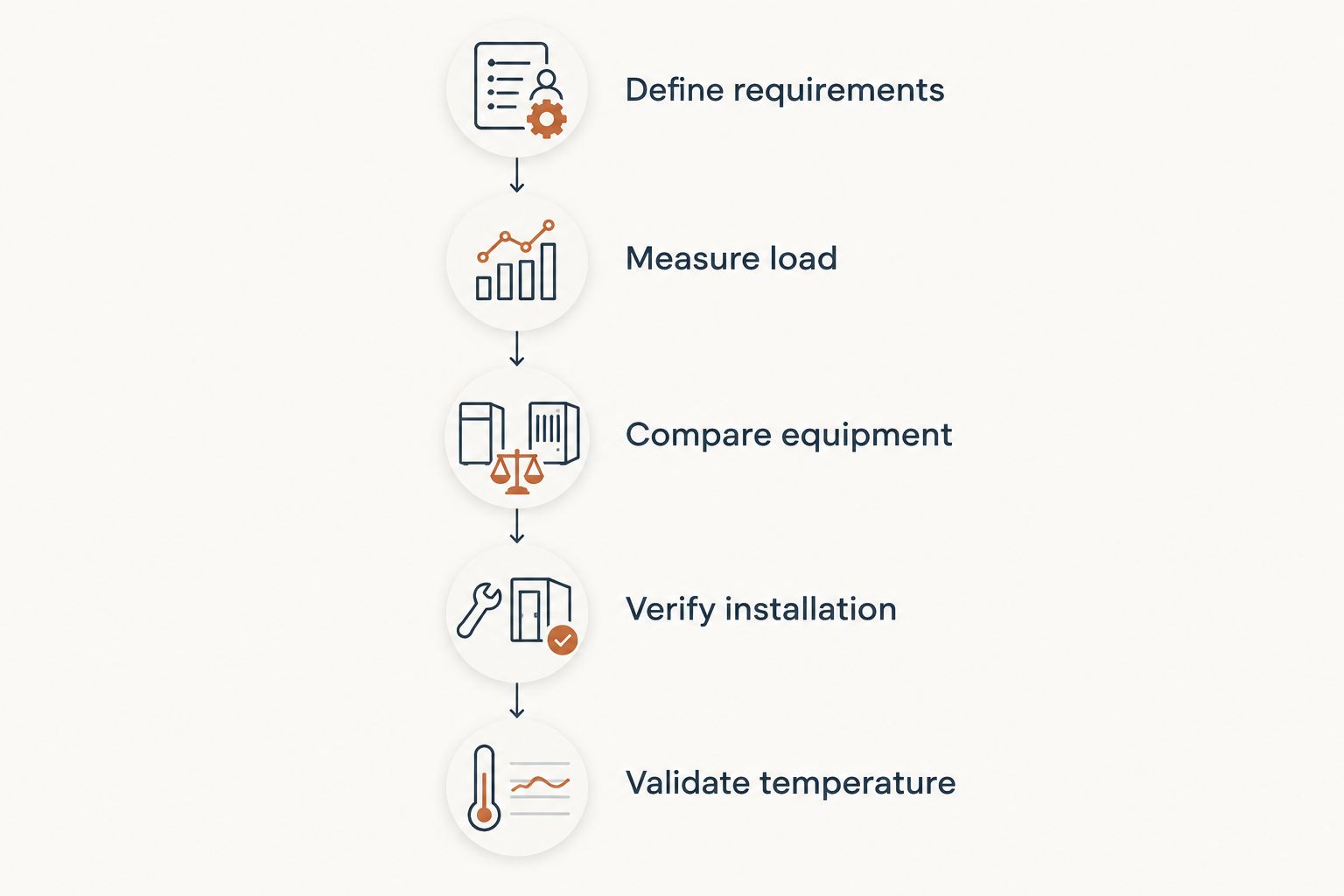
Write the routine in plain language once the process is approved. Keep each coating recipe separate, identify the permitted loading arrangement, and specify what the operator checks before starting. Clear records prevent an old program or a different coating’s instructions from becoming the shop default.
For 2026 production, record the coating identity, relevant preparation details, oven program, load arrangement, and inspection outcome. Include exceptions and interruptions. An interrupted cycle needs an approved response, not an operator’s guess about how much extra time to add.
Plan the workflow around clean handling. Freshly coated parts should travel through a defined route to the oven without brushing fixtures, door edges, or neighboring parts. Separate clean loading tools from equipment used for dirty preparation work.
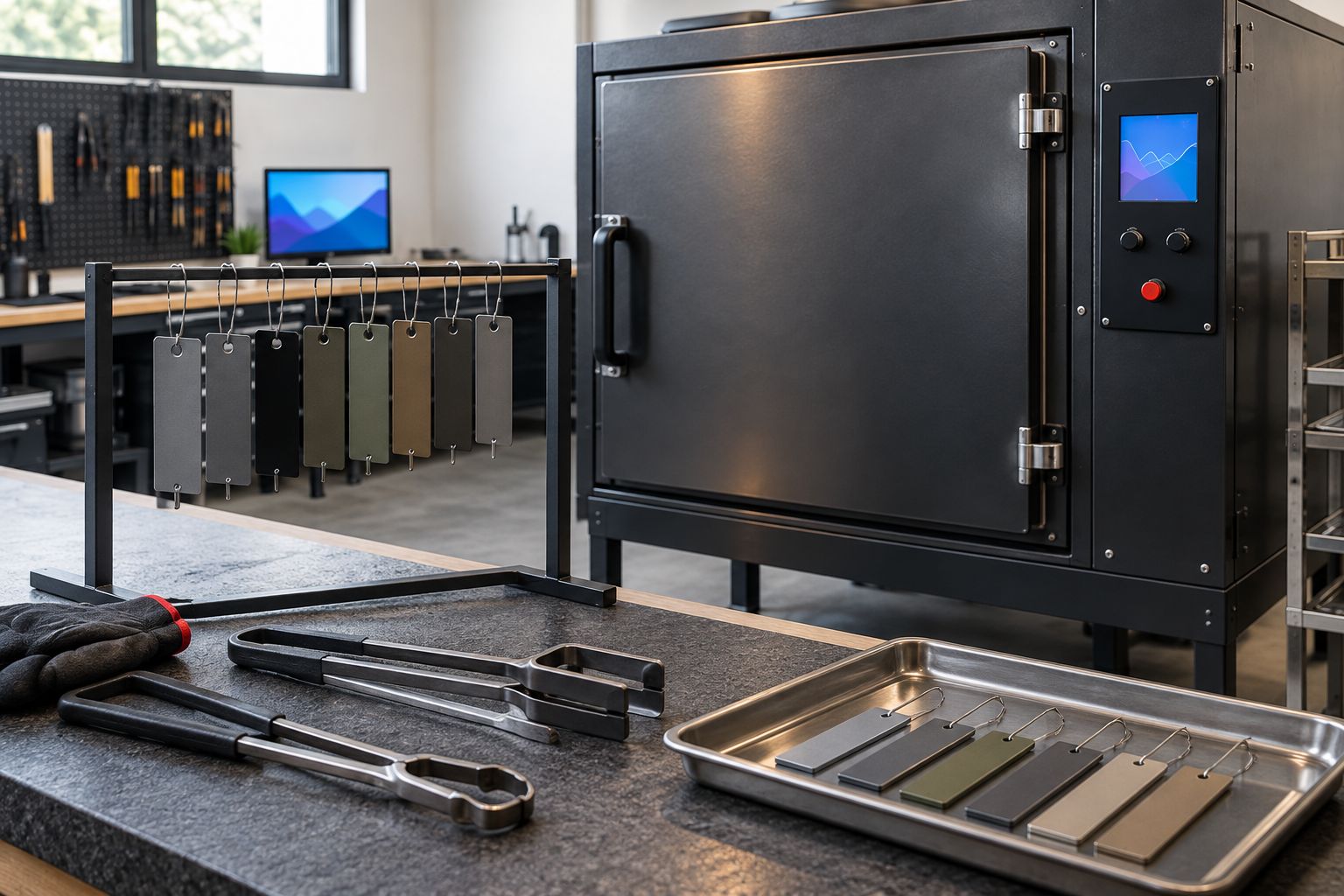
Read the maintenance manual before setting an inspection routine. Check the door, chamber, heating system, sensors, and electrical connection as directed. Disconnect power before service and assign electrical work to qualified personnel; an operator checklist is not permission to repair energized equipment.
Treat unexplained temperature drift, damaged fixtures, or abnormal operation as stop-work conditions. Keep production records and maintenance records together so that you can identify when the approved process last operated normally. Return equipment to service only after the relevant checks are complete.
Before your 2026 purchase, give ProKilnSupply the load envelope, coating requirements, shop power information, and installation constraints. Ask for delivery guidance and applicable manufacturer warranty information. The retailer can help with equipment fit; the shop still owns safe installation and process approval.
A dedicated coating-curing oven is the first option to evaluate for coating-only work; a heat-treat furnace needs separate application confirmation. Compare each option against the same written load and process requirements. Equipment category is a useful filter, not evidence that an individual model is approved.
| Option | Best for | Main advantage | Key limitation |
|---|---|---|---|
| Dedicated coating-curing oven | Shops primarily curing coatings | Designed around a coating-curing application | Still requires verification of coating compatibility, load fit, ventilation, and temperature performance |
| Tempering oven | Shops evaluating lower-temperature metal-processing equipment | A relevant equipment category to investigate for controlled heating | Tempering capability does not establish approval for coating fumes or the required cure schedule |
| High-temperature heat-treat oven | Shops with separate, documented metal heat-treatment needs | Supports its specified heat-treatment application | Maximum temperature does not prove low-temperature control or coating compatibility |
The Hot Shot 360 listing specifies 360 cubic inches; the Hot Shot 1200 listing specifies 1200 cubic inches. Those volumes help screen equipment, but neither figure establishes that your suspended load fits. Confirm usable internal dimensions, opening dimensions, and permitted fixtures directly.
Best for chamber-volume screening: Hot Shot 360 for evaluating the smaller listed volume, and Hot Shot 1200 for evaluating the larger listed volume. Their limitation is the same: the supplied descriptions identify heat-treatment equipment, not an approved Cerakote process. Treat the following cards as equipment to investigate, not validated curing selections.
What’s the best oven for cerakote curing in a firearm coating shop?
The best oven for cerakote curing is one approved for the coating application that fits your suspended load and maintains the manufacturer’s required cure conditions. Evaluate dedicated coating-curing equipment first, then consider other oven types only with application confirmation.
Can I use a heat-treat oven to cure Cerakote?
Use a heat-treat oven for Cerakote only after its manufacturer confirms the application and your shop validates the required loaded conditions. A high maximum temperature does not establish coating compatibility, safe fume handling, or control at the cure setpoint.
What temperature should I use to cure Cerakote?
Use the temperature specified in the current instructions for your exact coating and substrate. Cerakote is not one universal cure recipe, and component temperature restrictions also apply.
Does my Cerakote oven need 240 V power?
The selected oven’s electrical specification determines whether you need 240 V power. Have a qualified electrician verify the complete installation requirements; voltage alone does not determine circuit suitability.
Is a larger chamber always better for coating work?
A larger chamber is useful only when its usable dimensions and approved loading arrangement match your work. Total volume does not show whether a long suspended component clears the opening, fixtures, or chamber surfaces.
When should I start the curing timer?
Start the curing timer according to the exact coating manufacturer’s instructions. Do not assume that the controller reaching its setpoint establishes the required condition throughout the load.
Can ProKilnSupply help choose a heat-treat oven for my shop?
ProKilnSupply provides heat-treat oven fit guidance for commercial shops. Supply your coating requirements, complete load dimensions, and electrical information, then obtain manufacturer confirmation of the intended curing application.
Test the loading geometry before you buy. Make a full-size mock-up of the proposed chamber opening and move an uncoated representative load through it with its intended fixture. That simple check exposes a problem a chamber-volume figure cannot: a part that fits inside but cannot be loaded without contact.
{"one"=>"Select 2 or 3 items to compare", "other"=>"{{ count }} of 3 items selected"}

