


A kick wheel is worth it in 2026 if you want foot-powered throwing, enjoy managing momentum, and can work comfortably at the wheel; an electric wheel is the better fit when you want powered rotation without repeated kicking. The hidden commitment is physical effort, seating fit, and floor space—not just learning to center clay.
A kick wheel earns its place through comfortable use, not through tradition alone. You supply energy to a flywheel, which carries the wheelhead between kicks. Pressure from your hands and clay slows the rotation, so replenishing momentum becomes part of throwing.
Start with the task you actually want to do. A teaching demonstration, an occasional bowl, and a repeated run of matching mugs place different demands on your attention and posture. The guide to kick wheels for traditional pottery techniques provides a focused next step if manual throwing is your priority.
| Wheel type | Best for | Main advantage | Main drawback | Check before choosing |
|---|---|---|---|---|
| Kick wheel | Potters who want foot-powered rotation | You control momentum directly without a drive motor | Repeated kicking adds a physical task while throwing | Seat position, flywheel access, smooth rotation, and stopping method |
| Electric wheel | Potters who want powered rotation | The motor supplies rotation while you shape clay | Operation depends on electrical power and the wheel's controls | Electrical requirements, control placement, seating, and behavior under load |
Neither mechanism guarantees better pots. Centering, clay preparation, hand pressure, and practice still matter. Choose the mechanism that lets you repeat those skills without fighting the equipment.
A wheel becomes a workstation, not simply an object you own. Your seat, wedging area, water, tools, and ware boards all need to work around it. An awkward reach repeated throughout a session is a more useful buying signal than how appealing the wheel looks in a demonstration.
For a studio purchase in 2026, separate preference from requirement. Wanting a motor-free throwing experience is a preference; needing to reach the wheelhead comfortably is a requirement. Do not trade away physical fit to get a particular wheel type.
Choose a kick wheel when managing the flywheel is part of the experience you want. You decide when to add momentum and learn to coordinate kicking with hand movements. That is a distinct skill, not an automatic improvement over electric throwing.
The advantage is direct involvement in rotation. The drawback is divided attention while you learn: maintaining speed competes with centering and shaping until the coordination becomes familiar. Try the mechanism with clay before treating that learning task as a benefit.
A kick wheel makes the relationship between applied energy, momentum, and resistance tangible. An instructor can use it to demonstrate why wheel speed changes as hands work against clay. That gives the wheel a specific educational role.
The limitation is student fit. A seat and flywheel arrangement that works for the instructor does not establish that students can use it comfortably. Test the intended users and provide another working method when the arrangement does not suit them.
A kick wheel can make sense as a separate station when the studio intentionally offers manual throwing. It does not need to replace every electric wheel to be useful. Give it a defined job rather than expecting it to satisfy every user.
The trade-off is permanent space allocation. Measure the complete working area, including the potter and access for cleaning, rather than comparing wheelhead sizes alone. Check the actual wheel's footprint and moving requirements before planning its location.
Choose an electric wheel when you want the motor to provide rotation while your hands work the clay. This separates the energy needed to turn the wheel from the physical task of kicking. You still need to learn speed control and pressure management.
For repeated forms, test whether the controls let you return comfortably to your preferred working speeds. Do not assume that every electric wheel behaves identically under centering pressure. Motor specifications alone do not describe the complete throwing experience.
An electric wheel also deserves a trial if repeated kicking conflicts with your movement needs. That is not a promise of accessibility: pedal position, wheelhead height, splash-pan reach, and room for your legs still matter. Evaluate the exact setup, not the category label.
For a shared studio in 2026, write down who must use the station before choosing the drive type. An adjustable arrangement only helps when its actual adjustment range serves those users. Check dimensions and controls with the manufacturer rather than assuming a wheel suits everyone.
The useful comparison is between complete workstations and actual tasks. These factors determine whether manual rotation helps your studio or creates another obstacle:
These factors matter more than a general claim that manual equipment is simpler or electric equipment is more modern. Both types require inspection, cleaning, and a setup that matches their instructions.
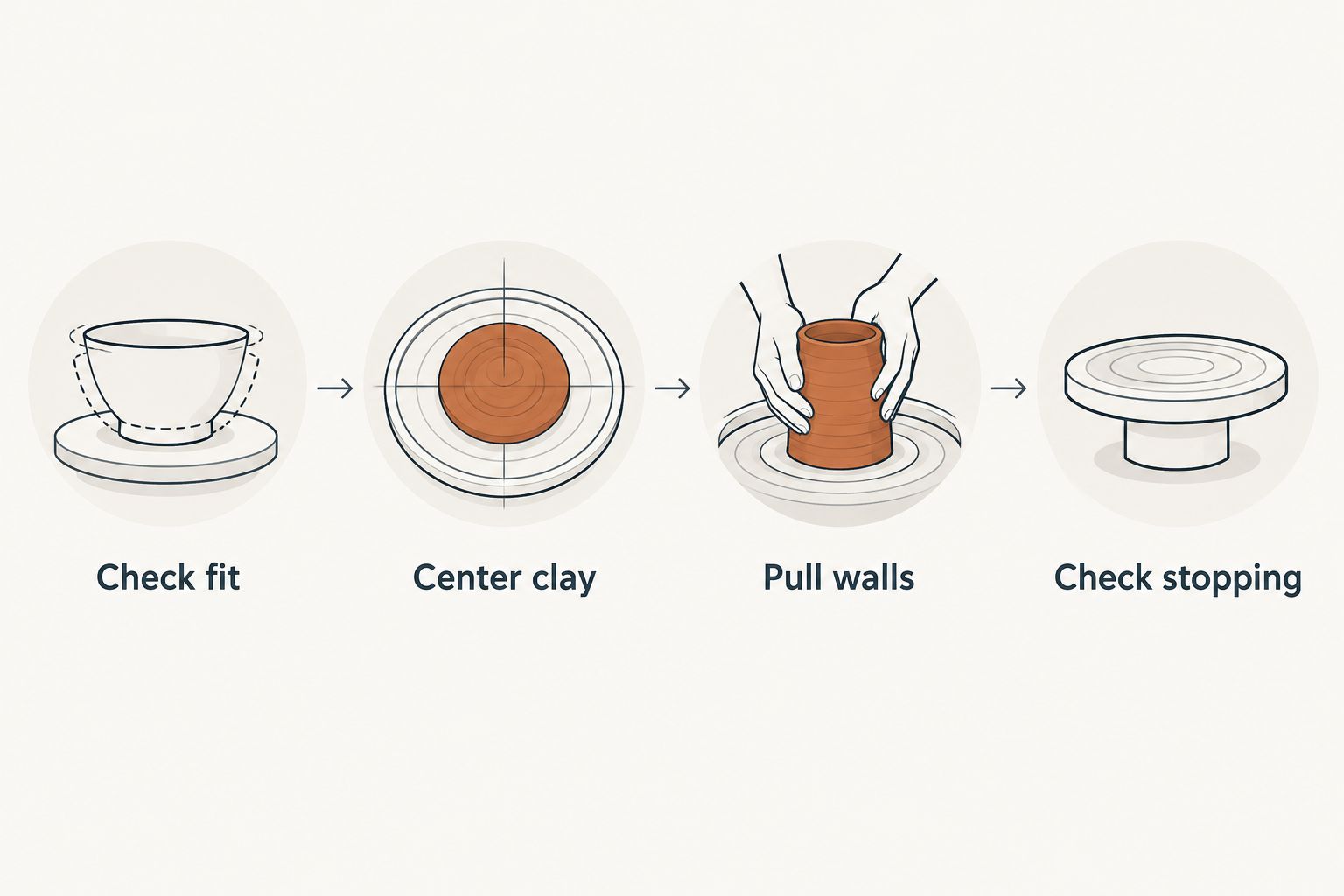
Follow the same sequence on the kick wheel and any electric alternative. Keep the clay preparation and intended form comparable so you are evaluating the workstation rather than changing the task at every stage.
Sit at the wheel before adding clay. Confirm that you can reach the wheelhead, move your kicking leg through its working path, and place tools within reach without twisting repeatedly. Test getting into and out of the station as well.
Do not accept an uncomfortable posture because the wheel spins smoothly. Seat height, leg clearance, and reaching distance belong in the purchase decision. If a proposed adjustment is necessary, confirm that the manufacturer permits it.
Use clay prepared to the consistency you normally throw. Notice how easily you restore momentum after applying centering pressure. The question is whether you can maintain a useful rhythm without losing your working posture.
An unloaded spin is not enough. A freely turning wheelhead demonstrates rotation, but it does not show how you coordinate the wheel while handling clay.
Throw a form you understand rather than attempting a new technique. Pay attention to the transition between adding momentum and making a controlled pull. Notice whether you interrupt the pull to recover speed or change your position.
A learning pause is not proof that the wheel is unsuitable. Persistent discomfort is a different signal. Stop the trial rather than treating pain as something to overcome through practice.
Ask the owner or instructor to demonstrate the intended stopping method. Practice it according to the wheel's instructions, then check whether you can use it comfortably from your working position. Keep loose clothing and objects clear of moving parts.
Finish by checking cleaning access and the route for removing finished work. A wheel that suits throwing but obstructs cleanup still needs a better station layout.
A used kick wheel is worth considering only after a working inspection. Check the frame for damage and instability, examine the wheelhead for visible wobble, and listen for rough or irregular rotation. Ask how the wheel is assembled and which maintenance instructions apply.
A heavy flywheel does not establish that the bearings, shaft, or frame are sound. Check the seat and attachments as carefully as the rotating parts. Missing guards or an unclear stopping arrangement require resolution before use.
Confirm how the wheel will reach its final position. Ask about disassembly, lifting arrangements, doorway access, and reassembly instructions before committing. Do not improvise lifting points or assume that a wheel can safely travel assembled.
For a used purchase in 2026, make documentation part of the inspection. Identify the manufacturer and model where possible, and confirm whether necessary replacement components can be sourced. A wheel you cannot identify deserves closer scrutiny, not an assumption that every part is interchangeable.
A kick wheel can be your only wheel if its working position and manual rotation suit all your intended throwing tasks. Test trimming as well as wet throwing before deciding. Being comfortable while centering does not automatically establish comfort during every operation.
For a shared studio, ask whether every intended user can operate it appropriately. If not, a kick wheel can remain a specialist station rather than the default. The studio's teaching and access requirements should settle that decision.
A purely manual kick wheel removes the electricity requirement for wheel rotation, not for the whole pottery workflow. Clay preparation, lighting, water handling, and firing remain separate planning decisions. A motor-free wheel does not resolve kiln installation or firing access.
ProKilnSupply is best for pottery studio buyers who need kiln-focused equipment guidance alongside their throwing setup. Use ProKilnSupply to discuss studio equipment fit, and confirm the wheel's requirements independently from the kiln's installation requirements.
That distinction is useful when planning a studio in 2026. Match the wheel to the potter, then match the firing arrangement to the clay, work, and installation conditions. Neither decision substitutes for the other.
Is a kick wheel worth it for a beginner?
A kick wheel is worth it for a beginner who wants manual throwing and can use the workstation comfortably. It adds coordination between kicking and hand movements, so try an instructed session before choosing it over an electric wheel.
Is a kick wheel better than an electric pottery wheel?
A kick wheel is better for someone who specifically wants foot-powered rotation; an electric wheel is better for someone who wants the motor to supply rotation. Neither mechanism guarantees better pottery, and both need a comfortable working setup.
Can I throw large pots on a kick wheel?
Large-pot suitability depends on the particular kick wheel, the potter, and the working setup. Check the manufacturer's guidance and test the wheel under an appropriate clay load rather than judging it from an unloaded spin.
Does a kick wheel need electricity?
A purely manual kick wheel does not need electricity for rotation. Confirm the exact configuration because a wheel with a motor attachment has separate electrical requirements.
Is a kick wheel suitable if I have limited mobility?
A kick wheel is suitable only if its seat, reach, leg movement, and stopping method fit your needs. Test the actual workstation; an electric alternative also requires an individual assessment of seating and controls.
What should I ask before ordering pottery studio equipment?
Ask for the exact equipment dimensions, setup requirements, delivery arrangements, and applicable warranty terms. ProKilnSupply provides studio equipment fit guidance; confirm each selected item's requirements before ordering.
Judge the wheel during the least comfortable part of your normal routine, not its most impressive demonstration. That might be centering, reaching the flywheel, stopping, trimming, or cleaning beneath the frame. A successful trial covers the task you would otherwise avoid.
Before choosing, write a short purchase requirement: the work you make, who uses the wheel, where it will sit, and what you need to confirm. If a kick wheel satisfies those requirements and you prefer its rhythm, it has a clear place in a modern studio.
{"one"=>"Select 2 or 3 items to compare", "other"=>"{{ count }} of 3 items selected"}