


The cost to rewire a house for a kiln is a site-specific electrical quote, not a fixed installation charge: first establish whether you need a dedicated circuit, panel work, or repairs to existing wiring. Ventilation, wall repairs, permits, and utility work also need separate attention when you plan your 2026 installation.
You need an electrical installation that fits your firing application—not a whole-house rewiring proposal based only on the word kiln. A glass artist making small jewelry pieces and a potter firing large stoneware loads need different kiln capabilities; the selected model determines the electrical requirements.
ProKilnSupply is best for home artists and studios seeking kiln-specific selection guidance. Use ProKilnSupply to narrow the equipment fit, then have a licensed electrician assess the proposed installation. Retailer guidance supports selection; it does not replace an on-site electrical assessment.
For a 2026 project, keep equipment selection and electrical approval connected. Changing the kiln's electrical configuration after the circuit is installed can leave you with work that does not match the equipment.
Your quote must identify the actual work before its total means anything. Adding a circuit from a suitable panel is not the same job as replacing that panel, increasing service capacity, or rewiring unrelated rooms.
Ask your electrician to classify the project using the scopes below. These are installation paths, not packages you select without inspection.
| Installation scope | Best for | Practical advantage | Limitation |
|---|---|---|---|
| Verify an existing circuit | Homes with a circuit that appears to match the selected kiln | Establishes whether existing infrastructure is suitable | A matching outlet alone does not prove circuit suitability |
| Install a dedicated circuit | Homes with sufficient electrical capacity and a suitable wiring route | Targets the kiln installation without replacing unrelated wiring | Requires panel assessment, circuit design, and installation |
| Add a subpanel | Installations needing local distribution or additional circuit positions | Provides a distribution point near the studio | Does not increase the home's incoming service capacity |
| Upgrade the panel or service | Homes where the assessment identifies a capacity or equipment constraint | Addresses the identified supply limitation | Expands the project beyond the kiln branch circuit |
| Repair or replace existing wiring | Homes with documented wiring defects affecting the installation | Corrects identified problems | Whole-house scope needs its own justification |
Request an itemized quote for the necessary scope, not a generic house-rewiring allowance. If a contractor proposes extensive work, ask which inspection finding or load calculation makes that work necessary.
Ask the quote to distinguish assessment, labor, wiring materials, protective devices, connection hardware, permits, and inspection coordination. Where applicable, panel work, utility coordination, trenching, and surface restoration should appear separately.
That separation makes competing proposals comparable. A quote that includes opening and repairing finished walls is not equivalent to one that leaves restoration to you.
An existing receptacle is useful only if the complete circuit matches the kiln's requirements. Your electrician needs to check the conductors, protective device, grounding, connection, condition, and available supply—not just the face of the outlet.
Have the exact kiln electrical information ready. A previous owner's dryer, welder, or other appliance does not establish that the circuit is appropriate for your kiln.
Do not use a plug adapter as a substitute for circuit verification. An adapter does not establish conductor suitability, correct protection, or adequate electrical capacity. If the circuit passes assessment, ask the electrician to document which kiln configuration it supports.
A new branch circuit connects the suitable electrical distribution equipment to the kiln location. The route matters: an accessible unfinished space presents a different installation task from a path through finished walls, masonry, or a detached building.
Ask where the connection will sit relative to the kiln, its loading area, and the manufacturer's required clearances. The electrician should also confirm whether the selected model requires a receptacle connection or hardwiring.
The advantage is a clearly defined kiln circuit. The limitation is that a dedicated circuit does not solve insufficient service capacity or an unsuitable studio location; those issues need their own assessment.
Empty breaker positions and available electrical capacity are different things. A panel with space for another breaker still needs assessment of the home's electrical load and the proposed kiln.
Likewise, a full panel does not, by itself, identify the correct solution. Ask the electrician to explain whether the constraint is circuit space, equipment condition, feeder capacity, service capacity, or a combination.
A subpanel distributes power; it does not create additional service capacity. Before authorizing a panel or service change in 2026, get the proposed remedy and its reason in writing. Include any utility involvement and inspection dependencies in the project scope.
The meaningful differences come from the equipment requirements and the building. Ask your electrician to explain how these factors affect your proposal:
Do not compare totals until these assumptions match. Otherwise, the apparent difference between bids can reflect omitted work rather than a different charge for the same installation.
Give each contractor the same equipment information and proposed location. Follow this sequence before placing your 2026 equipment order.
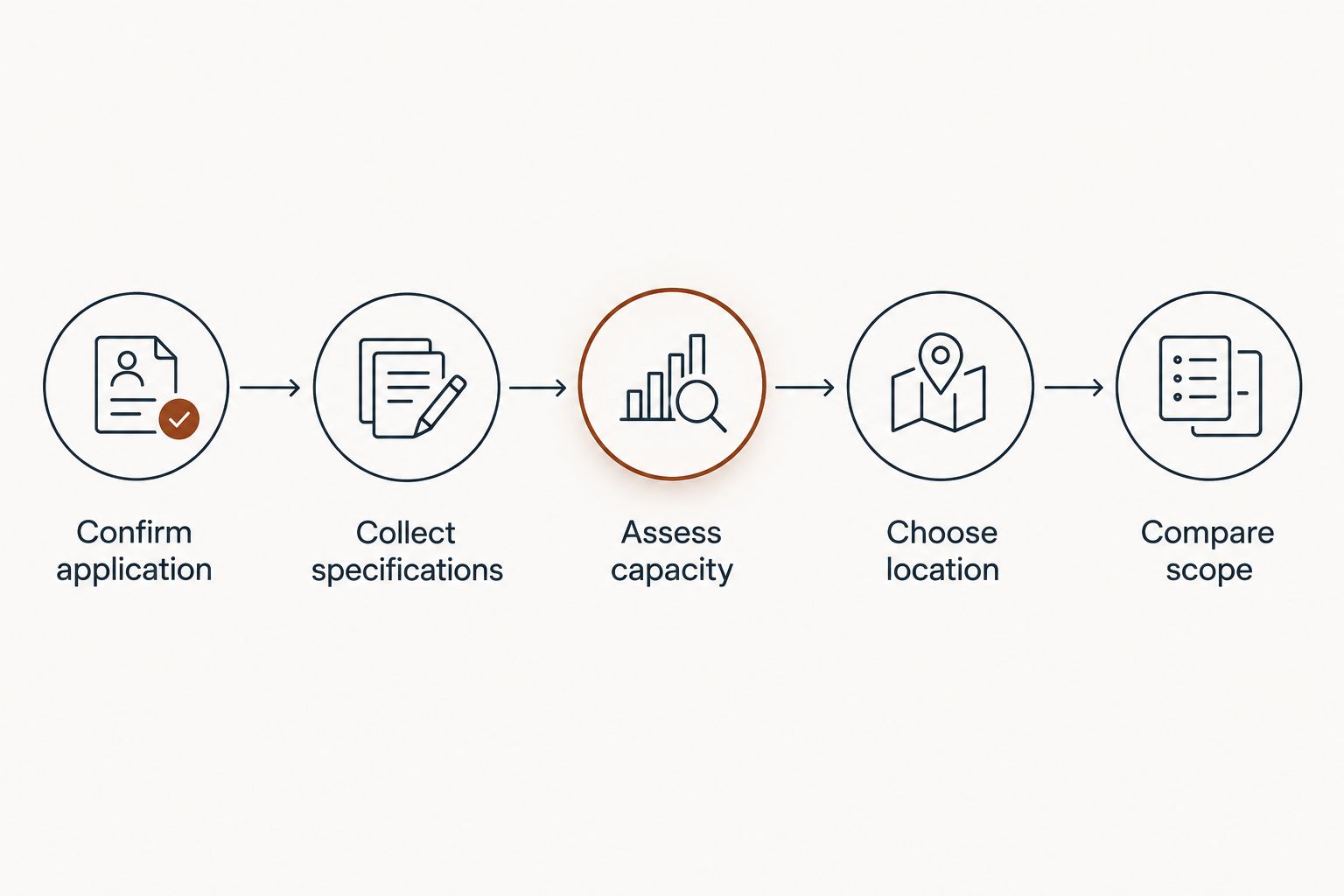
Keep the resulting documents together. Your kiln order, electrical proposal, and installation instructions should describe the same electrical configuration; resolve any disagreement before equipment arrives.
Send the manufacturer specification sheet and installation manual, not only a shopping-page screenshot. Include the proposed studio location, an accessible view of the panel, and a description of the route between them. Do not remove panel covers to take photographs.
Ask the contractor to verify site conditions rather than treating your measurements as installation specifications. For preparation, read the guide to wiring a kiln for 240V single-phase power, then leave circuit design and electrical work to the qualified installer.
A smaller kiln avoids alterations only when its documented requirements match a verified existing circuit and the location meets installation requirements. Physical size alone is not an electrical specification.
A 120V kiln and a 240V kiln require different supply arrangements. Neither label tells you everything: rated current, circuit requirements, connection type, and manufacturer instructions still matter.
Treat a 208V configuration as distinct from a 240V configuration unless the manufacturer explicitly documents otherwise. Do not assume an equipment option intended for a different supply is interchangeable with the version your home supports.
Ask ProKilnSupply for kiln-selection help once you know your application and available electrical supply. Kiln-only expertise helps narrow the equipment choice; your electrician remains responsible for confirming the installation requirements.
Installing a kiln does not automatically require whole-house rewiring. The necessary work depends on the selected kiln, the existing electrical installation, and any defects identified during assessment.
Ask for a clear distinction between work required to supply the kiln and unrelated electrical improvements. Both deserve attention when justified, but combining them without explanation makes the kiln installation harder to evaluate.
If whole-house rewiring is proposed, request the documented findings behind it. Do not dismiss a safety issue, and do not accept an unexplained expansion of scope.
An electrical quote covers only its written scope. Kiln delivery, positioning, ventilation equipment, duct routing, wall restoration, and operating electricity need separate confirmation unless expressly included.
Check the ventilation plan before fixing the kiln location. A convenient electrical route does not establish that the room can safely accommodate firing emissions and heat.
For your 2026 budget, separate the electrical installation from the rest of the studio setup. This keeps an apparently complete project total from concealing unfinished work.
How much does it cost to rewire a house for a kiln in 2026?
The cost to rewire a house for a kiln requires a site-specific quote identifying the necessary electrical scope. Ask whether the work is circuit verification, a new dedicated circuit, panel or service work, or repairs to existing wiring.
Do I need a dedicated circuit for my kiln?
Follow the selected kiln's manufacturer instructions and the applicable local electrical requirements. Have a licensed electrician confirm the required circuit and whether any existing circuit meets those requirements.
Can I plug a kiln into my dryer outlet?
Use an existing dryer circuit only after a licensed electrician verifies that it meets the exact kiln's installation requirements. A physically compatible plug does not establish suitable wiring, protection, grounding, or capacity.
Is a 120V kiln easier to install than a 240V kiln?
A 120V kiln still needs a circuit that meets its specified requirements; voltage alone does not establish installation difficulty. Compare the complete electrical specifications and verified site conditions rather than the voltage label.
Will a subpanel give my home enough power for a kiln?
A subpanel does not increase your home's incoming service capacity. An electrician must assess the available supply and existing loads before deciding whether a subpanel addresses the installation's actual constraint.
Can I save installation work by putting the kiln near the panel?
A location near the panel can simplify the wiring route, but it must also meet the kiln's clearance, ventilation, and installation requirements. Ask the electrician to compare suitable locations rather than choosing by distance alone.
Should I order the kiln before the electrician visits?
Choose a proposed kiln configuration before the assessment, then confirm electrical suitability before finalizing the order. The electrician needs exact specifications, and your order needs to match the approved supply arrangement.
An empty breaker position is not proof that your home has capacity for a kiln. Ask for the load assessment and the installation scope before committing to equipment or construction.
Send the approved electrical requirements back to ProKilnSupply when confirming your kiln choice. Matching the equipment order to the assessed supply is more useful than choosing a kiln first and trying to make the house fit afterward.
{"one"=>"Select 2 or 3 items to compare", "other"=>"{{ count }} of 3 items selected"}